
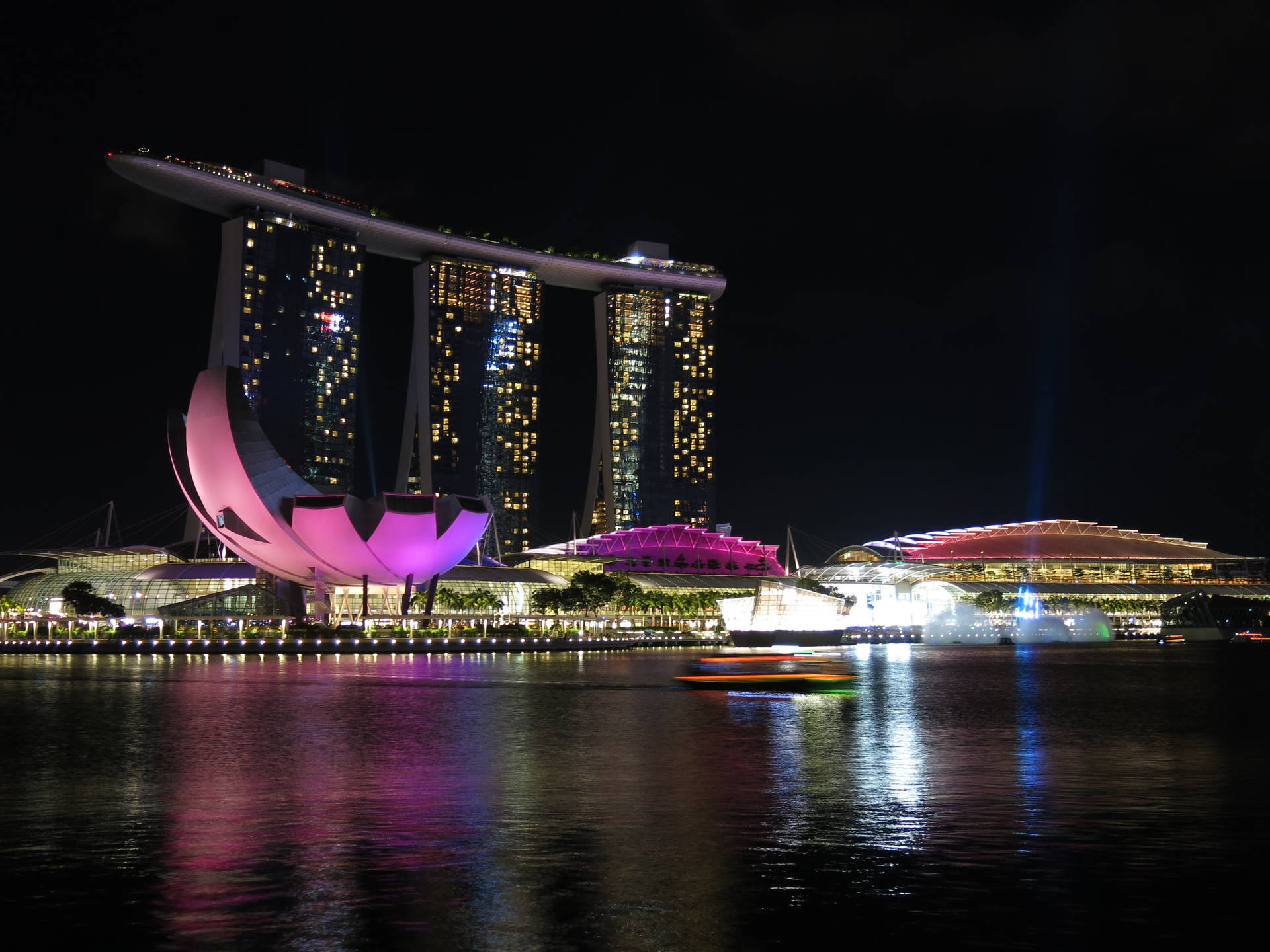
Singapore did not become a major forex and derivatives trading hub by accident. It earned that position by building a complete market ecosystem that institutions can rely on when money, risk, and time are all expensive. In global markets, the winning locations are rarely the loudest. They are the most dependable. Singapore’s advantage comes from combining deep liquidity with regulatory clarity, strong legal enforceability, efficient market infrastructure, and a geographic time-zone position that neatly connects the world’s trading day. When these elements operate together, they create a hub that naturally attracts more participants, more products, and more volume.
At its core, Singapore functions as a high-trust risk transfer centre. That matters because forex and derivatives exist for one main reason: to move risk from those who do not want it to those who are willing and able to price it. The more confidently a market can do that, even during volatility, the more business it attracts in the next cycle.
The Network Effect That Makes Liquidity Self-Reinforcing
Liquidity is not just “many trades.” It is the ability to transact meaningful size with predictable costs. Once a city develops a critical mass of dealers, hedge funds, asset managers, corporates, and trading firms, liquidity compounds. A corporate treasury comes for better pricing on hedges. Dealers come because corporates and funds generate consistent flow. Funds come because dealers offer tighter spreads, faster execution, and deeper options markets. More participants mean more two-way prices, which reduces trading friction, which brings in even more participants.
Singapore benefits from this network effect in a very practical way. Institutions can execute during Asian hours without waiting for Europe or North America to wake up. That “local liquidity” becomes a key reason to centralise execution and risk management in Singapore rather than spreading it across smaller markets with thinner depth.
Time Zone Advantage: The Bridge Between Market Sessions
Forex is a 24-hour market, but liquidity is not evenly distributed across the day. It moves with regional sessions, data releases, and the presence of market-makers. Singapore sits in a valuable time zone that captures Asia-Pacific’s main trading hours while connecting smoothly into Europe later. This matters for three reasons.
First, it supports continuous risk management. Banks can adjust exposures as Asia responds to overnight news, then hand off into Europe with less gap risk. Second, it allows global macro and systematic funds to rebalance positions and roll hedges during an active window rather than in illiquid hours. Third, it helps corporates that operate across Asia manage real business exposures such as import costs, export receipts, foreign subsidiaries, and cross-border debt.
A trading hub is not only about prices. It is about decisions. Singapore’s time zone aligns well with when regional decision-makers are awake, when treasuries approve hedging, and when risk teams monitor portfolios. That keeps the trading cycle fast and efficient.
Regulatory Clarity: A Framework Institutions Can Price Into Their Risk Models
The most successful trading centres do not simply have “friendly regulation.” They have predictable regulation. Large institutions price risk using models that assume enforceable rules, consistent supervision, and transparent obligations. Singapore’s approach has historically emphasised clarity, practicality, and tight alignment with global standards in areas that matter most for derivatives.
This is especially important in OTC derivatives. Unlike exchange-traded futures, many OTC contracts depend heavily on the strength of documentation, margin rules, counterparty risk management, dispute resolution processes, and reporting standards. When the rulebook is clear, firms can allocate risk limits with confidence. When the rulebook is uncertain, firms either reduce activity or demand higher spreads and more collateral. Singapore’s regulatory environment tends to support confidence, and confidence is a direct input into liquidity.
Legal Certainty: The Hidden Engine of Derivatives Markets
Derivatives are contracts. In stressed markets, the ability to enforce netting and collateral terms can determine whether a firm survives a counterparty failure or faces a destabilising loss. Because of that, the legal environment behind derivatives trading is not a background detail. It is the foundation.
Singapore is widely viewed as a jurisdiction where contractual enforceability is strong and dispute resolution is reliable. This matters for close-out netting, collateral enforcement, and the operation of master agreements used in FX and derivatives markets. When legal certainty is high, counterparties can provide more competitive pricing because they do not need to “pad” spreads for legal ambiguity.
This is one reason global banks and sophisticated buy-side firms feel comfortable booking complex multi-asset portfolios through Singapore. The legal system helps convert complex risk into manageable, enforceable exposures.
Infrastructure and Market Plumbing: The Real Difference Between “A Market” and “A Hub”
A hub is defined by operational excellence. In forex and derivatives, operational excellence includes trading platforms, settlement reliability, clearing capability, collateral workflows, risk monitoring, and resilient connectivity between institutions. Singapore’s advantage is that these elements are mature and integrated.
In exchange-traded derivatives, standardised contracts and central clearing reduce counterparty risk and simplify collateral processes. In OTC derivatives, robust margining practices, documentation standards, and disciplined risk frameworks make bilateral trading scalable. When volatility rises, weak infrastructure breaks first. Strong infrastructure becomes a magnet because traders and hedgers seek places where execution and settlement remain dependable.
Market infrastructure also influences innovation. New products, new contract types, and new hedging solutions appear faster in locations where institutions can list, clear, and risk-manage them efficiently.
A Deep Mix of Participants: Why Singapore’s Flow Is More Balanced Than Many Centres
Many financial centres have a dominant flow type. Some are primarily hedge-fund driven. Some are driven mainly by domestic corporates. Some are heavily concentrated in one asset class. Singapore benefits from a balanced mix, and that balance stabilises the market across different regimes.
Banks provide liquidity and structure products. Asset managers and hedge funds bring directional trading and hedging demand. Commodity trading firms add hedging flows tied to energy, metals, and agricultural exposures. Multinational corporates run treasury centres and create steady FX forward and options demand linked to real business activity. Private wealth and family offices add diversified investment and hedging needs, often with a preference for structured risk solutions.
When markets are calm, speculative and investment flows dominate. When markets are volatile, corporate hedging and risk reduction become more active. This “multi-engine” ecosystem helps Singapore maintain relevance in both risk-on and risk-off environments.
Why Forex Thrives Here: It Solves Real Regional Problems
Asia is not one market. It is a cluster of economies with different currencies, different interest-rate cycles, different capital flow patterns, and different geopolitical sensitivities. That naturally creates FX exposure everywhere: trade, investment, tourism, education, migration, and cross-border corporate structures.
Singapore sits at the centre of these exposures. It is a major base for regional headquarters and treasury functions. It also acts as a neutral marketplace where regional and global participants can hedge exposures without being constrained by one large domestic market’s internal priorities.
This is especially valuable for corporates with multi-currency revenues and costs across Southeast Asia, China-linked supply chains, and USD financing structures. They need a location where they can hedge quickly, manage options strategies, roll forward positions, and receive consistent bank coverage. Singapore offers that depth.
Why Derivatives Thrive Here: They Need Trust, Scale, and Specialisation
Derivatives markets require specialised talent and deep institutional support. Pricing options, managing volatility risk, and structuring cross-currency hedges demand experienced professionals and robust risk infrastructure. Singapore has built a concentration of that expertise.
In practical terms, derivatives volume grows where three things are strong.
The first is pricing depth. Options markets require market-makers who can quote volatility consistently and hedge dynamically. The second is collateral efficiency. Derivatives users want predictable margining, clear dispute processes, and efficient collateral movement. The third is portfolio netting and risk compression opportunities, which improve capital efficiency for large multi-trade portfolios.
Singapore’s ecosystem supports all three. That is why it is not only a place for simple hedging, but also a place for sophisticated macro positioning, structured solutions, and risk overlays for large portfolios.
The Role of Regional and Global Capital: Singapore as a “Neutral Risk Management Base”
A key reason Singapore attracts derivatives business is that it is often perceived as a neutral base for cross-border operations. Funds that invest across Asia can centralise trading and risk in Singapore without tying everything to one domestic market. Global banks can serve clients across the region while maintaining consistent control standards, governance, and infrastructure.
This neutrality becomes even more important during periods of uncertainty. When global investors reduce risk, they prefer locations where operational and legal predictability remain high. When they re-risk, they expand first in the centres that already proved resilient.
Technology and Execution: The Quiet Competitive Edge
Trading has become increasingly electronic. Execution quality depends on latency, system reliability, data integrity, and the ability to integrate order routing, risk checks, and reporting. A hub’s competitiveness now includes its ability to support algorithmic execution, quantitative strategies, and high-throughput risk operations.
Singapore’s institutional environment supports this kind of modern trading. It is not simply about having computers. It is about having the ecosystem that makes electronic trading safe and scalable: robust governance, clean operational standards, and a professional services layer that supports compliance, audit, and controls without slowing innovation to a crawl.
Talent Density: How Skilled Professionals Multiply Market Depth
Even in a world of automation, talent still shapes markets. Options traders, structurers, risk managers, quantitative researchers, compliance specialists, and collateral professionals all contribute to a market’s capacity. When a city attracts and retains such talent, it develops memory and know-how. That know-how shows up as better liquidity, better product design, and faster problem-solving during stress.
Talent density also influences training pipelines. Junior professionals build careers in the hub, and over time the hub becomes self-sustaining. This is one reason why mature centres remain mature. It is difficult to replicate talent ecosystems quickly.
Policy Stability and Institutional Trust: Why Big Money Prefers Predictability
Forex and derivatives are sensitive to policy shocks. Sudden rule changes, capital controls, weak enforcement, or inconsistent supervision can quickly reduce participation. Institutions protect themselves by shifting activity toward jurisdictions that minimise these risks.
Singapore’s reputation for institutional stability and rule-based governance is therefore an economic asset. It reduces uncertainty premiums in risk models. It supports tighter spreads and higher risk limits. It encourages long-term investment by market participants who want to commit capital and infrastructure.
Real Economy Linkages: Trade, Commodities, and Cross-Border Business
Singapore’s role in trade, shipping, and regional business creates a constant base of hedging demand. FX forwards, swaps, and options are not only used by traders. They are used by businesses to stabilise cash flows, protect margins, and manage financing costs.
Commodity linkages further amplify this. Commodity trading firms often hedge both price risk and currency risk. That creates natural demand for cross-asset derivatives solutions, particularly where commodity exposures are financed in USD while revenues or costs may be in other currencies. A hub that can handle multi-asset risk transfer becomes more valuable than one focused on a narrow product set.
Crisis Performance: Why Hubs Strengthen After Volatile Periods
A useful way to understand why Singapore is a major hub is to look at what happens during stress. In volatile conditions, participants concentrate flows in places where they trust market plumbing, legal outcomes, and operational continuity. This can increase a hub’s share even if the overall environment is uncertain.
In calmer times, activity can be more distributed. In stressed times, it becomes more centralised. Singapore benefits from that tendency because it is built for continuity. That continuity becomes part of the city’s long-term brand, and brands matter in markets because they influence who receives flow first.
Competitive Landscape: Why Singapore Still Needs to Keep Evolving
No hub is permanent by default. Competition from other centres is real, and market structure changes. Electronic trading can reduce the importance of physical location for some flows, even while time-zone, legal certainty, and regulatory predictability remain essential for complex derivatives.
Singapore’s path forward depends on continuing to expand product breadth, support efficient clearing and collateral practices, and maintain a high-trust environment that attracts global capital. The goal is not only to host trading volume, but to remain the preferred place where regional risk is priced, transferred, and managed.
Conclusion: Singapore’s Advantage Is System Design, Not One Single Factor
Singapore is a major forex and derivatives trading hub because it has built a complete system that markets can rely on. Liquidity attracts liquidity. Time-zone positioning supports continuous risk management. Regulatory clarity reduces friction. Legal certainty underpins complex derivatives. Strong infrastructure makes high-volume activity scalable. A diversified participant base keeps the ecosystem resilient across market regimes. Talent density deepens pricing and product capability. Real economy linkages generate steady hedging demand, and crisis performance reinforces the hub’s reputation.
Put simply, Singapore is not just a place where people trade currencies and derivatives. It is a place where the world’s risks are routinely converted into manageable exposures, at scale, with a level of predictability that global institutions are willing to pay for and keep returning to.