
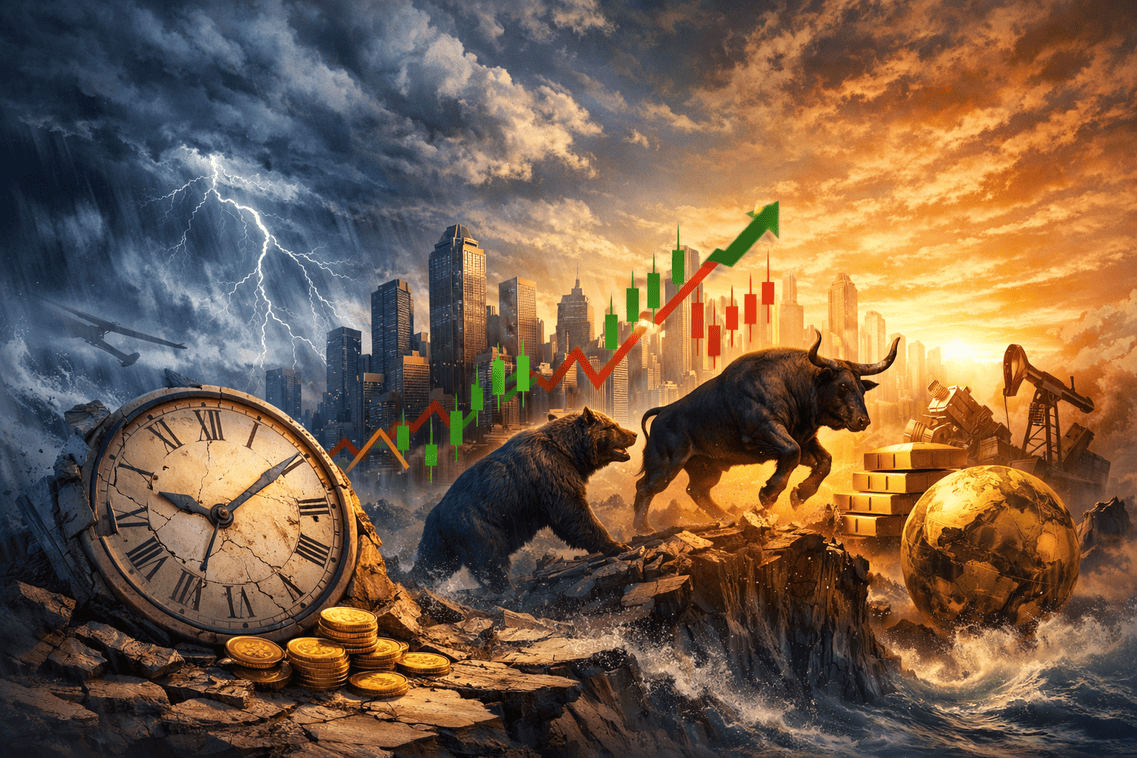
Volatility is often treated like a weather event. A storm arrives, markets shake, and then conditions return to normal. That storyline works in some years, yet 2026 is better understood as a regime where volatility becomes the operating climate, not an interruption. When volatility becomes structural, the winning edge shifts. Markets stop rewarding the loudest forecast, the fastest reaction, or the most confident narrative. Instead, they reward patience, positioning, and process.
In practical terms, 2026 is likely to test the habits that were built during smoother cycles. Many participants still carry a “prediction mindset” that assumes the future can be called with precision if you watch enough indicators. However, in a high-volatility regime, the future behaves less like a single road and more like a branching set of outcomes. Probabilities matter more than certainty, and flexibility matters more than conviction. This page reframes volatility as a rhythm to work with, not a threat to escape.
Volatility Is Not Random Noise in 2026
Most investors think volatility is chaos. Yet markets rarely move randomly for long. Volatility clusters, expands, compresses, and then expands again. These cycles are influenced by liquidity conditions, positioning, policy expectations, geopolitical surprises, earnings dispersion, and shifts in risk appetite. When those forces conflict, markets whip between narratives. A week can alternate between growth optimism and recession fear, risk-on rallies and risk-off panics, and “soft landing” confidence and “policy mistake” anxiety.
This is why prediction becomes dangerous. A prediction usually assumes one dominant scenario. Volatility cycles, by contrast, assume multiple competing scenarios. In 2026, the right question is not “What will happen?” but “What are the most likely paths, and how will I manage exposure if the market chooses a different path?”
The Hidden Structure Behind Big Swings
To work with volatility, you need to see its internal structure. Many large moves are not created by new information alone. They are created when positioning meets surprise. If the market is heavily positioned one way, even a modest surprise can trigger sharp moves because risk managers must react quickly. That reaction causes more movement than the original news. Then, after the market overshoots, value buyers and mean-reversion players step in, producing a snapback. The cycle repeats.
In 2026, this pattern can become more frequent because markets are likely to remain sensitive to liquidity shifts, rate expectations, currency stress pockets, and headlines that change sentiment quickly. That does not mean every day is a crisis. It means the market’s emotional range widens. A wider emotional range creates opportunity for disciplined participants and punishment for reactive participants.
When Markets Reward Patience Over Prediction
Patience in volatile markets is not passive. It is active restraint. It is the ability to wait for price to move into your zone rather than chasing momentum at the worst moment. It is the ability to reduce activity when noise is high, then increase activity when clarity improves. Most importantly, patience is the willingness to let the market reveal information through price action, rather than forcing your beliefs onto it.
Prediction encourages overtrading. It makes you feel you must do something because you “know” what comes next. Patience encourages selective action. It accepts that some days are designed to trap impatience, and that the best trade is often the one you do not take.
In 2026, markets may reward the investor who buys quality during panic and the trader who sells into euphoria, not because contrarianism is always correct, but because volatility tends to overshoot. Overshoots create mispricings. Mispricings reward those who can wait.
The Two Volatility Worlds of 2026
It helps to think of 2026 volatility as operating in two worlds that alternate.
The first world is event volatility. This is the fast spike driven by policy signals, geopolitical events, sudden earnings surprises, or unexpected inflation growth data. Event volatility is sharp, headline-driven, and emotionally contagious.
The second world is structural volatility. This is slower and deeper. It reflects uncertainty about the longer arc of growth, profitability, debt servicing, currency alignment, and global capital flows. Structural volatility does not disappear after one headline. It stays in the background and reactivates whenever markets encounter stress points.
When these two worlds overlap, markets become more “gappy” and less linear. Price may jump past levels. Trends may begin and then collapse. That is precisely when prediction-based strategies break, and process-based strategies begin to shine.
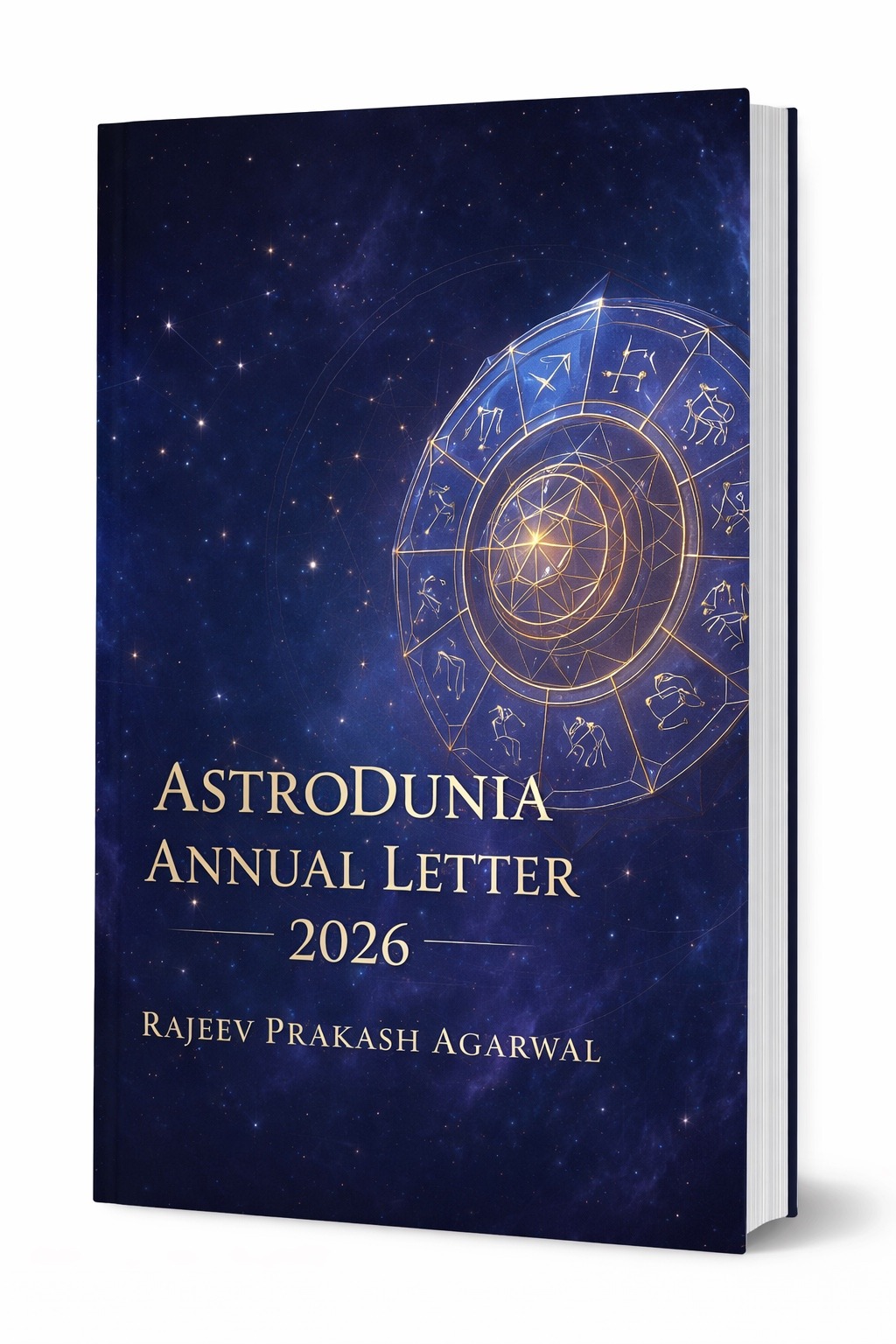
Annual Letter 2026 by Rajeev Prakash Agarwal
The Annual Letter 2026 presents a deep, forward-looking perspective created for committed investors, active market participants, and strategic thinkers operating in an era of accelerating global change. It interprets the year ahead by integrating planetary cycles with macroeconomic trends, investor psychology, and long-term structural shifts shaping equities, commodities, currencies, digital assets, and international capital movements.
Rather than offering short-term trade ideas or headline-driven forecasts, this letter provides a strategic lens for understanding how 2026 is likely to redefine risk management, opportunity cycles, regulatory dynamics, and sustainable wealth creation.
A Financial Astrology Lens on Volatility Cycles
Financial astrology does not replace market data. It complements it by offering a timing framework for shifts in sentiment, risk appetite, and crowd psychology. In volatile regimes, psychology often moves faster than fundamentals. Astrology’s value is that it encourages you to anticipate periods when perception may dominate reality, and when collective fear or euphoria can amplify swings.
From a Vedic perspective, volatility often rises when Rahu-driven themes dominate. Rahu is associated with amplification, speculation, narrative distortion, and sudden reversals. When Rahu-type symbolism is active in market psychology, price can travel further than logic expects, both upward and downward. Saturn symbolism, on the other hand, often correlates with constraint, risk control, realism, and the consequences of leverage. Jupiter symbolism can correlate with optimism, liquidity confidence, and constructive expansions, yet it can also inflate expectations when unchecked.
For 2026, the practical takeaway is not a single “date prediction.” The takeaway is that you should treat certain windows as high sensitivity zones where the market is more likely to react strongly to marginal news. During such windows, discipline matters more than opinions. Position sizing matters more than forecasts. Liquidity matters more than storytelling.
The Investor’s Problem in 2026: Narrative Whiplash
Volatility is amplified by narrative conflict. In smoother cycles, the market agrees on one dominant story. In 2026, disagreement may remain the normal state. Different asset classes may send different signals. Equities might rally while credit spreads warn. Commodities might surge while growth data cools. The currency market might hint at stress even while headlines celebrate resilience.
Narrative conflict encourages impulsive switching. People rotate from one theme to another at exactly the wrong time. They buy what just rallied, sell what just fell, and keep paying the invisible tax of bad timing. This is why patience is a skill. Patience prevents you from participating in the market’s emotional ping-pong.
Why Timing Still Matters, But Not the Way Most Think
Many people hear “market timing” and think it means predicting tops and bottoms. In 2026, timing should mean something more realistic. It should mean managing exposure across phases. It should mean building positions in layers, taking profits in layers, and adjusting risk when volatility expands or contracts.
This approach accepts uncertainty. It also aligns with how markets actually behave in volatile regimes. Price rarely turns at one perfect point. It forms zones. Volatility creates wider zones. The patient investor learns to operate in zones rather than chase exact numbers.
How Patience Becomes a Repeatable Strategy
Patience becomes powerful when it is tied to a framework. Without a framework, patience turns into hesitation. With a framework, patience turns into discipline. The goal is to define in advance what would make you act, what would make you reduce exposure, and what would make you do nothing.
A useful way to build this is to separate information into three categories. The first category is noise, which includes most daily commentary and most emotional headlines. The second category is signal, which includes confirmed shifts in liquidity, policy direction, earnings breadth, and trend integrity. The third category is regime, which includes structural factors like rates, inflation persistence, growth durability, and geopolitical alignment.
When you treat noise as noise, you stop reacting to it. When you treat signal as signal, you act selectively. When you understand the regime, you stop forcing strategies that only work in a different environment.
The Capital Preservation Angle: Staying Alive to Catch the Opportunity
Volatility does not just create risk. It creates opportunity, but only for those who remain solvent and emotionally stable. Capital preservation is not an anti-return mindset. It is the foundation that makes return possible. In 2026, many participants may discover that avoiding large drawdowns can be more important than chasing large gains, especially when rebounds are fast and unforgiving.
A patient approach tends to focus on avoiding the big mistake rather than capturing every move. The investor who avoids one major panic sell and one major euphoria buy may outperform the investor who gets many small calls right but gets one big call wrong.
Sector Dispersion: Why 2026 Volatility Will Not Hit Everything Equally
A common error is to assume volatility is market-wide in the same way. In reality, volatility creates dispersion. Some sectors trend while others chop. Some companies become “stable growth anchors,” while others become “liquidity-sensitive instruments.” Earnings quality, balance sheet strength, and pricing power tend to matter more when volatility rises because investors become selective. Weak structures get punished faster. Strong structures recover faster.
This dispersion is another reason patience wins. If you chase the hottest theme, you often end up holding what is most crowded. If you patiently accumulate high-quality businesses when they are temporarily mispriced, you benefit from both recovery and long-term compounding.
Commodities, Gold, and the Psychology of Safety
In volatile regimes, safety becomes a theme. Gold often enters the conversation not only as an inflation hedge, but as a confidence hedge. Commodities can also behave in surprising ways because they reflect supply constraints, geopolitical uncertainty, and currency dynamics. In 2026, the role of hard assets may be less about a single forecast and more about balancing portfolios when correlations shift.
The patient approach here is to avoid emotional extremes. People tend to buy safety after fear peaks and sell safety when calm returns. A disciplined allocator thinks in advance about what role safety assets play and how they will be rebalanced as conditions change.
The Trader’s Reality: Volatility Expands Both Opportunity and Error
For traders, volatility increases the size of potential moves, which can feel exciting. It also increases the probability of being wrong quickly. This is why the edge in 2026 is not just strategy. It is execution quality. Execution quality includes waiting for clean setups, cutting risk quickly when the market invalidates your thesis, and refusing to trade when price is designed to confuse.
In volatile periods, the market often creates false breakouts and false breakdowns. These moves exist to trigger stops and shake out weak hands. The patient trader learns to respect confirmation rather than chase the first move. They also learn to treat cash as a position, not as a failure.
A Practical Mental Model for 2026: Process Beats Prophecy
If you take one lesson into 2026, let it be this. Prophecy feels comforting but breaks under stress. Process feels boring but survives under stress. A process can include fundamental quality filters, technical trend context, volatility regime awareness, and timing windows for heightened sensitivity. A process does not need to predict the future. It needs to respond intelligently as the future reveals itself.
This is why patience is not a motivational slogan. It is a competitive advantage. In a volatility regime, the impatient participant provides liquidity to the patient participant. The impatient participant buys breakouts at the wrong time, sells breakdowns at the wrong time, and feeds the cycle. The patient participant waits, scales, manages risk, and compounds.
How to Read Volatility Cycles Without Getting Trapped
Volatility cycles often follow a recognizable emotional path. First, calm builds complacency. Then, a catalyst triggers shock. Shock triggers forced selling. Forced selling triggers overshoot. Overshoot triggers relief rallies. Relief rallies trigger renewed confidence. Confidence sets the stage for the next shock.
You do not need to label every stage perfectly. You only need to avoid acting at the emotional extremes. The extremes are where spreads widen, slippage increases, and decisions become impulsive. The patient participant acts closer to the center of the cycle, where price offers better risk-to-reward and where decisions are calmer.
Conclusion: The Opportunity of 2026 Is Not Predicting Right, It’s Behaving Right
2026 is likely to reward the investor and trader who treats volatility as a feature, not a flaw. It may punish those who demand certainty from an uncertain environment. The market does not care about confidence. It cares about positioning, liquidity, and behavior. When volatility rises, behavior becomes the true edge.
If you build a process that respects regimes, manages exposure, and waits for high-quality moments, you do not need perfect predictions. You need consistency. And in a year where swings may feel dramatic and narratives may break repeatedly, consistency is what turns volatility from a threat into an advantage.