
The VIX Index is often described as the market’s “fear gauge.” When it spikes, headlines warn of panic. When it stays low, commentators talk about calm or complacency. For beginners, this can make the VIX sound mysterious or even ominous. In reality, the VIX is simply a tool that reflects how much uncertainty investors are pricing into the market.
Understanding what the VIX measures, how it is calculated at a high level, and why it matters can help you interpret market conditions more clearly. Rather than predicting crashes or rallies, the VIX offers insight into expectations, risk perception, and how investors are positioning for future moves.
What the VIX Index Actually Measures
The VIX measures expected volatility in the US stock market over the next 30 days. More specifically, it reflects the market’s expectation of how much the S&P 500 is likely to move, based on prices of options tied to that index.
Options are financial contracts that give investors the right, but not the obligation, to buy or sell an asset at a specific price. When investors become more concerned about large market moves, they are often willing to pay more for options as protection or speculation. Those higher option prices translate into higher implied volatility, which is what the VIX captures.
In simple terms, the VIX rises when investors expect bigger price swings ahead and falls when they expect calmer conditions.
How the VIX Is Calculated Without the Math
You do not need to understand the full formula to grasp the idea. The VIX looks at a wide range of S&P 500 call and put options with about a month until expiration. By analyzing how much investors are paying for these options across many strike prices, the index extracts the level of volatility the market is collectively pricing in.
Because the VIX is based on option prices, it is forward-looking. It reflects expectations, not what has already happened. This is an important distinction. A market can be falling while the VIX is already declining if investors believe the worst is behind them.
Why the VIX Moves Inversely to the Stock Market
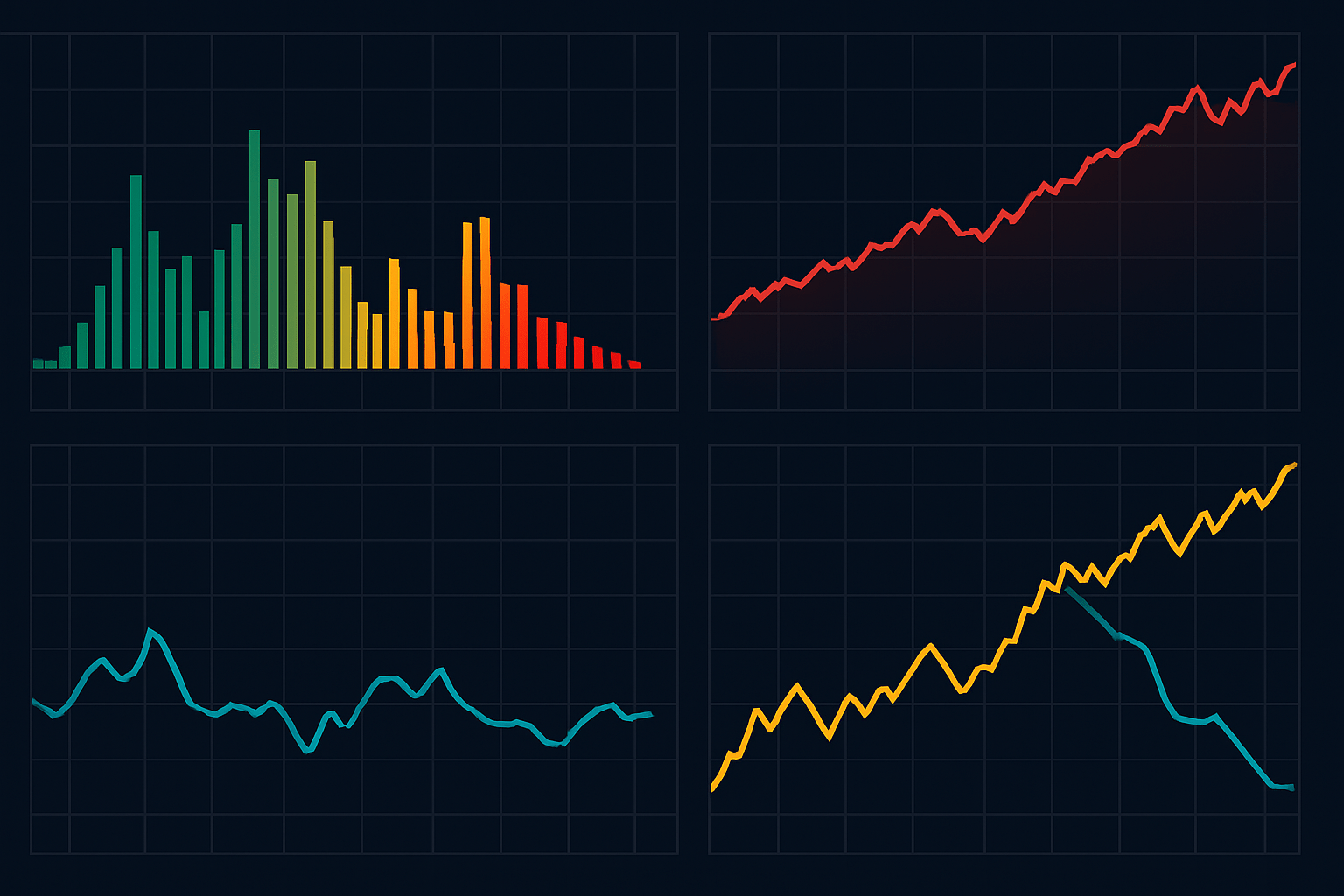
Most of the time, the VIX moves in the opposite direction of the stock market. When stocks fall sharply, fear increases and investors rush to buy protection, driving option prices higher and pushing the VIX up. When stocks rise steadily, fear tends to fade, option demand drops, and the VIX moves lower.
This inverse relationship is strong but not perfect. There are periods when both stocks and the VIX can rise together, especially if markets are climbing rapidly but investors still expect turbulence ahead. The key idea is that the VIX measures uncertainty, not direction.
What Different VIX Levels Generally Indicate
While there is no magic number, certain ranges tend to be associated with different market environments.
Lower VIX readings often reflect confidence and stable conditions. Moderate readings suggest normal uncertainty and healthy two-way trading. Elevated readings signal stress, fear, or heightened uncertainty about the future.
Extremely high VIX levels usually occur during crises, when investors are bracing for large and unpredictable moves. These spikes often coincide with market selloffs, but they can also mark periods when fear is peaking rather than just beginning.
Why the VIX Matters to Investors
The VIX matters because it provides context. It helps investors understand whether the market is pricing in calm or stress. This can influence decisions about risk exposure, position sizing, and expectations.
For long-term investors, the VIX can be a sentiment indicator. Very high fear can coincide with attractive long-term opportunities, while extremely low fear can signal complacency. This does not mean the VIX should be used to time the market precisely, but it can help frame risk.
For traders, the VIX affects option pricing directly. Higher implied volatility means options are more expensive. Lower implied volatility means they are cheaper. Understanding this relationship is essential for anyone using options.
The VIX and Volatility Spikes
The VIX tends to spike quickly and fall more slowly. Fear enters the market faster than confidence. When unexpected news hits, investors rush to hedge, causing a sharp rise in implied volatility. As uncertainty gradually resolves, the VIX drifts lower.
This behavior is why the VIX is often associated with sudden jumps rather than smooth trends. It reflects urgency and risk aversion in real time.
Common Misconceptions About the VIX
One common misconception is that a high VIX guarantees a market crash. It does not. A high VIX simply means investors expect large moves. Those moves can be up, down, or both.
Another misconception is that a low VIX means the market is safe. Low volatility does not eliminate risk. It can sometimes encourage excessive risk-taking, which increases vulnerability to future shocks.
Some beginners also think you can buy the VIX like a stock. The VIX itself is an index and cannot be bought directly. There are products designed to track VIX-related futures, but they behave very differently from the index and are not suitable for most beginners.
VIX Futures and Products: A Note of Caution
There are exchange-traded products linked to VIX futures, not the VIX index itself. These products are designed for short-term trading and hedging, not long-term holding. Because of how futures roll over time, they can lose value even if the VIX stays flat.
Understanding this distinction is critical. Many new investors lose money by assuming VIX-linked products will rise whenever markets fall. The reality is more complex.
How the VIX Fits Into the Bigger Picture
The VIX should not be used in isolation. It works best as part of a broader market view that includes price trends, economic data, interest rates, and earnings expectations.
Think of the VIX as a thermometer. It tells you the temperature of market fear, not the diagnosis. A high reading tells you something is wrong or uncertain, but it does not tell you exactly what will happen next.
Using the VIX in a Practical Way
A practical use of the VIX is awareness. When volatility expectations are high, markets may behave erratically, and risk management becomes more important. When volatility expectations are low, investors should be careful not to assume stability will last forever.
For most beginners, simply tracking the VIX alongside major indices can improve market understanding. It helps explain why markets feel tense at certain times and relaxed at others.
Conclusion: Why the VIX Deserves Respect, Not Fear
The VIX Index measures expected market volatility based on option prices, making it a forward-looking indicator of uncertainty. It rises when investors expect turbulence and falls when confidence returns. It does not predict market direction, but it provides valuable insight into sentiment and risk perception.
When understood properly, the VIX is not something to fear. It is a tool that helps explain market behavior during both calm and turbulent periods. By learning what it measures and why it matters, investors can respond more thoughtfully to volatility rather than reacting emotionally to headlines.