
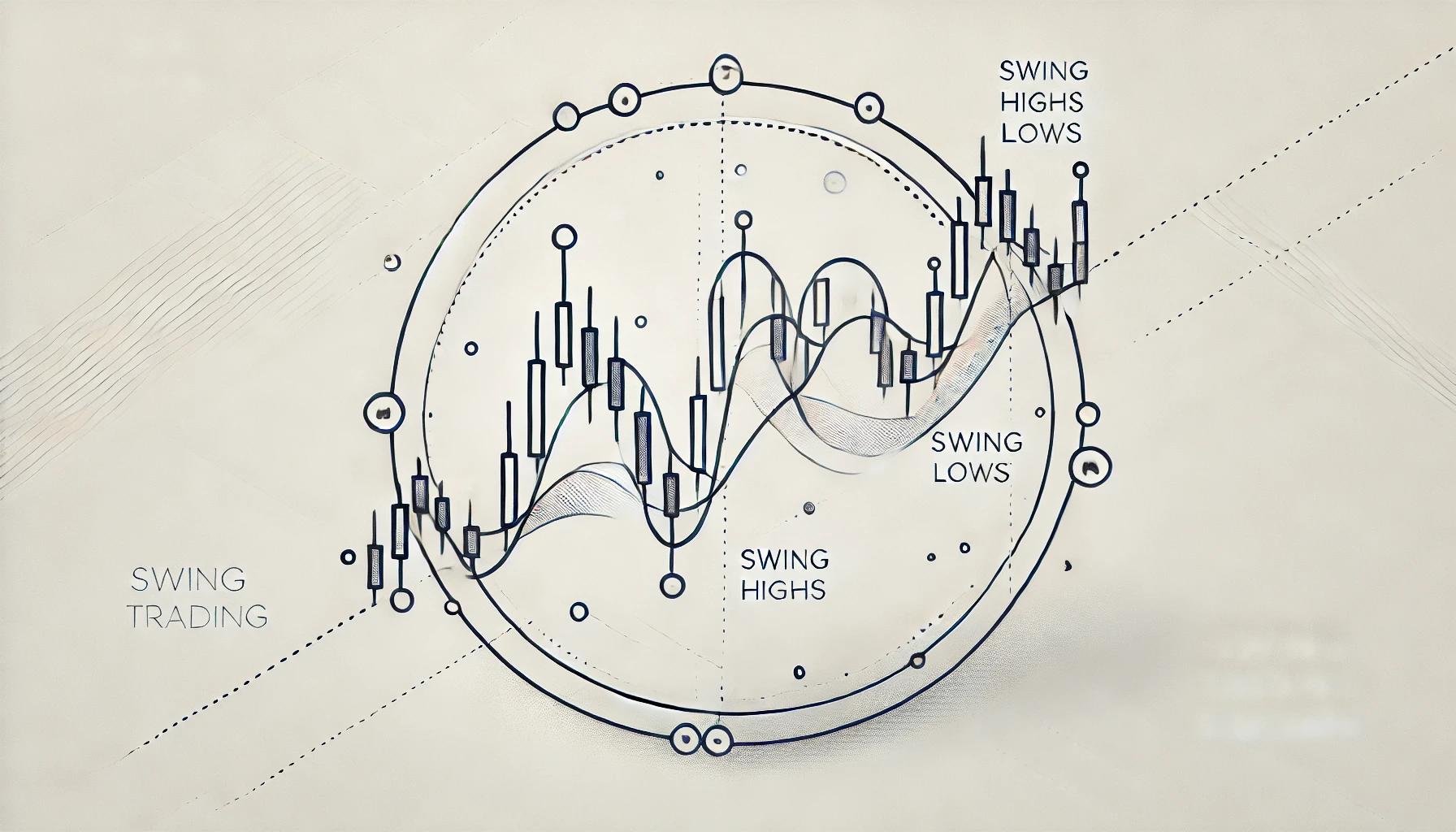
Swing trading is a trading style that seeks to capture gains in a stock (or any financial instrument) over a short to medium time frame. Typically, this time frame ranges from a few days to several weeks. Unlike day trading, which involves rapid-fire buying and selling of securities, swing trading offers a more flexible pace. It allows traders to take advantage of broader price moves and capitalize on market volatility. This guide will dive into the essentials of swing trading, providing insights into key strategies that can help traders succeed.
What is Swing Trading?
Swing trading involves identifying trends and trading positions to profit from expected upswings or downswings. Traders often use a combination of technical analysis, market sentiment, and fundamental data to make informed decisions. Unlike long-term investors, swing traders focus on relatively brief periods of market movement, aiming to maximize returns by entering and exiting trades at opportune moments.
To succeed at swing trading, it’s essential to understand market cycles, risk management, and key technical indicators that help predict price movement. Here, we explore the primary swing trading strategies used by experienced traders.
Key Elements of Swing Trading
1. Time Frame
Swing trading usually involves trades that last from several days to weeks. The time frame chosen by swing traders is crucial as they aim to capture short-term movements. Swing traders avoid the rapid pace of day trading, but they do not hold positions for months or years as long-term investors do.
2. Technical Analysis
Swing traders heavily rely on technical analysis to determine entry and exit points. Technical indicators such as moving averages, Relative Strength Index (RSI), Moving Average Convergence Divergence (MACD), Bollinger Bands, and support and resistance levels are commonly used to make informed trading decisions.
3. Risk Management
Effective risk management is at the core of swing trading. Swing traders usually set stop-loss levels to limit their risk exposure and ensure that a potential loss is contained. The goal is to minimize losses and protect profits as market conditions fluctuate.
Top Swing Trading Strategies
1. Trend Following Strategy
The trend-following strategy is one of the most widely adopted swing trading approaches. Swing traders look for an established trend—whether upward or downward—and aim to capitalize on price movement in the direction of the trend.
Identifying Trends: To identify a trend, traders use moving averages, trendlines, or a combination of both.
Moving Average Crossovers: Moving average crossovers is an effective way to identify trends. When a short-term moving average crosses above a long-term moving average, it generates a buy signal. Conversely, when the short-term moving average crosses below the long-term average, a sell signal is triggered.
This strategy requires patience, as traders must wait for price action to confirm an entry signal based on the trend. Timing is essential, and traders need to be prepared to enter or exit positions as the trend progresses.
2. Breakout and Pullback Strategy
The breakout and pullback strategy involves entering trades as the price moves beyond a specific resistance or support level, signaling a new trend. This strategy works best with volatile stocks or assets that have a history of making sharp movements.
Breakout: A breakout occurs when the price breaks through a resistance level (indicating a potential bullish trend) or falls below a support level (suggesting a bearish trend).
Pullback: Often, after a breakout, the price will pull back to retest the former support or resistance level. Swing traders capitalize on this pullback by entering positions in the direction of the breakout.
This strategy allows traders to enter positions early in a trend, increasing the profit potential. It’s important to confirm breakouts by observing high trading volume to ensure the price move is backed by broad market participation.
3. Reversal Strategy
The reversal strategy is designed to capture gains when a trend is losing momentum and about to reverse. Reversal patterns such as double tops, double bottoms, or head and shoulders are used to identify potential trend changes.
Double Top and Bottom: A double top occurs when a stock’s price peaks twice at a similar level, suggesting that upward momentum is waning. A double bottom indicates a potential reversal from a downtrend to an uptrend.
Head and Shoulders: The head and shoulders pattern is one of the most reliable reversal patterns. A head and shoulders top signals a bearish reversal, while an inverse head and shoulders pattern signals a bullish reversal.
When executing a reversal strategy, it’s crucial to use technical indicators such as RSI or MACD to confirm that a trend reversal is likely.
4. Fibonacci Retracement Strategy
Fibonacci retracement levels are used by swing traders to identify potential reversal levels based on the Fibonacci sequence. Traders use these retracement levels (e.g., 38.2%, 50%, 61.8%) to predict price pullbacks and to identify areas where prices might reverse.
Entry and Exit Points: Swing traders often enter trades at key retracement levels, placing stop-loss orders below the next Fibonacci level to protect against significant losses.
Confirmation: Confirmation from other technical indicators (such as MACD or RSI) can improve the accuracy of this strategy.
Using Fibonacci retracements helps traders time their entries and manage risk by highlighting levels where reversals are more likely to occur.
5. Moving Average Strategy
Moving averages smooth out price data to help traders identify trends over a specified period. Swing traders often use two moving averages—a short-term and a long-term average—to identify buy and sell signals.
Simple Moving Average (SMA): A simple moving average is the average closing price of an asset over a specific time frame. Swing traders use SMAs to gauge the general direction of a trend and identify potential reversals.
Exponential Moving Average (EMA): EMAs give more weight to recent prices, making them more responsive to price changes. This makes EMAs a popular choice for traders seeking to capitalize on shorter-term movements.
When the short-term moving average crosses above the long-term moving average, a buy signal is triggered. When the short-term moving average crosses below the long-term average, a sell signal is generated.
Advantages of Swing Trading
1. Flexible Time Commitment
Swing trading requires less time compared to day trading, as trades are typically held for several days or weeks. This makes swing trading ideal for part-time traders who cannot dedicate their full day to market analysis.
2. Potential for Larger Gains
Swing traders aim to capture larger price movements compared to day traders. The longer time horizon allows traders to benefit from more significant market moves, increasing the potential for larger gains.
3. Less Stressful
Swing trading is generally less stressful than day trading. It allows for more relaxed decision-making, as trades are not rushed within minutes or hours. Traders have time to evaluate market conditions and adjust their positions accordingly.
4. Works in Different Market Conditions
Swing trading strategies can be effective in both trending and range-bound markets. Traders can adopt different approaches depending on whether the market is moving sideways or following a particular trend.
Challenges of Swing Trading
1. Overnight Risk
Since trades are held for several days, swing traders face overnight risk. Events that occur when the markets are closed, such as earnings announcements or geopolitical developments, can result in price gaps when the market reopens, potentially impacting a trader’s position.
2. Emotional Discipline
Swing traders need to maintain emotional discipline and patience. The temptation to overreact to short-term price movements or to exit trades prematurely can hinder success. Sticking to a strategy and adhering to pre-set entry and exit points are essential for consistent profitability.
3. Requires Market Knowledge
Swing trading requires a deep understanding of technical analysis and market behavior. Traders need to know how to read charts, identify patterns, and analyze price movements accurately to make well-informed decisions.
Tools and Indicators for Swing Trading
Swing traders rely on a variety of tools and indicators to analyze market data and make informed decisions:
Candlestick Patterns: Candlestick patterns, such as bullish engulfing and hammer, provide insights into market sentiment and can help identify entry and exit points.
Support and Resistance Levels: Support and resistance levels are key areas on a price chart that indicate where the price might face difficulty moving higher or lower. Identifying these levels helps swing traders plan their trades.
Volume Analysis: Volume analysis is essential in swing trading, as it shows the strength of a price move. Increased volume during a price move indicates strong momentum, while low volume may signal a lack of conviction.
Stochastic Oscillator: The stochastic oscillator helps traders identify overbought and oversold conditions, providing potential buy and sell signals.
Conclusion
Swing trading is a powerful strategy for traders looking to capitalize on short- to medium-term price movements. By combining technical analysis, chart patterns, and indicators, traders can identify opportunities and profit from both trending and range-bound markets. Swing trading offers flexibility, lower stress, and the potential for substantial gains compared to day trading or long-term investing.
To become a successful swing trader, it’s essential to remain disciplined, manage risk effectively, and continue learning about market behavior. By mastering strategies such as trend following, breakouts, reversals, and Fibonacci retracements, traders can enhance their chances of success in the ever-changing financial markets.