
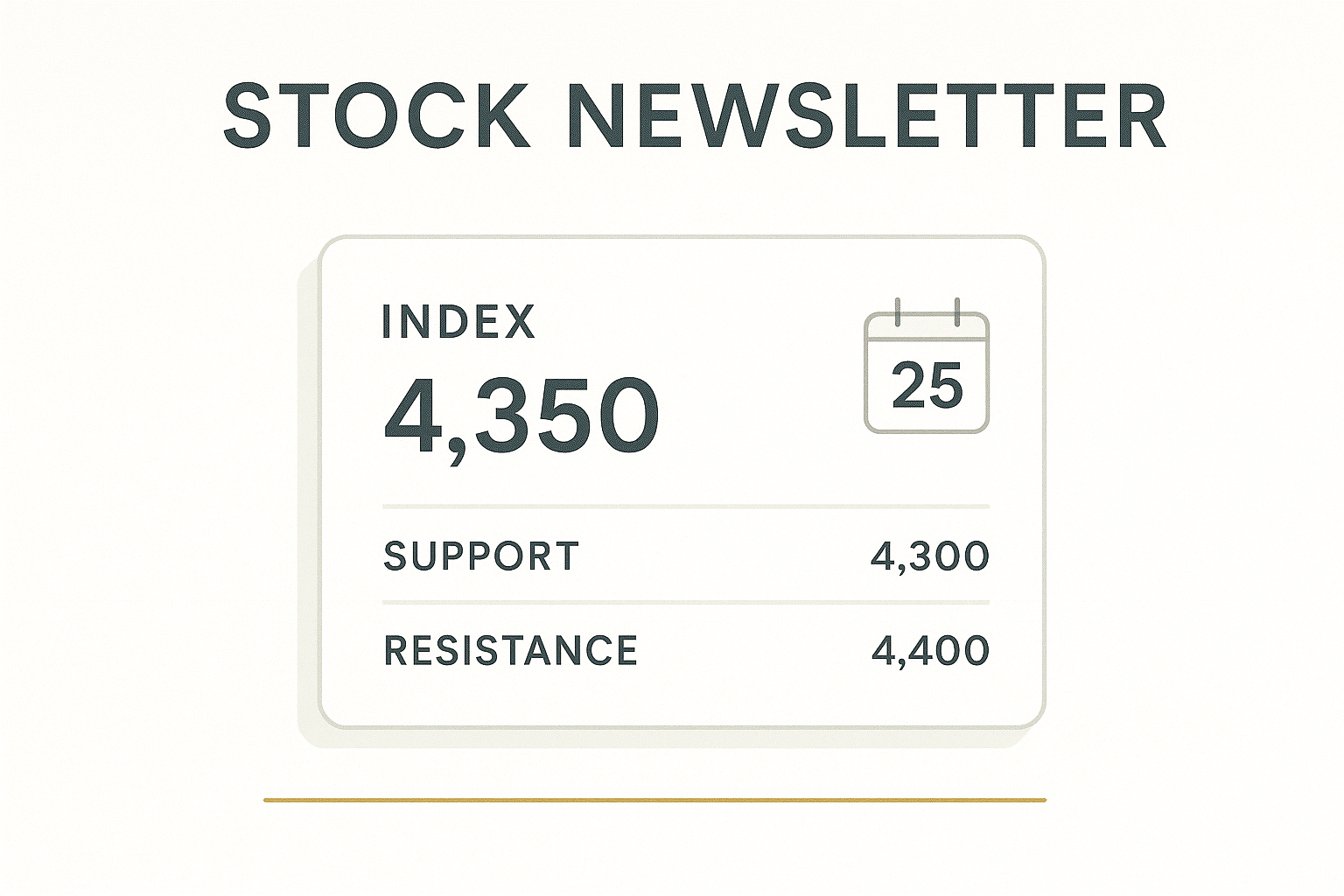
A stock newsletter should do more than list tickers. It should turn market noise into usable guidance: clear levels, scenario planning, and risk controls you can apply today. This page explains what our stock newsletter covers, how it is structured, and how to use it with discipline in 2025.
What Is a Stock Newsletter
A curated daily note that distills the trading session into key levels, directional bias, and risk management. It prioritizes clarity and repeatability over hype so you can make decisions quickly and consistently.
- Actionable: Specific levels and scenarios
- Structured: Same layout every issue
- Disciplined: Entries, exits, and risk ranges
Who It’s For
- SIP investors who want context to stay on plan
- Traders who prefer levels, not noise
- Allocators who need a quick top-down view before decisions
Coverage Universe
| Bucket | Examples | Notes |
|---|---|---|
| Indices | S&P 500, Nasdaq 100, Dow | Market tone and trend context |
| Leaders | High-liquidity large caps | Clear levels and event tracking |
| ETFs | Sector and factor ETFs | Rotation and breadth view |
| Macro | Gold, Silver, Oil (as context) | Risk appetite and regime hints |
What’s Inside Each Issue
| Section | What You Get | How to Use |
|---|---|---|
| Market Snapshot | Trend bias, breadth tone | Align position size and expectations |
| Key Levels | Supports, resistances, pivots | Plan entries, partials, and exits |
| Setups | Directional and range scenarios | Pick structures that fit your rules |
| Event Map | Earnings and macro calendar | Adjust risk around catalysts |
| Risk Notes | IV context and ranges | Size positions and avoid outsized risk |
Delivery and Cadence
Delivered with a consistent pre-market brief. Intraday or end-of-day add-ons may be issued when conditions warrant. The layout stays the same so you know exactly where to look.
How to Use the Newsletter
- Set intent: Define bias and time frame before the open.
- Mark levels: Plot supports and resistances on your chart.
- Choose structure: Shares or options per your rules and IV context.
- Size risk: Fix max loss per trade and respect it.
- Review: Journal outcomes and adjust playbook, not impulse.
Sample Issue Outline
- Headline view in one sentence
- Index levels and bias
- Three leader tickers with setups
- Sector rotation and breadth note
- Event map and risk notes
Risk Management Principles
- Position size first; entry second
- Let plans drive trades, not headlines
- Cut losers quickly; scale winners deliberately
- Reduce risk into binary events unless intended
FAQs
How is a stock newsletter different from stock tips?
It provides structured context, levels, and scenarios so you can apply your own rules, not one-off calls.
Does it include intraday updates?
Pre-market is standard. Intraday or end-of-day add-ons may be issued when conditions warrant.
How should I measure performance?
Judge execution quality and risk-adjusted outcomes over full cycles, not single days. Keep a journal to track consistency.
Disclaimer
This material is for education and general information. It is not investment, tax, or legal advice. Markets involve risk. Consider your circumstances and consult a qualified professional.