
In 2026, many investors will not lose money because they missed a trade. They will lose money because they absorbed too much information without a method to process it. The modern market now produces more commentary than analysis, more reaction than reflection, and more “explanations” than evidence. News arrives in fragments, spreads in seconds, and often reverses before most people have time to verify it. At the same time, prices move faster than narratives, which makes the investor feel permanently late.
This overload creates a dangerous illusion. If you consume enough headlines, watch enough clips, and follow enough accounts, you start to believe you are informed. Yet what you actually accumulate is emotional pressure. The more you know, the more you feel you must act. In volatile years, that pattern becomes expensive. The market does not reward constant responsiveness. It rewards correct positioning, disciplined timing, and the ability to ignore irrelevant stimuli.
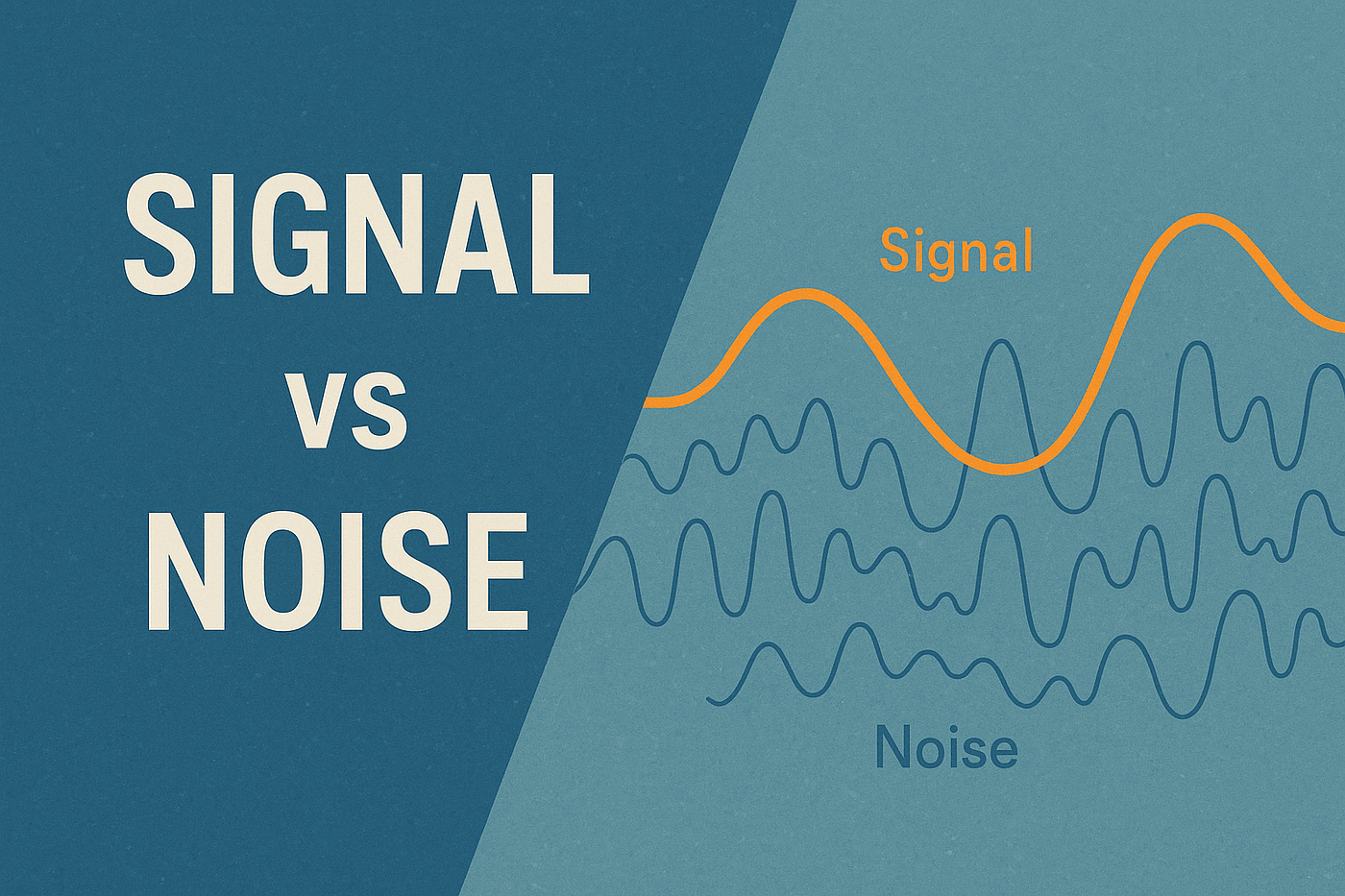
A smart investor in 2026 will not try to “know everything.” They will build a filtering system that separates information that changes the probability of an outcome from information that simply changes the mood of the crowd. That is the real battle of signal versus noise.
Why 2026 Makes the Problem Worse
Information overload is not new, but 2026 amplifies it because market structure and media structure now feed each other. Short-form content thrives on urgency. Algorithms prioritize engagement, and engagement rises when fear, outrage, or certainty is triggered. Markets, meanwhile, swing rapidly in response to liquidity conditions, positioning, and sudden shifts in risk appetite. This combination creates a loop: noise moves sentiment, sentiment moves flows, flows move price, and price becomes the justification for more noise.
Another reason 2026 feels louder is that macro narratives are more complex. Investors are navigating policy uncertainty, geopolitical risk, shifting growth expectations, and changing inflation dynamics, all while rate sensitivity remains high across risk assets. In that environment, many headlines are not truly informative. They are interpretations of interpretations. They are commentary on expectations about what policy might do, rather than facts about what the system is doing right now.
The investor who does not control this input becomes vulnerable to what can be called “headline whiplash.” One day brings optimism, the next day brings fear, and the portfolio becomes a mirror of the emotional cycle instead of a reflection of a plan. The goal in 2026 is not to avoid volatility. It is to avoid being manipulated by volatility.
What “Signal” Really Means in Markets
Signal is not information that sounds important. Signal is information that meaningfully changes the expected distribution of future outcomes. That is the simplest definition. If the information does not change your probabilistic view, it is likely noise. If it changes your probability, your time horizon, or your risk limits, it deserves attention.
This is why many investors misunderstand signal. They treat frequency as importance. They think that if something is repeated across multiple channels, it must matter. Yet repetition often reflects distribution incentives, not relevance. Markets do not respond to the loudest story. They respond to the intersection of liquidity, positioning, and perception at key inflection points. Signal helps you identify those points. Noise keeps you chasing explanations after the move has already happened.
In practical terms, signal usually appears in fewer places than people expect. It is often visible in the behavior of price itself, in the structure of participation, in the timing of liquidity shifts, and in how markets respond to news rather than the news content alone. When good news stops lifting a market, that is signal. When bad news stops breaking a market, that is signal. When volatility rises even without headlines, that is signal. These are not emotional observations. They are structural clues.
How Noise Disguises Itself as Signal
Noise rarely arrives as obvious nonsense. It arrives dressed as certainty. It arrives with confident tone, urgent timestamps, and clean explanations. In 2026, much of the noise will come from three sources.
First, predictive content that is not accountable. Many forecasts are designed to be shareable, not testable. They provide dramatic direction without risk levels, without time horizons, and without invalidation points. This content feels powerful because it offers clarity, but it creates fragile decision-making because it does not offer structure.
Second, narrative stacking. This occurs when one story is used to explain multiple price moves across different assets. It feels coherent, but it is often retrofitting. When a single narrative explains everything, it often explains nothing.
Third, over-interpretation of short-term data. Weekly prints, single speeches, isolated leaks, and partial reports become major drivers in commentary ecosystems. Markets may react briefly, but the investor who treats every print as a trend ends up constantly repositioning. In a volatile year, that becomes a cycle of buying late and selling early.
Noise also thrives because it is socially rewarded. People gain attention by reacting faster than others. Yet speed without verification produces fragile conviction. The investor must learn to trade the market, not the timeline.
The Cost of Confusing Activity with Progress
The most dangerous habit in an overloaded market is the belief that frequent decisions equal control. Many traders and investors become active not because opportunity is high, but because anxiety is high. They open apps repeatedly, check charts repeatedly, and refresh news repeatedly. This creates a sense of “doing something,” but it is often a form of emotional regulation, not strategy.
In 2026, where volatility can punish impatience, this habit becomes a consistent drag on performance. Not only do transaction costs add up, but decision fatigue grows. Decision fatigue makes you accept weaker setups, ignore your own rules, and rationalize actions that you would reject if you were calm.
Filtering is not passive. It is a performance skill. The investor who filters well will trade less, but with more confidence. They will hold better positions longer. They will avoid the worst whipsaws. Over a year, that advantage is large.
A Practical Framework to Filter Signal from Noise
You do not need a complicated model to filter better. You need repeatable questions that create discipline. When information appears, run it through a structured filter before it reaches your portfolio.
Start by asking whether the information is a fact, an interpretation, or an opinion. Facts are events that can be verified. Interpretations are explanations of facts. Opinions are views about what should happen next. Most noise is interpretation and opinion, often presented as fact.
Next, ask whether the information affects your time horizon. Many headlines matter for traders but do not matter for investors, and many long-term themes matter for investors but are useless for short-term trading. If you mix these horizons, you create confusion.
Then ask whether the information changes risk, not just direction. Directional calls are cheap. Risk awareness is rare. Signal usually forces you to adjust risk limits, not just bias.
Finally, ask whether price is confirming the information. This does not mean price must immediately move in the expected direction. It means you should observe whether the market treats the information as important. Sometimes the most powerful signal is non-reaction. When a market ignores a headline that “should” move it, it reveals underlying positioning.
The Only Inputs That Deserve Daily Attention
In an overloaded market, the best system reduces daily inputs to the essentials. Too many inputs create false urgency. In 2026, daily attention should go to information that directly shapes market mechanics and positioning.
Liquidity conditions remain the core driver of large moves. You do not need to follow every story. You need to follow whether liquidity is expanding or contracting, and whether risk appetite is broad or narrow. Broad participation, stable credit conditions, and orderly volatility often support risk-taking. Narrow participation, stressed credit, and rising volatility often demand caution.
Market breadth and leadership also carry strong signal. If indices rise while fewer stocks participate, that often indicates fragility. If leadership shifts rapidly across sectors without stability, it often reflects confusion and short-lived flows. In contrast, stable leadership with healthy rotation often indicates a stronger underlying trend.
Volatility structure is another essential input. Volatility is not only a number. It is a regime indicator. When volatility rises and stays elevated, markets behave differently. Stops need more room. Position sizes need adjustment. Timeframes need recalibration. Many investors fail in volatile years because they keep the same habits from calm years.
These daily inputs do not require constant monitoring. They require consistent review. That difference matters.

Annual Letter 2026 by Rajeev Prakash Agarwal
Markets are moving into a phase where information itself has become a source of risk. Liquidity is uneven, volatility is no longer episodic, and price action is increasingly driven by positioning rather than narratives. In this environment, reacting to every headline creates confusion instead of clarity.
The Annual Letter 2026 by Rajeev Prakash Agarwal is structured for this exact challenge. It provides a disciplined framework to separate signal from noise by combining macro cycle analysis, investor psychology, and planetary timing that has historically coincided with shifts in global capital behavior. Rather than encouraging constant reaction, the approach emphasizes context, probability, and timing, helping investors recognize meaningful transitions early and protect capital when uncertainty dominates market direction.
How to Build a Personal “Information Diet” for 2026
An investor should treat information the way an athlete treats nutrition. More is not better. The right amount is better. An information diet is not censorship. It is optimization.
Begin by reducing your sources, not expanding them. Too many sources often produce contradictory views, and contradiction without structure creates paralysis. Select a small set of sources that focus on primary data and clear reasoning. You can still explore broader commentary, but treat it as optional, not essential.
Next, separate consumption windows from decision windows. Many investors make decisions while consuming content. That is like driving while someone shouts directions in your ear. Create a routine where you review information at fixed times, then step away and decide with clarity.
Also, avoid the trap of always needing an explanation. Markets do not always give clean reasons in real time. If you demand narrative certainty, you will accept low-quality explanations. It is better to say, “I do not know yet,” and wait for confirmation than to act based on a story that collapses tomorrow.
Over time, your brain becomes calmer. Your decisions become more intentional. That is the hidden advantage of filtering.
The Role of Astrology in Filtering Market Noise
For investors who use financial astrology as part of their framework, 2026 offers an additional layer of filtering that can reduce emotional reactivity. Astrology, when used responsibly, does not replace data. It helps with timing awareness, cycle recognition, and psychological discipline. It offers a structured lens to observe when crowd behavior tends to intensify and when markets become more vulnerable to exaggerated moves.
Volatility often rises when collective psychology becomes unstable, and many traders can feel that shift before they can measure it. Planetary cycles, especially those associated with risk appetite and fear, can be used as a calendar to increase caution during historically sensitive windows. The benefit is not magical certainty. The benefit is preparedness. When you know a period may be prone to emotional extremes, you reduce leverage, tighten decision rules, and wait for better confirmation.
This approach works best when astrology is integrated with market structure signals. If both the cycle lens and the price behavior lens point toward instability, you treat that as higher probability. If they conflict, you reduce conviction. That is how a probabilistic investor uses timing tools without becoming dependent on prediction.
How Institutions Filter Noise Differently
Large investors do not have the luxury of reacting to every headline. Their size forces discipline. Because they cannot move in and out quickly without impact, they focus on regime, liquidity, and risk-adjusted positioning. They build filters into process.
Institutions also use “invalidation points.” This means they define what would prove their thesis wrong before they enter. Retail investors often do the opposite. They enter first and build the story later. In volatile years, the institutional approach is more resilient.
Another institutional habit is to separate narrative from exposure. They might acknowledge a story but choose not to act until the market confirms. They might hedge rather than exit. They might reduce exposure without abandoning the entire view. These are risk management decisions, not emotional decisions. A retail investor can copy this mindset even with a smaller account.
When you adopt this approach, you stop trying to win every day. You start trying to survive every regime. That shift is what makes long-term performance possible.
The Discipline of Waiting for Confirmation
In an overloaded market, waiting is not laziness. Waiting is skill. Confirmation reduces the risk of being trapped by false signals. Confirmation can be price holding key levels, volatility stabilizing, breadth improving, or leadership becoming consistent. The specifics depend on the asset, but the principle is constant.
Many investors fear missing out more than they fear being wrong. In 2026, that fear will be tested because sharp moves can occur quickly. Yet the investor who chases every sharp move will experience repeated whipsaws. The investor who waits for confirmation will miss some early entries but capture more reliable trends.
This is where filtering becomes protective. The filter delays action until information earns the right to influence the portfolio. That alone can transform results.
A Simple Way to Know You Are Consuming Too Much Noise
If your view changes multiple times per week, you are likely overloaded. If you feel urgency after reading updates, you are likely overloaded. If you cannot explain your position in calm, simple language, you are likely overloaded. If you have more opinions than rules, you are likely overloaded.
The solution is not to become uninformed. The solution is to become selective and structured. Your mind is part of your risk management system. In volatile years, mental clarity is capital.
Conclusion: The Investor Who Filters Wins the Year
2026 will reward discipline over intensity. The market will continue to produce noise, and the internet will continue to amplify it, but your portfolio does not need to respond to that environment. It needs to operate within a framework. When you separate facts from interpretations, align information with time horizon, adjust risk with regime, and wait for confirmation, you shift from reactive trading to strategic decision-making.
Signal is usually quiet. Noise is usually loud. In 2026, the investor who learns to recognize that difference will not only protect capital but also gain the confidence to act decisively when real opportunity appears.