
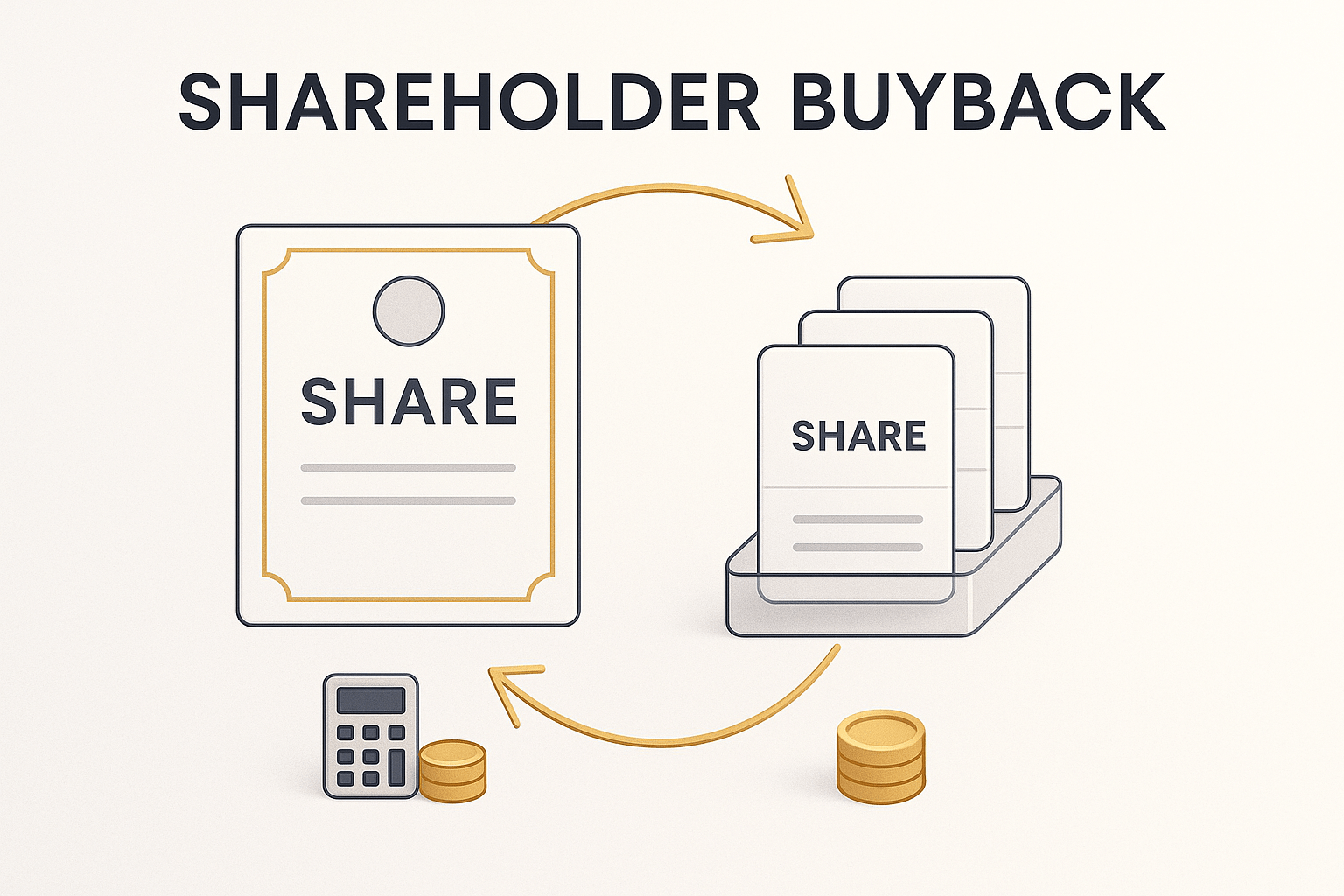
A shareholder buyback returns capital by reducing shares outstanding. When price is sensible and core investment needs are met, buybacks can lift per-share value and improve capital efficiency. This guide helps you evaluate programs clearly in 2025.
What Is a Shareholder Buyback?
The company purchases its own shares in the market or via a tender and holds them as treasury stock or cancels them. With fewer shares outstanding, each remaining share represents a larger ownership slice.
Why Companies Execute Buybacks
- Per-share focus: Lift EPS/ownership when shares trade below value
- Flexible payout: Easier to dial than dividends
- Offset dilution: Counter employee stock issuance
- Signal: Confidence in long-term value
Effects on Per-Share Metrics
| Item | Direction | Interpretation |
|---|---|---|
| EPS | ↑ if repurchase below intrinsic value | Uplift is real only if price < fair value |
| Book value/share | ↑ or ↓ | Accretive when price < book (context matters) |
| ROE / ROIC | Often ↑ | Smaller equity base; verify operating gains |
| Leverage | May ↑ | Debt-funded buybacks raise risk |
Buyback Methods at a Glance
| Method | How It Works | Pros | Cons |
|---|---|---|---|
| Open-Market | Gradual purchases in market | Flexible; low disruption | Timing risk; slower impact |
| Tender Offer | Fixed amount at a premium | Fast; clear signal | Cash-intensive; may overpay |
| Dutch Auction | Shareholders bid; clearing price set | Price discovery | Complex; costs |
| Accelerated (ASR) | Large block via bank; later true-up | Immediate EPS effect | Opaque; potentially higher cost |
When Buybacks Create Value
- Core reinvestment needs are fully funded at attractive ROIC
- Balance sheet remains strong (net debt prudent; coverage > 5×)
- Repurchase price is below conservative intrinsic value
- Share count declines net of stock-based compensation
Risks and Red Flags
| Red Flag | Why It’s Risky | What to Check |
|---|---|---|
| Debt-funded repurchases | Leverage and interest burden rise | Debt/EBITDA, coverage, covenants |
| Buying at peak multiples | Value destruction risk | Valuation vs history/peers & FCF |
| Heavy ongoing issuance | No real share count reduction | Net buyback (repurchases − issuance) |
| EPS-linked incentives | Metric gaming risk | Comp plan details; quality of earnings |
Metrics to Track
- Buyback Yield: Repurchases ÷ market cap (last 12m)
- Net Buyback Yield: (Repurchases − issuance) ÷ market cap
- Total Shareholder Yield: Dividends + net buybacks
- Diluted Shares Trend: 3–5y path of share count
Investor Checklist: Judge a Program
Open checklist
- Is reinvestment in the core already funded?
- Will leverage remain conservative after buybacks?
- Is the price below a prudent value range?
- Will share count fall net of stock grants/ESOP?
- Is authorization size meaningful vs FCF?
- Is execution valuation-aware (not mechanical)?
- Is capital allocation hierarchy clearly explained?
Taxes and Operational Notes
Tax and disclosure rules vary by country. Some markets tax buybacks or specify blackout windows and safe-harbor limits. Review filings and local rules; consult a qualified professional./cus
Disclaimer
Education only—this is not investment, tax, or legal advice. Consider your circumstances and consult a qualified professional.