
Safe-Haven Assets During Market Stress
Market stress is not a theory. You feel it in the speed of the candles, the gap-down opens, the intraday reversals, the headlines that change every hour, and the way correlations suddenly shift. In normal phases, portfolios behave like a well-diversified basket. In stress phases, they often behave like a single trade. That is the hidden danger. When fear rises and liquidity becomes selective, many assets that usually move independently start moving together, and the entire portfolio begins to respond to the same risk switch.
This is exactly where the idea of safe-haven assets becomes practical rather than philosophical. A safe haven is not simply “something that goes up.” A safe haven is an asset that either holds value better than risk assets, offsets losses when equities fall, or gives you a liquid place to rotate into without being forced to sell at the worst moment. In real trading conditions, safe havens are less about perfection and more about probabilities. They are tools for staying solvent, staying calm, and staying in the game long enough to benefit when the cycle turns back to opportunity.
Metals, especially precious metals, sit at the heart of that conversation. Gold has centuries of monetary history behind it. Silver behaves like a hybrid between money and industry. Copper often acts like a macro sensor for growth, industrial demand, and the China cycle. Platinum and palladium carry their own supply dynamics and industrial dependencies. The key is knowing what kind of stress you are in and what kind of metal exposure fits that stress.
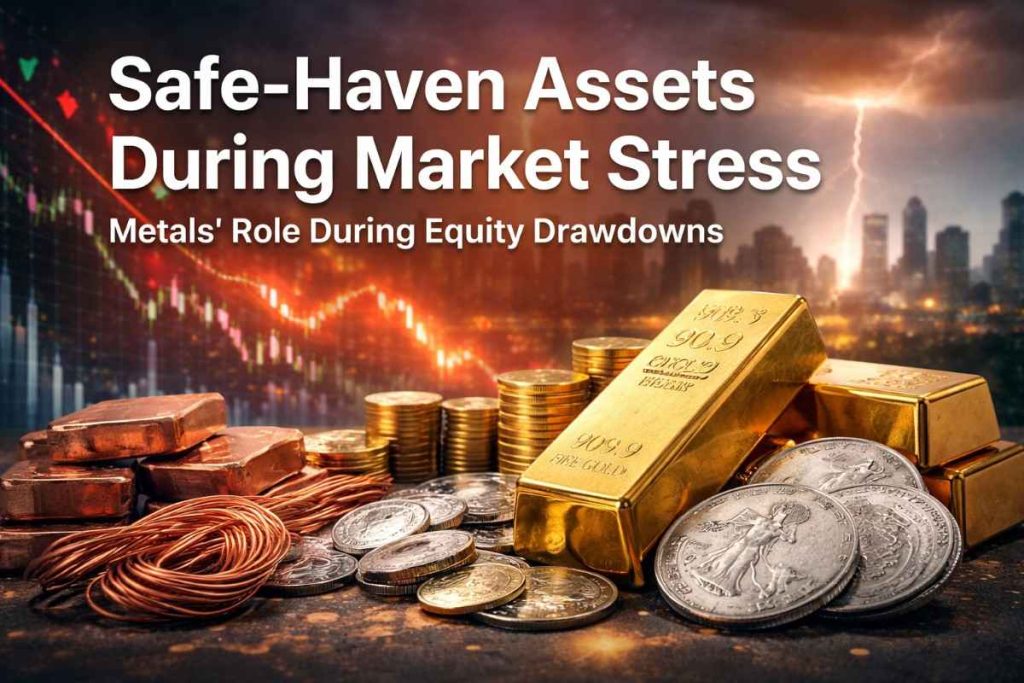
This guide is designed as a WordPress-ready, long-form landing page article. It explains how metals function during equity drawdowns, why they sometimes fail to protect in the first wave of panic, and how a cycle-and-signal approach can help you use them with better timing and less emotion.
What actually happens during equity drawdowns
Equity drawdowns rarely unfold in a clean, staircase pattern. More often, they move through phases. The first phase is disbelief, where dips get bought because the prior trend trained investors to expect recovery. The second phase is recognition, where bad news stops getting ignored and the market begins to reprice growth, earnings, or risk premiums. The third phase is liquidation, where investors sell what they can, not what they want. The fourth phase is exhaustion and stabilization, where volatility remains high but selling pressure starts to fade.
Safe-haven performance depends heavily on which phase you are in. In the liquidation phase, even gold can get hit temporarily because funds raise cash, margin calls force selling, and “risk parity” or leveraged strategies reduce exposure across multiple asset classes. In the stabilization and policy-response phases, gold often reasserts its safe-haven identity, especially if real yields fall, the currency weakens, or central banks signal easier liquidity.
This is why many people misunderstand safe havens. They expect a straight hedge in the first shock, but the market’s mechanics do not always allow it. The better framework is to treat metals as part of a defensive rotation plan, not as a magical shield.
The safe-haven spectrum
When people say “safe haven,” they often mean one of four things, and the difference matters.
The first meaning is capital preservation. You want an asset that declines less than equities when equities fall. The second meaning is inverse protection. You want an asset that tends to rise when equities fall. The third meaning is liquidity shelter. You want an asset you can sell easily without huge slippage, so you can rebalance or meet obligations. The fourth meaning is psychological protection. You want a position that reduces panic so you do not sabotage your long-term plan.
Gold most commonly fits capital preservation and, in some environments, inverse protection. High-quality sovereign bonds often fit inverse protection, but not always, especially when inflation is the main stress. Cash fits liquidity shelter, but not purchasing power preservation. Silver can preserve value over the full cycle but can behave like a risk asset during sharp shocks because of its industrial link.
Understanding which kind of protection you need lets you choose the right metal exposure and the right timing approach.
Why gold has a unique status during market stress
Gold’s role during equity drawdowns comes from its monetary identity. It has no default risk. It is not a claim on a company’s earnings. It is not a promise to pay. It is a real asset with global acceptance and deep liquidity. That matters most when investors doubt paper assets, fear systemic fragility, or anticipate aggressive central-bank responses.
Gold tends to benefit when real interest rates fall, when the currency weakens, when geopolitical risk rises, and when market participants begin to prioritize protection over growth. In many drawdowns, the best gold performance arrives after the initial panic, once policy expectations shift toward rate cuts, liquidity injections, or fiscal support.
Another important driver is central-bank behavior. When central banks are net buyers of gold, it supports a long-term bid under the market and reduces the probability of deep, prolonged drawdowns in gold itself. When central banks turn restrictive and real yields rise, gold can struggle even if equities are volatile. This is why you must connect gold’s safe-haven story to the rates story, not only to headlines.
Market Timing for Savvy Retail Investors
Imagine having an extra edge in the stock market, a way to make informed decisions based on more than just the daily news and company reports. That’s where AstroDunia comes in. We use a unique blend of astrology and technical analysis to provide you, the retail investor, with valuable insights to
enhance your investment strategy.
When gold fails as a hedge
Gold can fail as a hedge in short windows, and it usually happens for one of three reasons.
The first reason is forced liquidation. When leveraged positions unwind, investors sell liquid holdings to meet margin calls. Gold is liquid, so it gets sold. The second reason is a surge in the US dollar. If stress drives a rush into the dollar as the world’s reserve currency, dollar strength can temporarily pressure gold. The third reason is rising real yields. If markets believe policy will stay tight or inflation will collapse faster than nominal yields fall, real yields can rise, which is typically a headwind for gold.
These episodes do not invalidate gold’s safe-haven role. They simply remind you that safe-haven behavior is regime-dependent. The solution is not to abandon gold. The solution is to use timing signals and cycle context so you are not relying on hope in the most chaotic phase.
Silver during market stress
Silver often attracts investors who want a more volatile, higher-beta version of gold. That can work wonderfully in the recovery phase after a drawdown, especially when liquidity returns, real yields soften, and risk appetite improves. However, silver can be less reliable in the first phase of panic because industrial demand expectations drop and because silver’s volatility makes it vulnerable to rapid de-risking.
This creates a practical approach. If your goal is pure defence during equity drawdowns, gold is usually the cleaner tool. If your goal is to position for the rebound and participate in the recovery once stress begins to normalize, silver can become more attractive, especially when signals confirm that the liquidation phase has likely peaked.
Silver also responds strongly to the gold-to-silver ratio, which is often a useful macro indicator. In deep stress, that ratio can rise as investors prefer gold’s monetary stability. In recoveries, the ratio often compresses as silver outperforms.
Copper and the “growth stress” signal
Copper is often described as “Dr. Copper” because it tends to reflect economic health. In equity drawdowns driven by growth fears, recession risk, or China-related stress, copper often weakens. That makes it less of a safe haven and more of a regime indicator. Copper helps you diagnose whether the stress is primarily growth-related, inflation-related, or liquidity-related.
When copper falls hard while gold holds firm, the market is often shifting into a defensive posture where growth expectations are deteriorating but monetary hedging demand is rising. When copper and gold rise together, it can reflect a weaker currency, strong commodity complex, or a reflation pulse. When copper rebounds before equities stabilize, it can sometimes be an early sign that the market is beginning to price recovery.
For a metals-and-commodities landing page, copper is valuable because it helps traders avoid a common mistake: treating all metals as one trade. During drawdowns, they are not.
If you are a long term investor
The Annual Letter 2026 is a long-term guide to understanding big-picture market dynamics. It explains multi-year macro cycles, liquidity shifts, and how sector rotations evolve as global conditions change. Rather than reacting to short-term noise, it offers a disciplined framework to interpret economic transitions and stay focused on long-term compounding.
Platinum and palladium during equity drawdowns
Platinum and palladium tend to be more influenced by supply constraints, industrial demand, and sector-specific dynamics such as automotive demand and emissions standards. They can behave defensively in certain inflationary episodes, yet they are less consistent as crisis hedges compared with gold.
Platinum can sometimes act as a value rotation within precious metals, especially when it is historically cheap relative to gold and when demand narratives improve. Palladium, with its tighter supply history, can move sharply but is often less reliable for defensive allocation during broad market stress.
The practical takeaway is that platinum-group metals may fit an opportunistic or relative-value strategy more than a core safe-haven strategy.
The miners problem
Many investors buy gold miners expecting them to behave like leveraged gold. Sometimes they do. During stable uptrends in gold, miners can outperform because margins expand and capital flows into the sector. During equity drawdowns, miners can behave like equities because they are equities. They carry operational risk, jurisdiction risk, cost inflation risk, and general risk-off selling pressure.
This means miners can underperform gold in the worst part of a selloff even if gold is holding up. In the later phase, when markets stabilize and gold remains supported, miners can become powerful recovery vehicles. The key is to avoid using miners as your primary defence tool. Use them when the cycle shifts from protection to opportunity and signals confirm improving risk conditions.
Inflation stress versus recession stress
Equity drawdowns come in different flavours. In inflation stress, equities fall because costs rise, margins compress, and central banks tighten. In recession stress, equities fall because demand collapses, earnings fall, and defaults rise. In liquidity stress, equities fall because funding breaks and leverage unwinds.
Gold often performs best when the market expects easier policy, weaker real yields, or currency debasement fears. In pure recession stress, gold can still perform well, but the path may include choppy liquidation moves. In inflation stress with rising real yields, gold can struggle until the tightening cycle peaks or until inflation expectations rise faster than yields.
Silver tends to lag gold in recession shocks and outperform later. Copper tends to suffer most in recession shocks. Understanding which stress regime you are in helps you choose whether your metals exposure should be primarily gold-focused defence or a broader metals mix aimed at later-cycle recovery.
Policy Intervention and the Second-Order Safe-Haven Effect
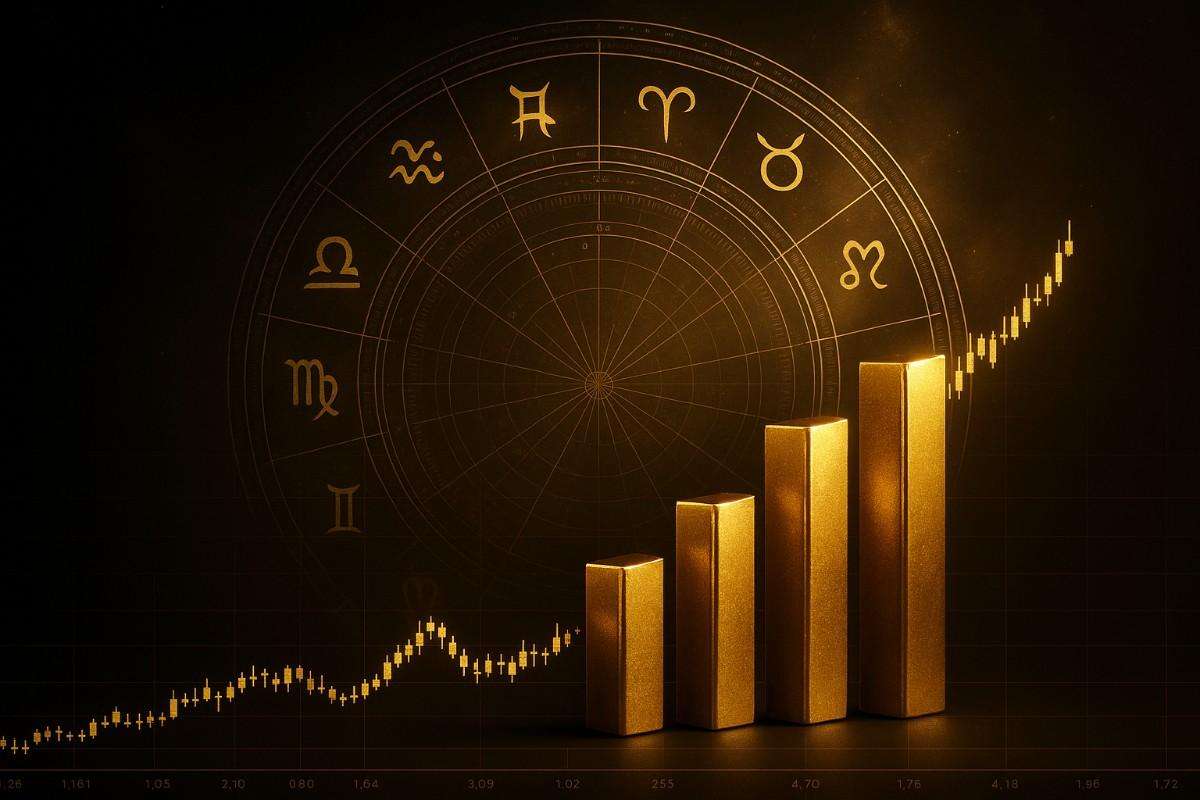
The most powerful support for safe-haven metals often emerges not at the height of fear, but immediately after policy makers respond to it. Central bank communication, emergency liquidity tools, rate-cut expectations, and fiscal coordination tend to arrive after markets have already absorbed the initial shock. At this stage, investors begin shifting from survival mode to capital preservation and future positioning.
Why the US dollar can dominate metals in a crisis
Because metals are typically priced globally in US dollars, currency moves can dominate short-term price action. In global risk-off episodes, the dollar often strengthens as capital seeks liquidity and safety. That can pressure gold and silver in dollar terms even if they are holding value in other currencies.
This creates an important tactical insight for international traders and investors. Sometimes the best safe-haven function of gold shows up more clearly in local currency terms than in dollar terms. If your portfolio is not dollar-based, you must evaluate gold’s protective role in your own base currency.
Even for dollar-based traders, tracking the dollar trend and real yields is often essential for timing metals entries and exits during stress.
Real yields and why they are the hidden driver
Real yields are a key driver for gold because they represent the opportunity cost of holding a non-yielding asset. When real yields fall, gold becomes relatively more attractive. When real yields rise, gold often faces headwinds.
During equity drawdowns, real yields can move in complex ways. In recession fear, nominal yields may fall, inflation expectations may fall, and real yields can either rise or fall depending on the balance. In policy-pivot phases, real yields often fall as markets anticipate rate cuts or financial easing. That is often when gold’s safe-haven identity shines the most.
For a cycle-based approach, watching the trend of real yields can serve as a confirmation tool for whether gold is likely to be a reliable hedge in the current environment.
Testimonials
Discover what our satisfied customers have to say about their experience with us. Read our testimonials from people just like who have benefited from our services.
Market singals have helped me to make quick and informed decisions for trades in stock market. resulting in significant profits for my portfolio. The team is highly professsional and always available to answer your questions and provide the best customer service.
SK Jhunjhunwala
Investor based in Mumbai
I have been using the astrodunia’s services for over 4+ years now and have been extremely impressed with level of experties and precions they bring to the table. Their live market signals have helped me make quick and informed decisions.
N. Patel
Pennsylvania , US
Excellent service. This is undoubtedly the best market forecast newsletter that i have ever subscribed. None of the other newsletter are anywhere close to this terms of accuracy. Please continue with the good work !
Withheld
Fixed income trader with a required foreign bank in asia
i am an entrepreneur based in Australia and have been subscriber of astrodunia services from the past two years.i have found their NewsLetter , Live Signals and Annual Letter to be incredibly valueable.
Z. Irani
Australia
How “signals” improve safe-haven performance
The biggest practical problem with safe-haven positioning is timing. Investors often buy protection late, after the drawdown is already advanced. Or they buy too early and lose patience when the hedge does not work immediately. Signals help solve both problems by converting fear into a process.
A robust signals approach for metals during market stress often combines price structure, momentum, volatility, and confirmation across related markets. You want to know when gold is actually behaving like a haven, not when you want it to. You want to know when silver is transitioning from risk-like behaviour to recovery-like behaviour. You want to know when miners are shifting from being dragged by equities to being pulled by gold.
In practical terms, signals can guide three decisions. They can guide when to initiate defensive exposure, when to add, and when to reduce after the stress fades. The value is not in predicting the headline. The value is in managing exposure through the phases of the drawdown.
Early warning signs that stress is building
Before equities break hard, markets often show subtle warning signs. Volatility starts to rise even when prices are flat. Credit spreads begin to widen. Defensive sectors start to outperform. Liquidity-sensitive assets begin to lag. Breadth deteriorates, meaning fewer stocks are carrying the index.
In metals, early warning often shows up as quiet relative strength in gold compared with equities, especially when growth-sensitive metals such as copper begin to weaken. Another sign is when gold holds up even while the dollar is strong, which can indicate unusually strong hedging demand.
These are not guarantees. They are probabilities. The advantage is that you can begin to prepare rather than react. Preparing can mean increasing cash, reducing leverage, or initiating a modest gold allocation that can be scaled if signals strengthen.
The first shock: why cash can beat everything for a moment
In the first sharp shock, cash can be the best safe haven simply because it does not move and it gives you flexibility. That may sound obvious, yet it is often ignored. In liquidation, the market punishes complexity. Investors who rely on perfect hedges can get surprised when everything sells off together.
This is why a balanced defence plan often includes both cash and gold, not one or the other. Cash handles immediate liquidation risk. Gold handles the longer stress cycle, especially if policy response and currency dynamics shift in gold’s favour.
The practical approach is to treat cash as your shock absorber and gold as your regime hedge.
Position sizing and the safe-haven trap
Safe-haven positioning becomes dangerous when it is oversized. If you over-allocate to gold or silver and the market stabilizes quickly, you can underperform and lose confidence. Then you may abandon the hedge just before the next stress phase arrives.
The goal is not to create a portfolio that never feels drawdowns. The goal is to create a portfolio that can survive drawdowns without forcing bad decisions. A sensible metals allocation depends on your objectives, your leverage, your time horizon, and your tolerance for tracking error.
Signals can help here too. Instead of holding maximum hedge exposure all the time, you can adjust exposure with regime confirmation. That approach often improves both performance and discipline.
Meet Our Team
Get to know our dedicated team of experts. With a diverse range of skills and years of experience, we’re committed to providing you with the best market analysis and investment guidance.

Mr. Rajeev Prakash Agarwal
Founder
Expert in financial & personal astrology for 20 years+. Rajeev is a well-known astrologer based in central India who has a deep understanding of both personal and mundane astrology.

Mr. Shashi Prakash Agarwal
Technical Head
Shashi is a technology leader with a strong background in global business.He holds a B. Tech in Computer Science & MBA in Finance from Narsee Monjee Institute of Management Studies, one of the top B-Schools in India.
Using metals as a rotation, not a permanent bunker
One of the most useful ways to think about metals is as a bridge asset. In risk-on phases, you may prioritize equities, growth assets, and cyclical exposure. As stress rises, you rotate toward cash, gold, and defensive quality. As stress peaks and the market transitions toward recovery, you may rotate from gold into silver, and later into miners or cyclicals if signals confirm.
This sequence matches how markets often behave. Gold leads on fear and policy pivot expectations. Silver often leads later when risk appetite returns. Miners can lead when gold is supported and equities are stabilizing. Copper can confirm growth recovery when it begins to hold higher lows and trend upward.
This is not a rigid formula. It is a framework that respects market phases.
The psychological value of metals during drawdowns
A safe-haven asset is partly a behavioural tool. If holding some gold reduces the urge to sell equities at the bottom, it has already done its job. The same applies to a well-timed defensive rotation into metals. The value is not only measured in returns. It is measured in avoided mistakes.
This is why simple, repeatable signals matter. They reduce decision fatigue. They reduce the temptation to chase headlines. They allow you to respond to price behaviour rather than emotions.
Common mistakes investors make with metals in market stress
A common mistake is buying metals after the panic is already public and volatility is already extreme. Another mistake is selling metals too early because they did not work in the first liquidation wave. Another mistake is confusing miners with gold and expecting miners to hedge equities. Another mistake is treating silver like gold during the worst phase of stress. Another mistake is ignoring the rate and dollar context, which can make metals move in ways that feel “wrong” if you only watch headlines.
The consistent solution is to use a regime framework. Identify what kind of stress you are in, watch the rate and currency layer, and use signals to confirm when metals are behaving as protective assets rather than speculative trades.
Why Choose Us ?
Astrodunia guides you through the market’s ups and downs with the help of planetary science. Our team of experts in financial astrology provide valuable insights and predictions to assist you in market wise investment decisions and navigate the global market with ease.

Market Forecasting
Experience the advantage of enhanced market predictions. Our unique approach combines traditional analysis with astrological insights for more accurate predictions and better investment opportunities.

Decades of Market Timing Expertise
For over 20 years, we’ve honed our skills in market timing within the stock market. Our extensive experience allows us to navigate market trends with precision and confidence.

Trusted by Discerning Investors
Our clients choose us for our proven track record of success and our commitment to providing them with the most reliable market insights. Join the ranks of satisfied investors who trust our expertise
A cycle-minded way to think about the year ahead
The phrase “2026 outlook” should not be treated as a single forecast. It should be treated as a set of scenarios. In some scenarios, inflation cools and growth slows, which can push policy toward easing and support gold. In other scenarios, inflation remains sticky, central banks keep conditions tight, and gold may need a catalyst such as renewed instability, weaker currency trends, or falling real yields. In other scenarios, geopolitical stress creates sudden demand for monetary hedges, which can lift gold regardless of growth.
The purpose of a metals safe-haven plan for 2026 is not to guess which scenario will happen. The purpose is to build a response map. If equities break and volatility rises, you already know what to watch. If gold shows relative strength and real yields soften, you know the hedge has confirmation. If stress fades and silver begins to outperform, you know the recovery rotation may be starting. If miners begin to outperform gold while equities stabilize, you know risk appetite is rebuilding.
That is how you trade and invest through uncertainty without becoming a prisoner of it.
Conclusion: metals are not a prediction, they are a protection tool
Metals earn their place in a serious portfolio not because they always go up, but because they offer a different set of drivers than corporate earnings and equity risk premium. Gold, in particular, tends to respond to real yields, currency confidence, and the demand for monetary protection. Silver adds recovery potential but needs better timing in deep stress. Copper is a powerful regime indicator that helps you understand whether the drawdown is growth-led. Miners can amplify returns in the right phase but should not be mistaken for pure defence.
If you want metals to work for you during equity drawdowns, treat them as part of a cycle-and-signal process. Respect the phases of stress. Expect liquidation waves. Use confirmation instead of hope. Rotate rather than panic. That is how safe-haven positioning becomes practical, repeatable, and profitable over the full market cycle.
Whether you’re a seasoned investor or just starting out, our financial astrology tools can be tailored to your specific investment goals. Gain valuable insights to achieve your financial aspirations.
Address
1301, 13th Floor, Skye Corporate Park, Near Satya Sai Square, AB Road, Indore 452010
+91 9669919000
© All Rights Reserved by RajeevPrakash.com (Managed by AstroQ AI Private Limited) – 2025