
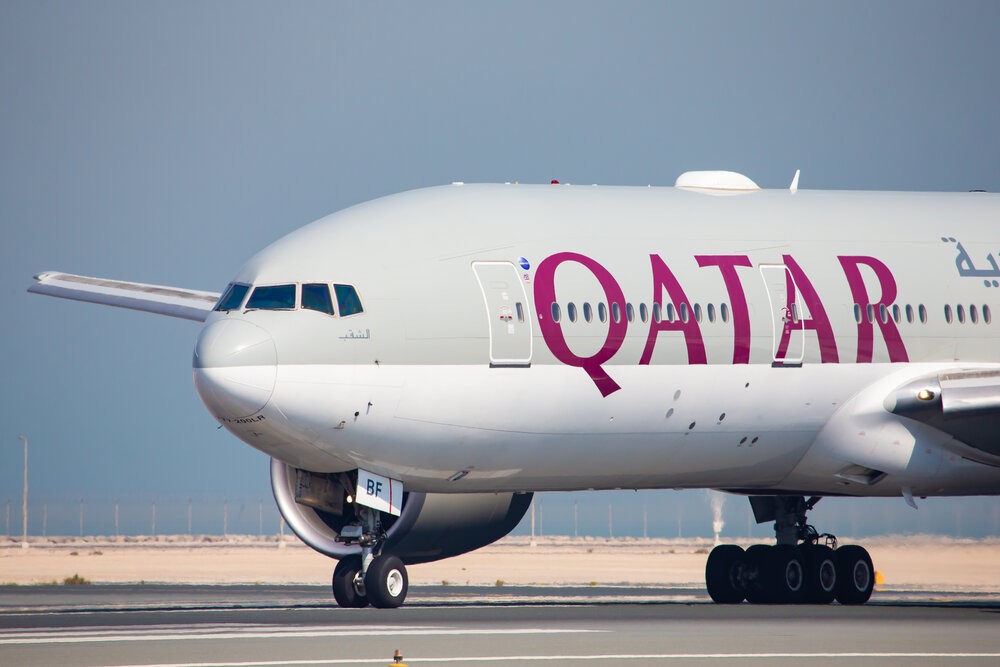
Qatar Airways is not just a premium airline brand. It is one of the most important pieces of global aviation infrastructure, because it sits on a geographic hinge that connects Europe, Asia, Africa, and the Americas through a single, tightly managed hub at Doha. Over the last decade, the airline has refined a model that many carriers try to copy but few execute at the same scale: a high-frequency, long-haul and ultra-long-haul network that feeds into a hub designed for fast, global connections. That model has become even more relevant in the post-pandemic era, as demand recovered unevenly across regions and airlines with flexible capacity and strong partnerships gained an edge.
In 2025, Qatar Airways Group announced the strongest financial performance in its history, reporting record profits for the 2024/25 fiscal year and highlighting how its network strategy, partnerships, and cargo platform contributed to results. In early 2026, the airline also continued to push product differentiation, including highlighting Starlink connectivity rollout across parts of its widebody fleet.
This article is written for WordPress in a simple, structured format. It explains Qatar Airways from every angle that matters in 2026: how the hub model works, why the airline’s partnerships are a competitive weapon, what is happening with its fleet and technology, how its cargo business fits the puzzle, and how travellers can make smarter choices when booking. It also includes an investment lens, because Qatar Airways’ moves influence aircraft manufacturers, leasing markets, and global route competition.
Qatar Airways in one sentence
Qatar Airways is a Doha-based global network carrier that uses a hub-and-spoke model and deep alliance partnerships to move premium and leisure travellers across continents with high connectivity, strong service positioning, and a modern widebody-heavy fleet.
Why the Doha hub model is so powerful
Qatar Airways’ biggest structural advantage is its location and hub design. Doha sits in a position where a single stop can connect large parts of Europe with South Asia, Southeast Asia, East Asia, Africa, and Australia. That geography enables an efficient network even when individual city pairs cannot support nonstop daily demand.
However, geography alone is not enough. The hub must be engineered for connections. That means arriving waves of flights that transfer into departing waves within realistic connection windows, and an airport and airline operation that can absorb disruptions without collapsing the network.
Qatar has invested heavily in hub capability over time, and Qatar Airways Group’s reporting about its broader group activities reflects how the airline’s ecosystem goes beyond passenger flights. The Group includes Qatar Airways Cargo and Qatar Duty Free, and its annual reporting highlights scale across passengers carried, flights operated, cargo tonnage, and group employment.
For travellers, this translates into a simple reality: Doha is designed for global connections in a way that many point-to-point airlines cannot replicate. For the airline, it means it can compete in markets where demand is fragmented, because it can aggregate passengers through the hub.
The competitive landscape: why Qatar Airways sits in the top tier of global carriers
Qatar Airways competes in a unique space. It is not a low-cost carrier and it is not a purely regional airline. Its closest peers are the other Gulf network carriers and the strongest long-haul brands in Europe and Asia. The airline’s strategy is to win on three fronts at the same time.
The first is network reach, meaning the ability to connect many cities through Doha efficiently. The second is premium service and product consistency. The third is partnerships, because a strong alliance and codeshare network can expand reach without adding aircraft.
Qatar’s alliance membership is especially important. Qatar Airways is a member of the oneworld alliance, which strengthens connectivity for frequent flyers and enables network extension through partner airlines.
In practice, alliance membership helps in two ways. It pulls travellers into the Qatar Airways ecosystem when they are loyal to an alliance partner, and it improves feed into and out of Doha, especially on markets where Qatar Airways does not fly directly.
Partnerships are not marketing for Qatar Airways, they are a growth engine
A modern global airline can grow in two ways. It can add its own aircraft and fly more routes, or it can partner so it can sell journeys it does not operate end-to-end. Qatar Airways does both, but its partnership layer is a major strategic lever.
Qatar Airways publicly emphasises its partner network and the role of codeshare arrangements and alliance membership in expanding destination reach.
In 2025, Reuters reported that Qatar Airways took a 25 percent stake in Virgin Australia and also a stake in Airlink in South Africa, describing these as strategic investments to expand network reach and passenger access through partnerships. In 2026, news coverage continues to reference the Virgin Australia partnership as a meaningful route-to-market tool for long-haul connectivity via Doha, showing how partnerships can shape strategic options for both airlines.
The deeper point is that Qatar Airways uses partnerships to do three things at once. It increases passenger feed, strengthens its presence in markets where direct growth is slow or restricted, and gains political and commercial resilience because more stakeholders depend on the connectivity it provides.
The fleet strategy: why aircraft choices define the Qatar Airways business model
If you want to understand Qatar Airways, you have to understand fleet strategy. The airline’s model depends on widebody aircraft because it runs long-haul and high-density connection banks. Widebodies also support a premium cabin strategy because they allow differentiated products, larger business class cabins, and cargo capacity below the passenger deck.
Qatar Airways’ own fleet pages highlight key widebody types such as the Airbus A350, Airbus A380, Boeing 777 and Boeing 787 as part of its active fleet mix. Independent fleet summaries also reflect a widebody-heavy mix that includes multiple variants of A350, 777, and 787, plus a smaller A380 sub-fleet and narrowbody plans through A321neo family aircraft.
A widebody-heavy fleet gives Qatar Airways a unique ability to match demand across continents. But it also creates operational complexity. Widebodies are expensive, engine maintenance is costly, and delivery delays can disrupt growth plans.
That is why Qatar Airways’ aircraft order strategy has attracted so much attention. In 2025, Reuters reported that Qatar Airways placed a massive Boeing widebody order, including 777X and 787 aircraft, positioning this as a future capacity and modernization move.
For travellers, fleet strategy affects comfort, cabin products, and reliability. For investors and industry watchers, it affects aircraft backlogs, engine makers, leasing economics, and competitive positioning.
Cabin product and service: what Qatar Airways sells beyond a seat
Premium airlines do not compete primarily on price. They compete on trust, predictability, and experience. Qatar Airways has built a brand around premium service and strong business class positioning, and it continuously invests in product elements that reduce friction.
In 2026, one of the most visible examples is onboard connectivity. Qatar Airways announced that it launched the world’s first Starlink-equipped Boeing 787-8 and completed Starlink rollout across its Airbus A350 fleet, positioning this as a major product step.
Why does that matter? Because connectivity is no longer a bonus for premium travellers. For business travellers, it can be the difference between choosing a carrier or avoiding it. For leisure travellers, it shapes perception and word-of-mouth. And for an airline whose hub model involves long segments, the value of consistent connectivity rises.
This also ties back to the Qatar Airways brand promise. A hub airline wins when travellers trust it for long journeys with a connection. Product consistency lowers the psychological cost of choosing a connecting itinerary.
Qatar Airways Cargo: the hidden profit stabiliser
Many travellers view airlines as passenger businesses. In reality, cargo is often the stabiliser that keeps network airlines resilient during demand shocks. Cargo makes particular sense for Qatar because Doha is a central transshipment point, and a widebody fleet naturally creates belly cargo capacity.
Qatar Airways Group’s reporting has highlighted record financial performance and included the cargo division within the group’s results framing.
Cargo plays two roles in the Qatar Airways model. First, it monetises capacity that would otherwise be unused. Second, it allows route economics to work even when passenger demand is soft, which supports network breadth and schedule stability.
For market professionals, cargo is also one reason why Qatar’s long-haul network can remain robust. When cargo yields are strong, they can subsidise passenger pricing flexibility in certain lanes.
Financial performance and what it signals for 2026
Qatar Airways Group announced record profits for the 2024/25 fiscal year, describing it as the strongest financial performance in its history. That result matters because it suggests the airline’s model is not just prestigious but economically effective when demand is supportive and operations are stable.
In practical terms, strong profitability signals three things.
It signals that the airline’s premium positioning is converting into revenue quality, not just brand awards.
It signals that the hub model is still viable even as travellers increasingly compare nonstop options.
It signals that Qatar Airways’ partnership strategy is working, because partnerships were explicitly referenced in reporting about how the airline drove results and expanded reach.
For 2026, travellers should interpret strong financial results as a sign the airline can continue investing in product, fleet, and operational resilience. For investors in the aviation ecosystem, it signals ongoing demand for widebody aircraft, premium cabin differentiation, and airport hub expansion.
Qatar Airways and oneworld: what frequent flyers should actually care about
Alliance membership can feel abstract, but it has practical value when used correctly. Qatar Airways’ oneworld membership creates benefits across tier status recognition, lounge access rules, and earn-and-burn possibilities through Qatar Airways Privilege Club, which uses Avios.
For frequent flyers, the key is alignment. If your travel patterns include Europe, the UK, Asia, or North America, oneworld connectivity can improve redemption options and reduce friction across multi-leg journeys. Qatar Airways also emphasises that codeshare rules and benefits depend on which airline operates the flight, so travellers need to check operating carrier details rather than only the marketing code.
Route network: how Qatar Airways chooses where to compete
Qatar Airways’ network is shaped by hub economics, bilateral air service agreements, and demand patterns. A hub airline chooses routes that can reliably feed into banks without creating operational fragility. The airline also needs enough frequency on key lanes to maintain connection utility, because connections are only valuable if schedules align.
Partnerships extend this network without the airline needing to operate every segment. Qatar Airways highlights how partnerships provide broader connectivity beyond its own metal.
This is especially useful when a market is high-demand but capacity constrained, or when launching a new route carries high risk. A partnership can test demand before committing aircraft.
Technology and operations: why reliability is becoming as important as luxury
In 2026, premium travel is increasingly judged by operational reliability. Travellers have become less tolerant of inconsistent service, missed connections, and opaque disruption handling. This is where hub airlines face a double challenge.
They must keep their own on-time performance strong, and they must protect connection integrity. A disruption at a hub can cascade across dozens of onward connections.
Product moves like Starlink connectivity matter, but the biggest competitive advantage remains operational consistency. Qatar Airways’ strategy communications in early 2026 about rolling out connectivity across widebodies suggests the airline continues to invest in experience layers that make long journeys feel more controlled and productive.
The aircraft order narrative: what it means for Boeing, Airbus, and the market
Qatar Airways’ fleet choices matter beyond Qatar. When a carrier of this scale commits to aircraft, it influences manufacturer strategy, engine maker supply chains, and leasing markets.
Financial Times reporting in 2025 described Qatar signing a major Boeing deal for widebody aircraft, including 787 and 777X, framed as Boeing’s largest-ever order in that context. Reuters also reported the Boeing order scale and described it as a record deal including 777X and 787 aircraft.
At the same time, public reporting has also discussed Qatar Airways’ fleet strategy adjustments, including narrowbody decisions and manufacturer relationship dynamics, though you should treat some sources cautiously and focus on primary disclosures for confirmation.
The key market implication is that Qatar Airways intends to maintain a large, modern, long-haul fleet for the next decade. That suggests confidence in long-haul demand, hub relevance, and premium travel resilience.
What travellers should know before booking Qatar Airways in 2026
The most important booking decision is not the airline name. It is the itinerary structure, aircraft type, and connection timing. Qatar Airways can offer excellent value and experience when the itinerary is well designed, but any hub connection carries risk if the connection window is too tight or the route is prone to weather or congestion.
If you are booking through Doha, think about connection time with realism. A slightly longer connection can reduce stress and protect against missed onward segments.
If you care about cabin product details, look at aircraft type and route. Aircraft changes can occur, but fleet information and the airline’s fleet mix provide a baseline expectation of what you might see on long-haul routes.
If you value onboard connectivity, check whether your aircraft and route are part of the connectivity rollout described in the airline’s announcements.
If you collect points, align your booking with the operating carrier and alliance rules so you do not accidentally buy a fare bucket that earns poorly or does not deliver expected benefits.
The investor angle: how to think about Qatar Airways without owning the airline
Many readers want an investment perspective even if they cannot invest directly in Qatar Airways as a listed airline. The practical way to think about Qatar Airways as an “industry signal” is through its influence on three categories.
The first category is aircraft manufacturing and engine supply chains. Large orders and delivery plans affect Boeing, Airbus, and engine makers, which are publicly traded in various forms or influence broader aerospace indices.
The second category is airport and infrastructure ecosystems. A strong hub carrier tends to drive continued investment in hub airports, retail, logistics, and route development.
The third category is competitive pressure on other airlines. Qatar Airways’ premium positioning and connectivity can force pricing and product upgrades from rivals in long-haul corridors.
This makes Qatar Airways relevant to market professionals, because it influences strategic behaviour across the global aviation system.
Risks and challenges to watch in 2026
Every airline has risks, but hub carriers have a unique risk profile.
Delivery delays remain a global aviation issue. If aircraft deliveries slip, the growth plan becomes constrained, and older aircraft may need to stay longer.
Engine maintenance and reliability can affect dispatch reliability and cost. Widebody engines are expensive and any reliability issue can disrupt schedule stability.
Geopolitical volatility can impact airspace, demand, and connecting flows. Hub airlines are especially sensitive because they connect many regions.
Competition is rising. As other airlines rebuild long-haul capacity and improve products, premium travellers become more willing to compare.
Despite these risks, Qatar Airways’ record financial performance and continued product investment suggest the airline is entering 2026 from a position of strength.
Conclusion: why Qatar Airways remains a global aviation benchmark
Qatar Airways in 2026 is best understood as a system, not just an airline. It is a hub-based connectivity engine built on a modern widebody fleet, strengthened by alliance membership and strategic equity partnerships, and differentiated by premium service and product investment such as expanded high-speed connectivity on key aircraft types.
For travellers, the airline’s value comes from predictable global connectivity through Doha and a premium experience that is designed for long journeys. For market professionals, its value as a signal comes from its fleet commitments, partnership strategy, and financial performance, all of which shape broader aviation trends.