
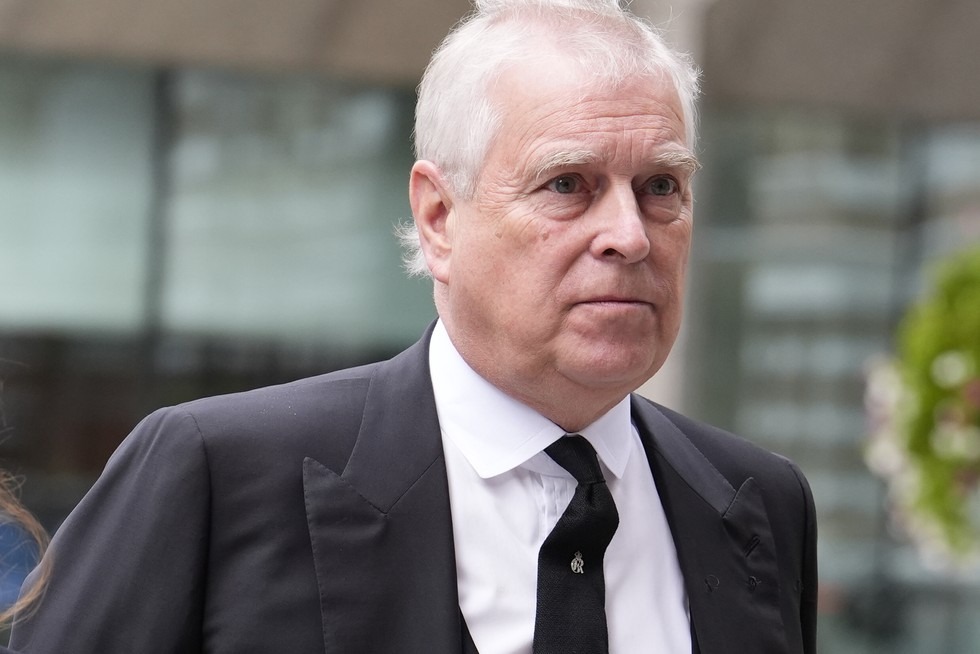
Prince Andrew, Duke of York, has occupied a complicated place in modern British royal history. For decades, he was a prominent “working royal” who represented the Crown at ceremonies, official visits, and charitable events, and he also built a public identity around his Royal Navy service. Over time, however, a series of controversies and legal developments dramatically changed his position within the monarchy and reshaped how the public and the institution itself viewed his role.
An in-depth understanding of Prince Andrew requires holding multiple realities together. He is the third child and second son of Queen Elizabeth II and Prince Philip, born into a monarchy that evolved rapidly under television, tabloid culture, and later the internet. He is also a veteran of the Falklands War era whose military chapter remains one of the most defining parts of his public biography. At the same time, his later life became dominated by scrutiny linked to his association with Jeffrey Epstein, culminating in his withdrawal from public royal duties and changes to his official standing.
This article explores Prince Andrew’s early life, naval service, marriage and family, royal responsibilities, the developments that altered his public role, and what his story reveals about how the monarchy manages reputation, accountability, and institutional stability in the modern age.
Early Life Inside a Changing Monarchy
Prince Andrew was born on 19 February 1960 at Buckingham Palace. His childhood unfolded during a period when the monarchy was becoming increasingly visible and scrutinised, not only through formal state occasions but also through wider media exposure that brought royal life closer to everyday public conversation.
He was educated at Gordonstoun, a school closely associated with Prince Philip and also attended by the then Prince Charles. The environment at Gordonstoun, known for discipline and outdoor-focused character building, formed part of the family’s broader emphasis on duty and resilience. In public memory, Andrew’s youth often appeared against the backdrop of a monarchy that still projected traditional formality while gradually adapting to a more modern, image-driven era.
From an institutional standpoint, Andrew’s early status was significant. As the monarch’s second son, he carried a prominent position within the family hierarchy and was expected to contribute to public duty, national representation, and the continuity of royal service.
The Royal Navy and the Falklands War Chapter
Prince Andrew joined the Royal Navy in 1979, training as a helicopter pilot. His active service during the Falklands War in 1982 became a central element of his public identity. Sources describing his service note that he served aboard HMS Invincible as a Sea King helicopter co-pilot, flying operational missions that included tasks such as transport and search-and-rescue support, as well as duties connected to the conflict environment.
The symbolism of a senior royal serving in a modern conflict carried a powerful resonance in the UK’s public imagination. It reinforced the royal family’s long-standing narrative of military connection and national service. It also helped define Andrew’s reputation for many years as the “military royal” within a generation whose public roles were otherwise heavily shaped by ceremony, patronage work, and diplomacy.
In later decades, as Andrew’s public standing became more contested, the Falklands chapter remained a recurring reference point in discussions about his biography, often framed as the era in which his public image felt most clearly aligned with the monarchy’s duty-first tradition.
Marriage to Sarah Ferguson and the Duke of York Identity
In 1986, Prince Andrew married Sarah Ferguson, and on the day of his wedding he was created Duke of York, a title traditionally granted to the monarch’s second son. Their marriage was widely followed and, at first, carried the high visibility typical of royal weddings in the modern media era.
The couple had two daughters, Princess Beatrice and Princess Eugenie. However, the marriage later came under intense public and tabloid pressure, and the couple separated in 1992 before divorcing in 1996. Despite the end of the marriage, their relationship continued to attract public attention, in part because of their ongoing family proximity and co-parenting visibility.
This period mattered because it coincided with broader turbulence in royal public life during the 1990s, when the monarchy faced heightened media intrusion and evolving public expectations about transparency and behaviour. The Andrew–Ferguson storyline became part of that wider cultural shift, where private family dynamics increasingly played out in public.
Public Duties, Patronages, and the Role of a “Working Royal”
For many years, Prince Andrew carried out official engagements on behalf of the Crown. These included ceremonial appearances, attendance at national events, charity involvement through patronages, and representation roles that supported the monarchy’s visibility across the UK and internationally.
He also served as the UK’s Special Representative for International Trade and Investment from 2001 to 2011, a role designed to support commercial diplomacy and promote British business relationships overseas. Over time, this role attracted controversy and scrutiny about expenses and associations, and it became part of the wider debate about how royals interact with business and influence networks.
A key point about royal duty is that it is rarely just about the individual. Royal engagements operate as institutional symbols of continuity. When a working royal’s position changes, the ripple effects are both personal and structural, affecting patron organisations, military affiliations, public scheduling, and the monarchy’s broader brand of stability.
The Epstein Association and the Inflection Point in Public Perception
Prince Andrew’s association with Jeffrey Epstein, who was a convicted sex offender, became one of the most damaging elements in his public narrative. Reporting and public discussion intensified over time, and the matter became increasingly tied to questions about judgement, accountability, and institutional response.
In November 2019, Andrew issued a public statement announcing he would step back from public duties “for the foreseeable future,” with the Queen’s permission, amid mounting pressure following an interview and wider scrutiny. This was a decisive moment because it marked the end of his role as an active “front-facing” working royal.
When a senior royal steps back, the act is not merely symbolic. It usually signals that the institution has concluded the cost of continued visibility outweighs the benefits of continuity. In Andrew’s case, the 2019 withdrawal represented a clear institutional boundary: he would no longer represent the monarchy publicly in the way he had for decades.
January 2022: Military Affiliations and Royal Patronages Returned
In January 2022, Buckingham Palace released a statement confirming that, with the Queen’s approval, the Duke of York’s military affiliations and royal patronages had been returned to the Queen. The same statement emphasised that he would continue not to undertake public duties and was defending a civil legal case as a private citizen.
Additional reporting from Reuters at the time stated that a royal source said Andrew would no longer use the style “His Royal Highness” in any official capacity. The UK Parliament’s House of Commons Library briefing on titles and honours also references the January 2022 announcement about not using “His Royal Highness” officially.
This development matters because military affiliations and patronages are core parts of how the monarchy distributes symbolic roles. Returning them to the sovereign is both a practical reallocation and a reputational firewall, reducing the likelihood that institutional prestige becomes entangled with personal controversy.
The Virginia Giuffre Civil Case and the 2022 Settlement
In February 2022, Prince Andrew reached an out-of-court settlement in the US civil case brought by Virginia Giuffre. Reporting noted that the settlement involved no admission of guilt or liability. Coverage also reported that, as part of the settlement context, Andrew acknowledged that Giuffre had suffered as a “victim of abuse,” while still making no admission of liability.
The settlement did not “close” the story in public perception. Instead, it changed the nature of the conversation. For some observers, the settlement reduced institutional risk by avoiding a trial and potential testimony; for others, it reinforced questions about reputational accountability. Either way, it became a major milestone in the reshaping of Andrew’s public position.
What His Reduced Role Means Under a Modernised Royal Model
In the years since stepping back, Andrew’s presence in public life has been limited. The monarchy under King Charles III has also signalled a preference for a more streamlined working-royals model, concentrating public duty among a smaller number of senior figures. While this approach is often presented as modernisation, it also functions as risk management: fewer public representatives means fewer potential points of reputational failure.
In that context, Prince Andrew’s reduced role reflects both personal circumstances and institutional strategy. When controversy becomes closely tied to a royal figure, limiting public visibility can become an essential tool for protecting the Crown’s broader legitimacy.
The Duke of York Title and the Question of Symbols
The title Duke of York carries historical significance in the British peerage tradition. Even when the person holding it is not active publicly, the title still exists as a symbolic marker inside the royal system.
Contemporary debates about titles, honours, and royal status are not only about one individual. They reflect larger public questions: What should royal titles represent in a modern constitutional monarchy? How should an institution balance tradition with public accountability? What mechanisms exist, formally and informally, to adjust royal roles when reputational risk becomes severe?
These debates have become more prominent as public expectations of transparency have risen and as the monarchy has increasingly operated within a media environment that moves faster than traditional institutional response styles.
Family Relationships and the Personal Dimension
Prince Andrew is also a father to Princess Beatrice and Princess Eugenie, who have grown into adult public figures with their own philanthropic interests and professional lives. Their relationship with their father is often discussed in the context of family loyalty and the complexity of private support amid public controversy.
The monarchy, at its core, is both an institution and a family. Many of its most visible tensions arise from that duality, especially when personal relationships intersect with public accountability. Andrew’s story highlights that tension sharply, because the consequences of the controversies have extended beyond his own public role into broader questions about the royal family’s collective image.
A Balanced View of Legacy
An honest profile of Prince Andrew cannot erase either side of his biography. His naval service and Falklands-era role remain central to his historical record. His later withdrawal from public duty, the return of military affiliations and patronages, and the legal and reputational crises linked to the Epstein association are equally central to how his public life is now understood.
For the monarchy, Andrew’s trajectory has also become a case study in modern institutional response. It shows how a royal household attempts to maintain continuity while also responding to reputational threat, reallocating symbolic roles, and narrowing public exposure when necessary.
In the end, Prince Andrew’s story is not just about a single royal. It is about the evolving relationship between monarchy and public expectation, and about the increasingly strict standards to which public figures are held in an era where private associations can become defining public facts.