
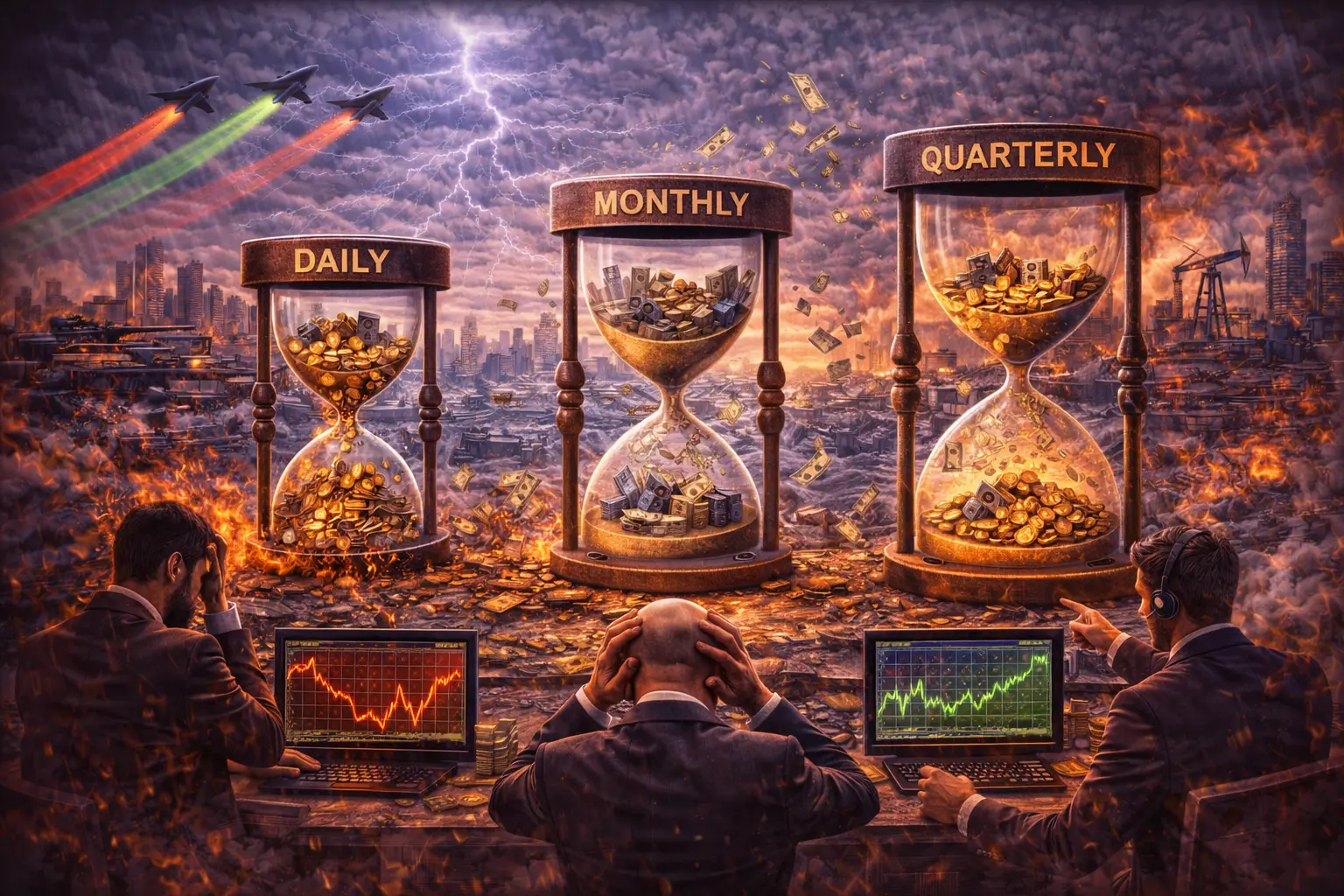
Portfolio rebalancing is often presented as a mechanical discipline, something done at fixed intervals to restore target allocations. In calm markets, this approach works reasonably well. In volatile market phases, however, rebalancing frequency becomes a strategic decision rather than a routine task. In 2026, where volatility is structural rather than episodic, the question is not whether to rebalance, but how often and under what conditions.
Rebalancing too slowly can allow risk to accumulate unnoticed. Rebalancing too frequently can amplify losses, increase costs, and force investors to act against unfolding realities. Understanding this balance is critical for protecting capital during unstable phases.
Why Volatility Changes the Logic of Rebalancing
Volatility alters market behavior. Prices move faster, correlations shift, and leadership rotates abruptly. Fixed rebalancing schedules assume gradual movement and mean reversion. Volatile phases challenge these assumptions.
In 2026, sharp drawdowns and rapid rebounds can distort portfolio weights in short periods. Assets that outperform briefly may reverse just as quickly. Rebalancing without context risks locking in losses or increasing exposure to weakening trends.
Volatility demands judgment, not automation.
The Difference Between Time-Based and Condition-Based Rebalancing
Traditional rebalancing is time-based. Portfolios are adjusted monthly, quarterly, or annually regardless of market conditions. In volatile phases, this approach can be counterproductive.
Condition-based rebalancing responds to changes in risk rather than the calendar. It considers volatility regimes, liquidity conditions, and correlation behavior. In 2026, this approach becomes more effective because risk expands and contracts unevenly.
Rebalancing should respond to market stress, not ignore it.
When Frequent Rebalancing Becomes Harmful
Frequent rebalancing during high volatility can increase exposure to falling assets. It assumes that price declines are temporary and that mean reversion will occur quickly.
In 2026, some declines reflect structural shifts rather than temporary dislocations. Rebalancing aggressively into these declines increases drawdown risk. It also erodes confidence when losses compound.
Understanding when not to rebalance is as important as knowing when to act.
Volatility Clusters and Rebalancing Risk
Volatility often clusters. Once it rises, it tends to remain elevated for extended periods. During these clusters, prices oscillate violently without establishing direction.
In 2026, volatility clusters may persist due to policy uncertainty and liquidity fragility. Rebalancing too frequently within these clusters can lead to repeated whipsaws.
Allowing volatility to stabilize before adjusting exposure reduces unnecessary turnover.
Rebalancing and Correlation Breakdowns
Rebalancing assumes diversification benefits remain intact. During correlation breakdowns, this assumption fails.
In 2026, assets may decline together. Rebalancing across correlated assets offers little protection. Instead of restoring balance, it increases overall exposure to systemic risk.
Recognising correlation regimes helps determine when rebalancing restores balance and when it magnifies risk.
The Role of Liquidity in Rebalancing Decisions
Liquidity conditions influence rebalancing effectiveness. In illiquid markets, price movements exaggerate stress. Rebalancing into illiquid assets can trap capital.
In 2026, liquidity may vary sharply across asset classes. Effective rebalancing prioritizes liquidity awareness, ensuring adjustments do not rely on fragile exit conditions.
Liquidity determines whether rebalancing improves resilience or increases vulnerability.
Behavioral Traps in Volatile Rebalancing
Volatile markets heighten emotional pressure. Rebalancing decisions may be driven by fear of losses or fear of missing out.
In 2026, investors may rebalance too frequently to regain a sense of control. This behavior often leads to poor outcomes. Disciplined frameworks help separate emotional relief from rational adjustment.
Rebalancing should reduce stress, not create it.
Gradualism Over Precision
In volatile phases, gradual adjustments outperform precise ones. Instead of fully restoring target weights, incremental rebalancing reduces timing risk.
In 2026, gradualism allows portfolios to adapt without committing to a single interpretation of market conditions. It preserves flexibility while reducing extremes.
Small adjustments compound more safely than decisive moves.
Rebalancing as Risk Management, Not Return Maximization
The primary purpose of rebalancing in volatile markets is risk management. It is not to capture short-term gains.
In 2026, preserving capital and maintaining optionality matter more than optimizing returns. Rebalancing decisions should be evaluated through the lens of drawdown control rather than performance comparison.
Risk management defines success during unstable phases.
Aligning Rebalancing With Time Horizon
Rebalancing frequency should align with the investor’s time horizon. Long-term investors can tolerate more deviation. Shorter horizons require tighter control.
In 2026, aligning rebalancing with actual liquidity needs prevents forced decisions later. Portfolios designed for long-term growth should not be rebalanced as if short-term stability were required.
Time horizon provides context.
The Astrological Perspective on Timing and Adjustment
From a financial astrology perspective, volatile phases reflect transitional cycles where extremes dominate and equilibrium is delayed. Saturn emphasizes patience and discipline, while Rahu creates rapid swings and false signals.
In 2026, this reinforces the value of restraint in rebalancing. Acting too quickly during illusory stability often leads to regret.
Astrology here supports timing awareness rather than constant action.
Measuring the Effectiveness of Rebalancing Decisions
Effectiveness is measured over full cycles, not individual adjustments. In volatile markets, short-term outcomes can be misleading.
In 2026, investors should evaluate rebalancing decisions based on reduced drawdowns, improved stability, and preserved flexibility rather than immediate gains.
Success appears quietly over time.
Why Rebalancing Frequency Often Matters More Than Asset Selection
In volatile market phases, portfolio outcomes are often driven less by what assets are held and more by how often portfolios are adjusted. Even well-constructed portfolios can underperform if rebalancing frequency amplifies volatility instead of dampening it.
In 2026, markets are likely to experience sharp swings without clear directional follow-through. Rebalancing too often during these swings forces investors to react to noise rather than signal. Over time, this behavior erodes performance through repeated small losses and rising transaction costs.
Understanding rebalancing frequency as a risk lever rather than a maintenance task changes how portfolios are managed.
The Cost of Mechanical Discipline in Unstable Regimes
Mechanical discipline is often praised in investing, but in unstable regimes it can become a liability. Fixed rebalancing rules assume that markets oscillate around fair value. In volatile phases, fair value itself is uncertain.
In 2026, markets may overshoot in both directions multiple times before stabilizing. Mechanical rebalancing forces investors to commit capital before uncertainty resolves. This creates the illusion of discipline while ignoring context.
True discipline adapts to regime conditions rather than enforcing rigid rules.
Volatility Decay and the Hidden Drag of Over-Rebalancing
High volatility creates volatility decay, where repeated price swings reduce returns even if prices end unchanged. Frequent rebalancing during such conditions magnifies this effect.
In 2026, portfolios exposed to volatile assets may suffer hidden drag if rebalanced too often. Gains are trimmed prematurely, while losses are repeatedly averaged into. Over time, this reduces compounding efficiency.
Allowing positions time to normalize can reduce volatility drag.
Rebalancing During Liquidity Stress Versus Liquidity Recovery
Liquidity conditions determine whether rebalancing adds value or increases risk. During liquidity stress, price signals are distorted. Rebalancing into stressed assets often reflects forced selling by others rather than true opportunity.
In 2026, liquidity stress may persist longer than expected due to funding constraints and cautious capital providers. Rebalancing aggressively during these phases can trap capital.
Liquidity recovery, not initial stabilization, offers a more reliable window for adjustment.
The Interaction Between Rebalancing and Drawdown Psychology
Drawdowns affect decision-making. Investors often rebalance more frequently after losses to regain control or restore confidence.
In volatile phases, this psychological response can be counterproductive. Rebalancing motivated by discomfort rather than structure increases the likelihood of poor timing.
In 2026, acknowledging the emotional dimension of rebalancing helps prevent reactive behavior that compounds stress.
Annual Letter 2026 by Rajeev Prakash Agarwal
Markets are entering a phase where easy assumptions no longer work. Liquidity is selective, volatility is structural, and capital is rewarded only when it is positioned with clarity and discipline. In such an environment, reacting to headlines is not enough. What matters is having a forward-looking framework that helps you anticipate change rather than chase it.
The Annual Letter 2026 by Rajeev Prakash Agarwal offers a comprehensive investment outlook designed for this new market regime. It blends long-term macro analysis, market psychology, and planetary cycles that have historically aligned with major shifts in global capital flows. The focus is on understanding cycles, identifying high-probability phases, and protecting capital during periods of uncertainty.

When Rebalancing Becomes a Form of Implicit Leverage
Rebalancing into declining assets increases effective exposure. While this is often framed as discipline, it functions like implicit leverage when trends persist.
In 2026, trends may be driven by structural change rather than temporary mispricing. Rebalancing repeatedly into these trends increases downside risk.
Understanding when rebalancing increases exposure rather than restores balance is critical.
Adaptive Rebalancing and the Use of Tolerance Bands
Rather than rebalancing at fixed intervals, adaptive frameworks use tolerance bands. Portfolios are adjusted only when deviations exceed meaningful thresholds.
In volatile markets, these bands naturally widen as price fluctuations increase. This reduces unnecessary turnover and allows portfolios to absorb noise.
In 2026, adaptive tolerance helps distinguish meaningful imbalance from temporary volatility.
Rebalancing Frequency and Opportunity Cost
Rebalancing too often not only increases costs, it also consumes attention and capital that could be deployed more selectively.
In volatile phases, opportunity cost matters. Capital tied up in constant rebalancing cannot be allocated to asymmetric opportunities that emerge during stress.
In 2026, preserving flexibility is as valuable as restoring balance.
Aligning Rebalancing With Capital Availability
Rebalancing decisions should reflect capital availability. Portfolios that rely on near-term liquidity must rebalance more conservatively than those with long-term capital.
In 2026, misalignment between rebalancing frequency and capital needs increases the risk of forced selling. Aligning adjustments with liquidity realities reduces vulnerability.
Capital constraints should shape rebalancing behavior.
Conclusion: Rebalancing Frequency as a Strategic Choice in 2026
Portfolio rebalancing frequency in volatile market phases cannot be standardized. It must respond to volatility regimes, liquidity conditions, and correlation behavior.
In 2026, effective rebalancing prioritizes risk awareness over rigid schedules. It emphasizes gradual adjustment, patience, and flexibility.
This approach aligns with the philosophy of rajeevprakash.com and the Annual Letter 2026, where navigating uncertainty thoughtfully matters more than mechanical precision. In volatile markets, knowing when to rebalance is less important than knowing when not to.