
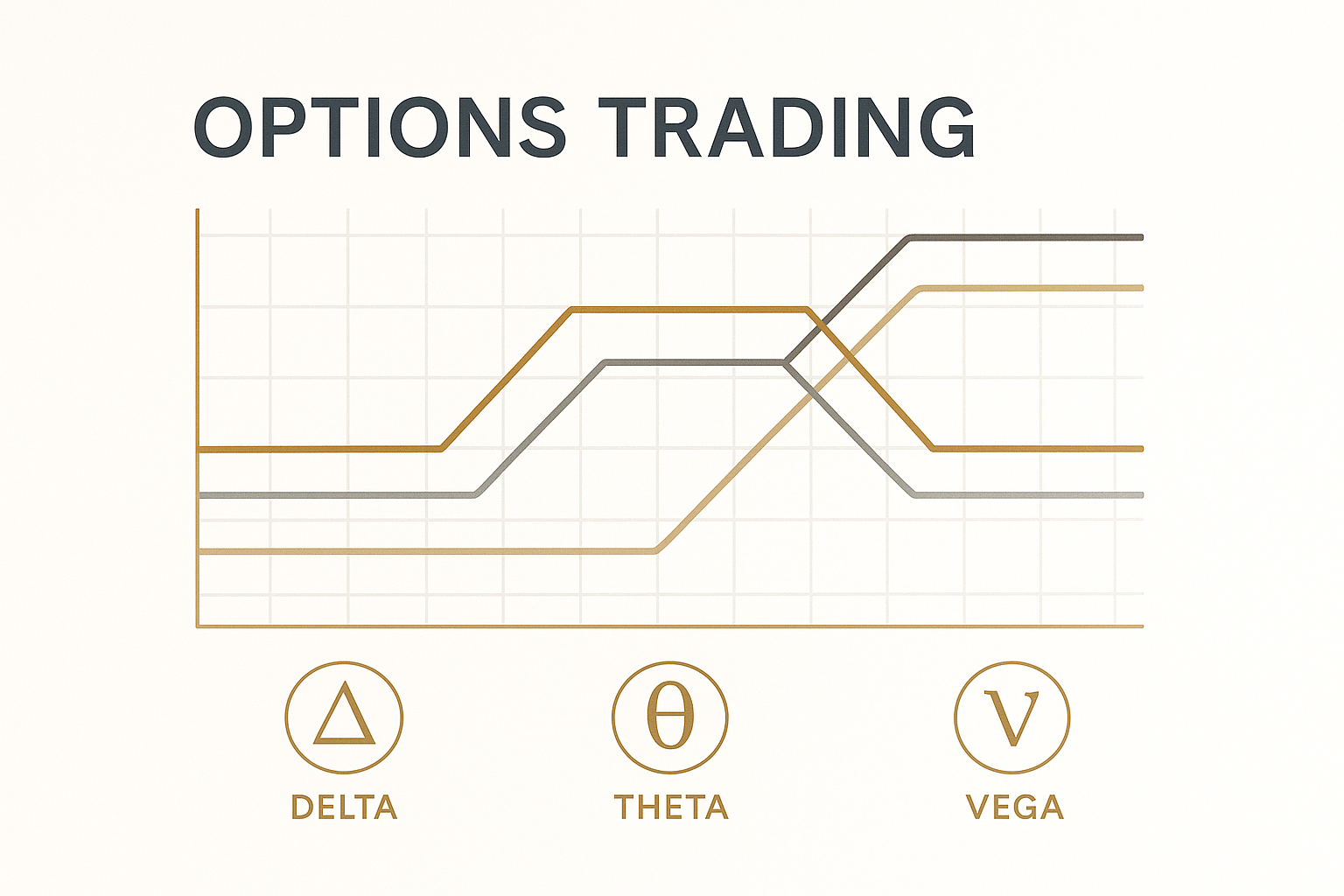
Options trading lets you shape payoff profiles instead of only buying or selling shares. With a small outlay, you can define risk, express directional or neutral views, and manage time and volatility exposures. This guide keeps the essentials visual and practical so you can make clear, risk-aware decisions in 2025.
What Is Options Trading
An option is a contract that gives the right, not the obligation, to buy or sell an underlying asset at a set price (strike) before or on a set date (expiration). Calls are rights to buy; puts are rights to sell. Buyers pay a premium; sellers receive premium and take on defined obligations.
| Type | Right | Typical Use |
|---|---|---|
| Call | Buy the underlying at strike | Bullish views, covered calls, call spreads |
| Put | Sell the underlying at strike | Bearish views, portfolio hedges, put spreads |
Contract Specs at a Glance
| Spec | Typical Value | Notes |
|---|---|---|
| Contract size | 100 shares | Per standard equity option |
| Strike | Preset price | In/out of the money depends on spot |
| Expiration | Weekly / Monthly / Quarterly | Shorter expiries decay faster |
| Style | American / European | American can be exercised any time |
| Settlement | Physical or cash | Index options often cash-settled |
Why Traders Use Options
- Define risk: Use spreads and protective puts to cap losses.
- Leverage efficiently: Control 100 shares with limited capital.
- Get paid for patience: Earn premium via covered calls or cash-secured puts.
- Trade volatility: Express views on implied volatility without big directional bets.
- Hedge: Protect portfolios around earnings or macro events.
Pricing Basics: Premium = Time + Volatility + Moneyness
Option prices reflect how far the strike is from spot (moneyness), how much time is left, and how volatile the market may be. More time and higher implied volatility (IV) raise premiums. As the clock ticks, time decay (theta) reduces option value if all else stays equal.
The Greeks: What They Tell You
| Greek | Measures | Practical Use |
|---|---|---|
| Delta | Price sensitivity to underlying moves | Position bias and hedge ratio |
| Gamma | Change in delta for a 1-point move | Convexity; risk near expiration |
| Theta | Time decay per day | Income vs decay trade-offs |
| Vega | Sensitivity to IV changes | When to buy vs sell options |
| Rho | Sensitivity to rates | Matters more for long-dated options |
Strategy Quick Reference
| Strategy | Bias | Max Loss | Max Gain | Best When |
|---|---|---|---|---|
| Covered Call | Mildly bearish to neutral | Stock drawdown minus premium | Premium + upside capped at strike | IV moderate/high; willing to sell upside |
| Cash-Secured Put | Mildly bullish to neutral | Strike − premium (if assigned) | Premium | Happy to buy stock lower; IV moderate/high |
| Protective Put | Long stock hedge | Premium | Downside protected below strike | Event risk; seeking floor |
| Debit Call Spread | Bullish | Net debit | Strike diff − net debit | Directional move with limited cost |
| Debit Put Spread | Bearish | Net debit | Strike diff − net debit | Downside view with limited cost |
| Iron Condor | Neutral | Widest wing − net credit | Net credit | Range-bound view; IV falls |
Risk Management and Assignment
- Size positions: Risk a small, consistent percent of equity per idea.
- Know max loss: Use defined-risk spreads where possible.
- Respect assignment: Short options can be assigned early on dividends or deep ITM.
- IV context: Sell premium when IV is elevated and you’re comfortable with obligations; buy premium when IV is subdued and you want convexity.
- Exit rules: Pre-define profit targets and loss limits; avoid holding short premium into binary events unless intended.
Trade Checklist You Can Apply Today
Open checklist
- Clear thesis: bullish, bearish, or neutral range?
- Time frame: days, weeks, or months to play out?
- Select structure: long option, spread, or income strategy?
- IV vs historical: buying or selling premium justified?
- Max loss, max gain, breakeven understood?
- Exit plan: profit target, stop, and event handling.
Taxes and Operational Notes
Tax treatment depends on jurisdiction, holding period, and option type. Settlement, cut-offs, and corporate action adjustments may differ by exchange. Review broker disclosures and consult a qualified professional before trading.
Disclaimer
This material is for education and general information. Options involve risk and are not suitable for every investor. Consider your circumstances and consult a qualified professional before trading.