
Why Optimism Alone Is Not Enough for Investors in 2026
Optimism has always played an important role in financial markets. It fuels entrepreneurship, supports long-term investing, and encourages participation in economic growth. However, optimism becomes dangerous when it is detached from discipline, timing, and preparation. As markets move into 2026, relying on optimism alone is increasingly insufficient. The global investment landscape is shaped by volatility, rapid reversals, geopolitical uncertainty, and tighter financial conditions. In such an environment, optimism without structure often leads investors into poor decisions made at the wrong time.
The challenge for investors in 2026 is not a lack of opportunity, but a mismatch between expectation and reality. Markets can still rise, innovation continues, and wealth can still be created. Yet the path is uneven, and progress is no longer smooth. Behavioral finance teaches that human psychology often struggles to adapt to these shifts, especially when optimism overrides discipline.
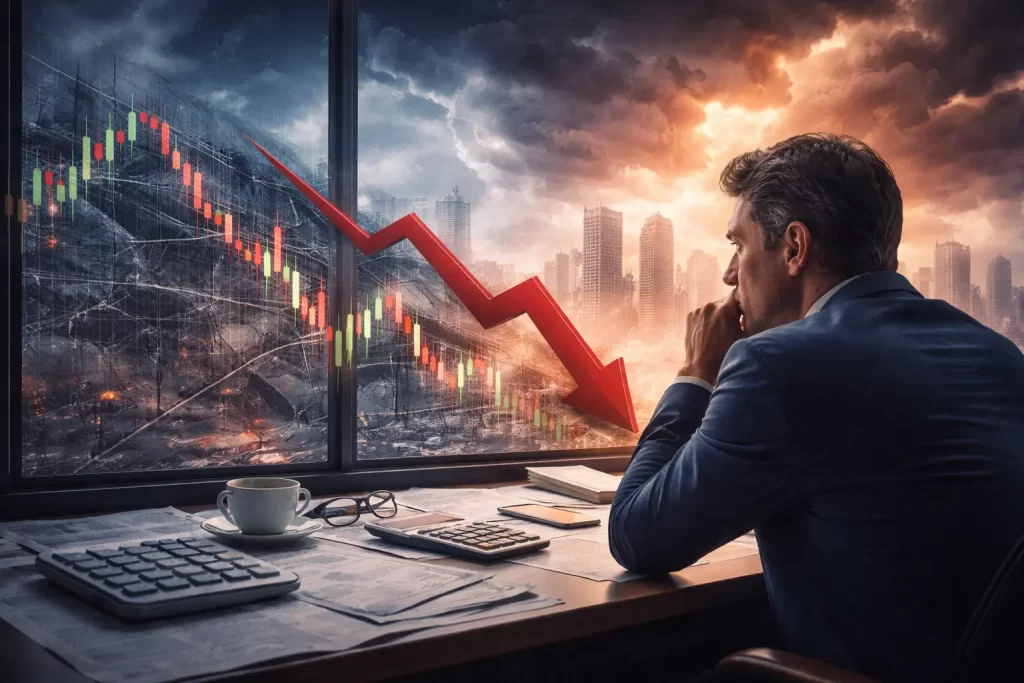
The Behavioral Trap of Overconfidence
One of the most common behavioral biases affecting investors is overconfidence. When markets perform well or recover from declines, investors often assume that positive outcomes will continue. This belief is reinforced by recent experiences, creating a false sense of security. In 2026, this bias is particularly risky because market conditions are less forgiving.
Overconfidence leads investors to increase exposure late in market cycles, ignore valuation signals, and underestimate downside risk. It also encourages concentration in popular themes rather than balanced allocation. When reversals occur, these positions suffer the most damage. Behavioral finance shows that investors tend to overestimate their ability to predict outcomes, especially after periods of success. Optimism becomes a liability when it blinds investors to changing conditions.
Optimism and Poor Timing Decisions
Timing does not mean predicting exact market tops or bottoms. It means understanding when risk is rising and adjusting exposure accordingly. Optimism often interferes with this process. Investors who believe strongly in a positive outcome tend to delay defensive actions. They remain invested when conditions deteriorate and only react after losses occur.
In 2026, markets are expected to experience frequent shifts in sentiment driven by macroeconomic data, policy changes, and geopolitical developments. These shifts reward investors who are prepared and disciplined, not those who assume that optimism will carry them through volatility. Poor timing decisions usually stem from emotional attachment to a narrative rather than objective assessment of risk.
The Discipline Gap Between Expectation and Outcome
One of the most important reasons optimism alone fails investors is the gap it creates between expectation and outcome. Optimism encourages investors to focus on what should happen rather than what is happening. When markets do not behave as expected, this gap widens and creates frustration. Frustration often leads to impulsive decisions, such as abandoning a strategy at the worst possible moment or doubling down on positions without reassessing risk.
In 2026, this gap is likely to appear more frequently because market outcomes are increasingly influenced by non-financial forces such as geopolitics, regulatory shifts, and social dynamics. These forces can override traditional economic logic for extended periods. Investors who rely on optimism assume alignment between logic and outcome, while disciplined investors accept that markets can remain irrational or unstable longer than anticipated.
The Illusion of Linear Progress
Many investors are conditioned to believe that markets move upward over time in a relatively predictable manner. While this may be true over very long horizons, the journey matters. Behavioral studies show that investors experience losses more intensely than gains. Large drawdowns can permanently damage portfolios if investors are forced to exit at unfavorable levels.
Optimism alone encourages the belief that setbacks are temporary and can be ignored. In an era of structural fragility, this assumption is dangerous. Progress is increasingly non-linear. Markets may advance, stall, reverse, and recover multiple times within short periods. Discipline is required to navigate this environment without being emotionally overwhelmed.
The Role of Intent in Investment Decisions
Intent is central to Rajeev Prakash’s philosophy. Investing without clear intent often results in reactive behavior. Optimism without intent leads to chasing trends, following crowd behavior, and abandoning strategy under stress. Intent, by contrast, anchors decisions to purpose. It clarifies time horizon, risk tolerance, and objectives.
In 2026, investors who lack intent are more likely to be influenced by headlines and short-term market movements. Those with defined intent can evaluate information without overreacting. They understand why they hold certain assets and under what conditions they will adjust or exit. Optimism becomes constructive only when it is aligned with intent.
Preparedness as a Competitive Advantage
Preparedness separates successful investors from hopeful ones. Behavioral finance highlights that investors often prepare mentally for gains but not for losses. This asymmetry leads to panic when markets decline. Prepared investors anticipate volatility and plan responses in advance.
Preparation includes understanding market cycles, maintaining liquidity, managing position sizes, and accepting that drawdowns are part of investing. In 2026, preparedness is especially important because policy support is more constrained and market reactions can be swift. Optimism does not protect against volatility. Preparation does.
Annual Letter 2026 – Strategic Outlook for Investors
Markets are entering a phase where innovation, geopolitics, and capital cycles are intersecting with unusual intensity. The Annual Letter 2026 is designed to help investors and traders interpret these shifts with clarity and discipline. It offers a structured view of global market cycles, leadership transitions, and risk phases expected during the year, supported by long-term cycle analysis and timing frameworks.
This research publication goes beyond headlines and short-term noise. It connects innovation-driven optimism with valuation risk, capital concentration, and sector rotation, helping readers understand where leadership may strengthen and where caution is warranted. The letter also examines how global macro trends and policy decisions could influence equities, commodities, and currencies as markets move through critical inflection points.

Discipline Over Emotion
Discipline is the ability to follow a strategy even when emotions run high. Optimism can undermine discipline by encouraging investors to ignore warning signs. Behavioral research shows that people tend to seek information that confirms their beliefs and dismiss information that contradicts them. This confirmation bias reinforces optimism even when evidence suggests caution.
Disciplined investors actively seek disconfirming information. They reassess assumptions and adjust exposure when risk increases. They do not confuse hope with strategy. In uncertain markets, discipline acts as a stabilizing force that prevents emotional decision-making.
Market Volatility and Psychological Stress
Volatility is not just a statistical measure. It is a psychological experience. Sharp market movements trigger fear, regret, and anxiety. Optimistic investors who are unprepared often suffer the most stress because they did not anticipate adverse outcomes. This stress leads to impulsive decisions that lock in losses.
In contrast, investors who accept uncertainty as part of the process experience less emotional disruption. They view volatility as information rather than threat. Behavioral finance emphasizes that emotional regulation is critical for long-term success. Optimism without emotional resilience increases vulnerability to stress-driven mistakes.
Learning From Past Cycles
History offers clear lessons. Market bubbles and crashes are often preceded by widespread optimism detached from fundamentals. Investors who believed that positive trends would continue indefinitely suffered significant losses when conditions changed. Those who combined optimism with caution, timing awareness, and risk management preserved capital and were able to act when true opportunities emerged.
The investment environment of 2026 shares similarities with past periods of transition. Structural changes, technological disruption, and geopolitical uncertainty create both opportunity and risk. Optimism alone cannot distinguish between the two. Discipline and preparedness provide that distinction.
The Cost of Emotional Decision-Making in Modern Markets
One of the most underestimated risks for investors is not market volatility itself, but how individuals respond to it emotionally. In 2026, information moves faster than ever. News, opinions, forecasts, and price movements reach investors in real time, creating a constant stream of emotional triggers. Optimism without discipline often turns this information flow into noise, leading investors to act impulsively rather than thoughtfully.
Emotional decision-making typically follows a predictable pattern. Investors feel confident during rising markets and increase exposure when risk is already elevated. When markets reverse, fear replaces optimism, and decisions are made to relieve discomfort rather than to protect long-term outcomes. Behavioral finance consistently shows that these emotionally driven decisions result in buying high and selling low, eroding returns even in markets that perform reasonably well over time.
Narrative Investing and the Danger of Belief
Optimism often attaches itself to powerful narratives. These narratives may be rooted in genuine innovation, economic reform, or long-term transformation. However, when belief in a narrative becomes absolute, discipline weakens. Investors stop questioning assumptions and begin interpreting all information through a single lens.
In 2026, markets are full of compelling narratives, from technological breakthroughs to geopolitical realignments. While many of these themes are real, their market impact is rarely smooth or immediate. Narrative-driven optimism encourages investors to overlook timing and valuation, assuming that belief alone justifies exposure. When reality unfolds more slowly or unevenly, disappointment follows, often accompanied by sharp price corrections.
Loss Aversion and the Refusal to Adapt
Behavioral finance highlights loss aversion as a powerful force. Investors feel the pain of losses more strongly than the pleasure of gains. Optimism can intensify this effect by creating unrealistic expectations. When outcomes fall short, investors struggle to accept losses and delay necessary adjustments.
This refusal to adapt is particularly dangerous in 2026 because market regimes can shift quickly. Clinging to optimistic assumptions in a changing environment increases drawdowns and reduces flexibility. Disciplined investors recognize when conditions no longer support their original thesis and act accordingly. Optimistic but unprepared investors often wait for validation that never arrives.

The Role of Patience in a Volatile Year
Patience is often misunderstood as passive optimism. In reality, patience is an active discipline. It involves waiting for alignment between price, risk, and timing rather than acting on belief alone. Optimistic investors may feel compelled to stay fully invested at all times, fearing missed opportunity. This fear can be costly when markets move sideways or decline sharply.
The Timing Gap Between Fundamentals and Markets
Another challenge facing investors is the timing gap between fundamental developments and market pricing. Optimism assumes that markets will eventually reflect positive fundamentals. While this may be true over long periods, markets can diverge from fundamentals for extended durations. In fragile environments, sentiment and liquidity often dominate pricing in the short to medium term.
In 2026, this timing gap is likely to widen as policy uncertainty and global stress affect capital flows. Investors who rely solely on optimism may enter positions too early, exhausting patience and capital before fundamentals are rewarded. Discipline helps manage this gap by aligning position size and timing with market conditions rather than expectation alone.
Preparedness for Drawdowns and Opportunity
Prepared investors accept drawdowns as part of the process and plan for them. Optimistic investors often assume that drawdowns will be shallow or short-lived. When deeper corrections occur, they are emotionally unprepared and forced into reactive decisions.
Preparation includes setting realistic expectations, maintaining liquidity, and defining clear thresholds for reassessment. In 2026, opportunities are likely to emerge during periods of stress rather than during widespread optimism. Investors who preserve capital and emotional stability during downturns are better positioned to act decisively when valuations become attractive.
Meet Our Team
Get to know our dedicated team of experts. With a diverse range of skills and years of experience, we’re committed to providing you with the best market analysis and investment guidance.

Mr. Rajeev Prakash Agarwal
Founder
Expert in financial & personal astrology for 20 years+. Rajeev is a well-known astrologer based in central India who has a deep understanding of both personal and mundane astrology.

Mr. Shashi Prakash Agarwal
Technical Head
Shashi is a technology leader with a strong background in global business.He holds a B. Tech in Computer Science & MBA in Finance from Narsee Monjee Institute of Management Studies, one of the top B-Schools in India.
The Role of Structure in Behavioral Control
Structure is the antidote to behavioral bias. Clear rules around allocation, rebalancing, and risk management reduce the influence of emotion. Optimism without structure leaves investors vulnerable to impulse. Structure transforms optimism into constructive action.
In an environment where headlines can shift sentiment within hours, structure provides continuity. It allows investors to step back from immediate emotion and evaluate decisions within a broader framework. This is especially important in 2026, where rapid changes in policy, data, and geopolitics can create frequent emotional whiplash.
Short-Term Noise Versus Long-Term Vision
Optimism often thrives on short-term signals. A positive data point, a strong earnings report, or a policy announcement can reinforce belief in a favorable outcome. However, long-term success depends on distinguishing noise from signal. Behavioral finance shows that investors tend to overweight recent information, a bias known as recency effect.
In volatile markets, recency bias leads to overreaction. Investors chase recent winners and abandon positions after short-term weakness. Discipline counteracts this tendency by anchoring decisions to long-term intent rather than recent performance. Optimism becomes sustainable only when it is aligned with a long-term vision that tolerates interim fluctuations.
The Balance Between Hope and Responsibility
Optimism is not inherently negative. It becomes harmful only when it replaces responsibility. Responsible investing requires acknowledging uncertainty, managing risk, and preparing for unfavorable outcomes. Behavioral finance teaches that sustainable success comes from balancing positive expectations with realistic assessment.
In 2026, investors who balance optimism with discipline are more likely to survive volatility and capitalize on mispricing. Those who rely solely on hope may find themselves repeatedly reacting to markets rather than shaping outcomes.
A Mindset for 2026 and Beyond
The defining characteristic of successful investors in 2026 will not be confidence, but clarity. Clarity of intent, clarity of strategy, and clarity of risk. Optimism can motivate action, but it cannot replace structure. Markets reward those who are prepared before opportunity appears, not those who act after optimism peaks.
This year demands a mindset shift. Investors must move from believing that things will work out to ensuring they are positioned for multiple scenarios. Optimism should support long-term vision, while discipline governs short-term behavior.
Why Choose Us ?
Astrodunia guides you through the market’s ups and downs with the help of planetary science. Our team of experts in financial astrology provide valuable insights and predictions to assist you in market wise investment decisions and navigate the global market with ease.

Market Forecasting
Experience the advantage of enhanced market predictions. Our unique approach combines traditional analysis with astrological insights for more accurate predictions and better investment opportunities.

Decades of Market Timing Expertise
For over 20 years, we’ve honed our skills in market timing within the stock market. Our extensive experience allows us to navigate market trends with precision and confidence.

Trusted by Discerning Investors
Our clients choose us for our proven track record of success and our commitment to providing them with the most reliable market insights. Join the ranks of satisfied investors who trust our expertise
The Illusion of Control in Uncertain Times
Optimism can create an illusion of control. Investors may believe that careful analysis or conviction gives them greater influence over outcomes than is realistically possible. In complex global markets, many forces are beyond individual control. Policy shifts, geopolitical events, and systemic risks can override even the best analysis.
Acknowledging uncertainty is not pessimism. It is realism. Prepared investors respect the limits of prediction and design strategies that can withstand adverse outcomes. Optimistic investors who believe they can control outcomes often take excessive risk, exposing themselves to large losses when reality diverges from expectation.
Developing Psychological Resilience
Psychological resilience is a critical skill for investors in 2026. Resilience allows individuals to remain engaged without becoming emotionally reactive. It supports consistent decision-making even during periods of stress or disappointment.
Resilient investors view mistakes as learning opportunities rather than personal failures. They adjust strategies without abandoning discipline. Optimism contributes to resilience when it is grounded in process rather than outcome. Confidence in a well-designed approach is more durable than confidence in a single forecast.
Testimonials
Discover what our satisfied customers have to say about their experience with us. Read our testimonials from people just like who have benefited from our services.
Market singals have helped me to make quick and informed decisions for trades in stock market. resulting in significant profits for my portfolio. The team is highly professsional and always available to answer your questions and provide the best customer service.
SK Jhunjhunwala
Investor based in Mumbai
I have been using the astrodunia’s services for over 4+ years now and have been extremely impressed with level of experties and precions they bring to the table. Their live market signals have helped me make quick and informed decisions.
N. Patel
Pennsylvania , US
Excellent service. This is undoubtedly the best market forecast newsletter that i have ever subscribed. None of the other newsletter are anywhere close to this terms of accuracy. Please continue with the good work !
Withheld
Fixed income trader with a required foreign bank in asia
i am an entrepreneur based in Australia and have been subscriber of astrodunia services from the past two years.i have found their NewsLetter , Live Signals and Annual Letter to be incredibly valueable.
Z. Irani
Australia
Integrating Optimism With Responsibility
The goal is not to eliminate optimism but to integrate it responsibly. Optimism motivates participation and long-term commitment. Responsibility ensures survival and adaptability. Behavioral finance suggests that the most successful investors balance these qualities by combining positive expectations with clear boundaries.
In 2026, this balance is particularly important. Markets are offering opportunity, but they are also testing patience and discipline. Investors who respect both sides of this reality are more likely to achieve consistent results.
Closing Perspective
Optimism alone is not enough for investors in 2026 because markets are no longer driven solely by growth narratives. They are shaped by timing, fragility, and behavioral responses to uncertainty. Without discipline, optimism leads to poor timing, emotional decisions, and unnecessary losses.
Rajeev Prakash’s emphasis on intent, timing, and preparedness offers a framework suited to this environment. Investors who adopt this approach treat optimism as a foundation, not a strategy. They prepare for volatility, respect cycles, and act with purpose. In doing so, they transform optimism from a risk into a strength.
Whether you’re a seasoned investor or just starting out, our financial astrology tools can be tailored to your specific investment goals. Gain valuable insights to achieve your financial aspirations.
Address
1301, 13th Floor, Skye Corporate Park, Near Satya Sai Square, AB Road, Indore 452010
+91 9669919000
© All Rights Reserved by RajeevPrakash.com (Managed by AstroQ AI Private Limited) – 2025