
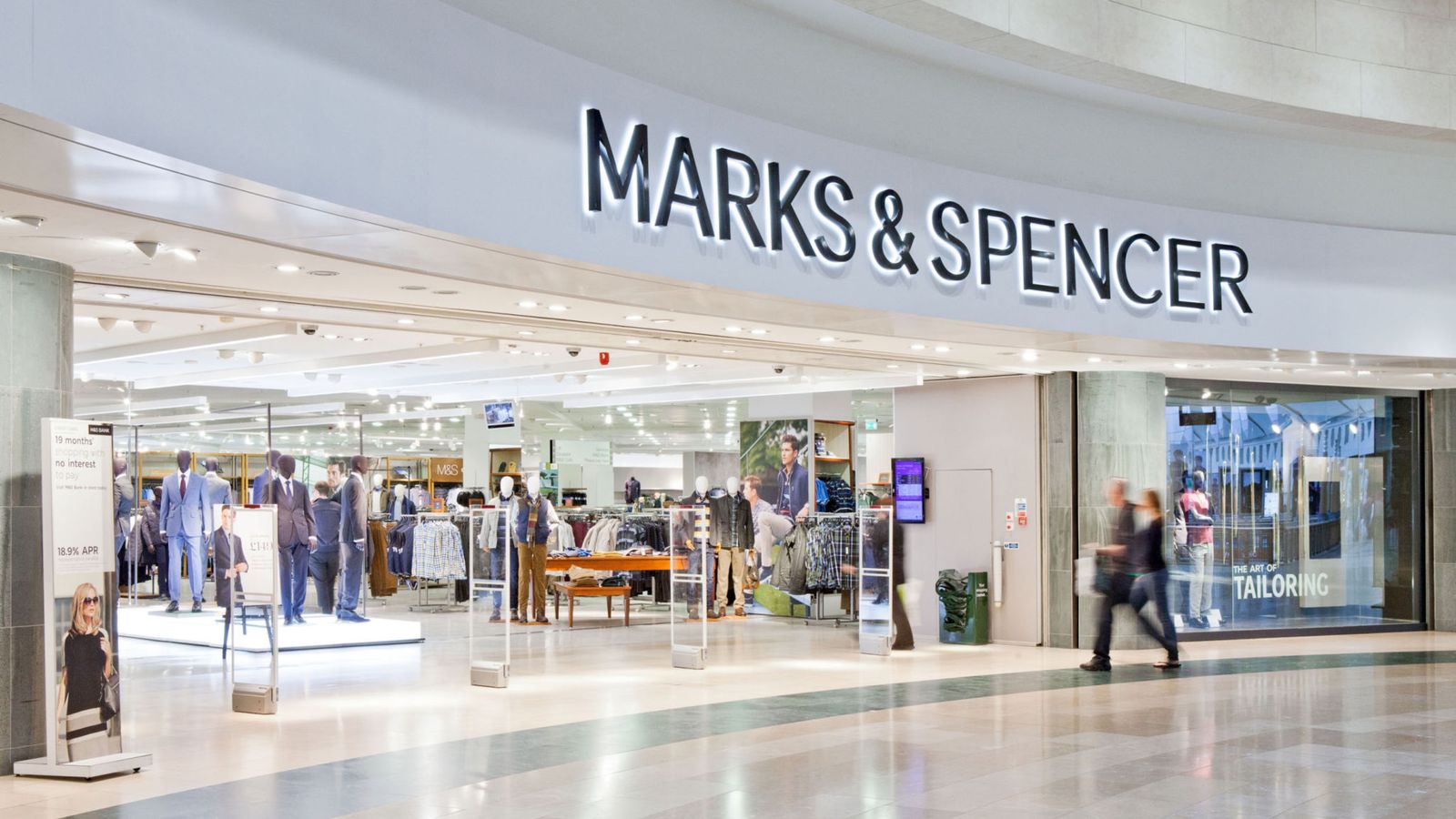
Marks and Spencer UK is no longer being discussed only as a legacy retailer. Over the last few years, the company has worked through a structural reset that touches almost every part of the business: food growth, clothing and home improvement, store renewal, and a clearer approach to digital and supply chain investment. For European HNIs, family offices, and stock market professionals, the main question is simple. Is this turnaround now durable enough to justify long term capital, or is the business still vulnerable to operational shocks and margin pressure?
Recent company updates show both progress and friction. M&S has continued investing to reshape its store estate and push food expansion, but it also faced a disruptive period in 2025 that temporarily hit Fashion, Home and Beauty performance after online operations were paused for several weeks and then gradually restarted.
What Marks and Spencer UK is today
Marks and Spencer Group plc operates across two core engines: Food and Fashion, Home and Beauty. Food has been the steadier driver in recent updates, while Fashion and Home remains more sensitive to availability, online performance, and consumer confidence.
M&S also has an important online grocery link through Ocado Retail, the joint venture connected to Ocado Group, which acts as its principal online grocery route. This matters because investor perception of M&S is increasingly tied to its ability to combine strong physical retail economics with a credible omnichannel model, without letting costs spiral.
Marks & Spencer Investment Outlook Analyzer 2026
Adjust key performance drivers to evaluate whether M&S fits your current portfolio strategy.
The store rotation programme is not a side project, it is the strategy
One of the most underappreciated drivers of M&S performance is its property strategy. The company has been explicit that it is rotating the store estate to improve productivity and match modern shopping patterns.
M&S says it currently has 229 full line stores across the UK and plans to move to 180 higher quality and higher productivity full line stores over the next three years, achieved by rotating the estate in 110 locations. At the same time, it expects to increase its Food offering from 328 to 420 stores.
For investors, this is important because it is a long duration margin and cash flow lever. Better stores in better locations usually mean higher sales density, better staffing efficiency, and improved profitability. It also creates a clearer capital allocation narrative, where investment is tied to measurable return rather than maintenance spending.
In late 2025, M&S also said it had launched a list of 500 target locations it is considering for new and renewed Food stores as it aims to double the size of its Food business, alongside a faster pace of renewal and openings.
The 2025 disruption and what it revealed about the business
Every turnaround story gets tested by shocks. In the first half of the 2025 to 2026 financial year, M&S described a one off incident that led to a temporary pause in online operations from late April to early June, followed by a gradual recovery. The company said Fashion, Home and Beauty sales declined materially in that period, and it cited lower sales and higher stock management costs as key reasons why the division’s profitability weakened in the half.
From an HNI and institutional perspective, the takeaway is not only that disruption happened. The more investable question is whether the company built resilience. In its half year communications, M&S stressed that it was strengthening technology infrastructure and investing in supply chain modernisation as part of its broader transformation, with the ambition of regaining momentum in the second half of the year.
Investors should treat this period as a reminder that omnichannel excellence is not only a marketing story. It is operational discipline. When online pauses or availability falls, store traffic can also weaken because customers often combine store visits with click and collect and convenient fulfilment options, which M&S itself referenced in the same half year discussion.
Food strength and why it matters more than it seems
Food is not just a defensive division for M&S. It has become a growth engine and a brand driver. Independent analysis of the company’s third quarter update highlighted food like for like sales growth alongside weaker fashion, reflecting the different dynamics across the group.
For investors, food scale matters because it stabilises the earnings base and can support reinvestment in other areas. It also supports store economics, because modern M&S food stores can generate high volumes in well chosen locations, and they can become anchor points for the brand in regions where full line stores are being consolidated.
The broader store strategy supports this. M&S has been accelerating its store renewal and expansion activity, with company communications pointing to a faster pace of openings and renewals in the Food estate.
Fashion, Home and Beauty: the turnaround inside the turnaround
The Fashion, Home and Beauty division is where the equity story becomes more complex. When it performs well, it can drive margin expansion and a stronger valuation narrative. When it struggles, it can pull attention back to execution risk.
In the half year results for the 26 weeks ended 27 September 2025, M&S said Fashion, Home and Beauty sales declined sharply due to the temporary pause in online operations and gradual recovery afterward, and it said store sales were also impacted by reduced availability and fewer visits linked to the absence of click and collect.
For HNIs, the important point is that this is not only a demand story. It is also a fulfilment and availability story. If the company improves supply chain flow, product availability, and omnichannel experience, Fashion and Home performance can recover without needing an unrealistic macro tailwind.
Guidance and investor confidence in 2026
A key reason investors watch M&S closely is that management has offered guidance that can anchor expectations even through volatility. In January 2026 commentary on the M&S trading update, guidance was described as unchanged with underlying pre tax profit around £650 million.
When a company holds guidance in a volatile environment, it can support the valuation because it signals management confidence in recovery trajectory and cost control. That does not mean the risks vanish. It means the market can shift from questioning survival to debating how much upside is left.
Ocado Retail link: why online grocery still matters to the M&S narrative
M&S has a strong brand relationship with food, and online grocery is one of the most important shopping habit shifts of the last decade. M&S’s online grocery route is closely linked to Ocado Retail, which the company positions as transforming online grocery through that joint venture structure.
This matters for investors because online grocery economics are not simple. They depend on order density, fulfilment efficiency, delivery routing, and basket composition. While the joint venture provides scale and technology, it also connects part of the M&S growth story to the operating choices and performance of Ocado.
Recent headlines about Ocado cutting jobs and restructuring its technology unit add a layer of context for investors who view the online grocery ecosystem as interconnected. Reuters reported Ocado aiming for cash flow improvement while cutting around 1,000 roles and reducing costs, and the Financial Times noted that accounting changes linked to the M&S joint venture also influenced some reported figures in Ocado’s recent results coverage.
For M&S investors, the practical approach is to treat online grocery as supportive, but not the only foundation of the thesis. The core thesis still relies on M&S executing store rotation, strengthening food economics, and restoring fashion and home momentum.
Capital allocation and what HNIs should look for
HNIs often care less about quarterly noise and more about capital allocation discipline. The M&S transformation requires investment: store renewal, supply chain modernisation, and technology resilience. The question is whether that spending produces measurable productivity gains.
M&S has framed its store strategy in productivity terms, explicitly describing a move toward fewer but higher quality and higher productivity full line stores while expanding the Food estate. This is the kind of plan that can improve returns on capital over time if executed consistently.
Investors should pay attention to signals such as sales density improvement, operating margin trend, inventory control, and the ability to maintain or improve profit guidance while still investing.
Risks that can still change the share price direction
Marks and Spencer UK is on a stronger footing than it was, but several risks remain relevant for a serious investor.
Operational disruptions can still hurt performance, as the 2025 online pause showed.
Consumer confidence can affect discretionary categories such as apparel and home. Even if food is strong, fashion and home can remain volatile.
Competition is structural. UK food retail is highly competitive, and margins can compress when price pressure rises. The advantage for M&S is differentiation through quality and brand loyalty, but it still operates in a market where customers compare value constantly.
Execution risk is always present in large scale change programmes. Store rotation, supply chain modernisation, and technology resilience must work together. If one area fails, it can damage the whole omnichannel experience.
Investment outlook for European HNIs and professional allocators
For European HNIs, M&S typically fits as a UK consumer and retail exposure with a transformation angle. It is not a pure defensive stock and not a pure growth stock. It is a hybrid where the market can reward sustained operational improvement with a higher valuation, while also punishing setbacks quickly.
A disciplined way to approach M&S as an investment is to focus on a few leading indicators: food like for like growth trend, fashion and home recovery trajectory after disruptions, store renewal pace, and whether profit guidance and cash generation remain credible.
The company’s explicit store estate plan and the continued investment narrative suggest management wants the turnaround to be structural rather than cyclical. If that is delivered, M&S can remain attractive for long term investors who want exposure to a UK consumer brand that is actively rebuilding competitiveness.
Conclusion
Marks and Spencer UK has become one of the most important turnaround and modernisation stories in British retail. The company is reshaping its store estate, expanding food presence, and working to restore momentum in Fashion, Home and Beauty after a disruptive period in 2025 that temporarily hit online operations and availability.
For investors, the path forward is clear. If M&S sustains food strength, stabilises fashion and home performance, and executes store rotation with discipline, the valuation can be supported by improving earnings quality and credibility. If operational resilience slips again, the market can quickly reprice the stock around execution risk rather than progress.