
Why 2026 Is a High-Volatility Year for Global Markets
Market volatility is not a random event. It is the visible expression of hidden stress building across economic systems, policy frameworks, and investor psychology. When confidence is stable, markets digest news calmly and trends develop smoothly. When confidence becomes fragile, the same information produces outsized reactions, sharp reversals, and sudden shifts in leadership. The market volatility forecast for 2026 points toward a year where global markets may struggle to maintain stable trends because multiple forces are converging at once.
In the context of cycle-based market analysis, 2026 stands out as a high-volatility year because it sits at a point where growth expectations, policy constraints, geopolitical stress, and liquidity conditions interact in a way that makes markets more sensitive. This does not mean every month will be chaotic. It means that the probability of frequent and intense volatility episodes is higher than usual, especially around key macro and policy turning points.
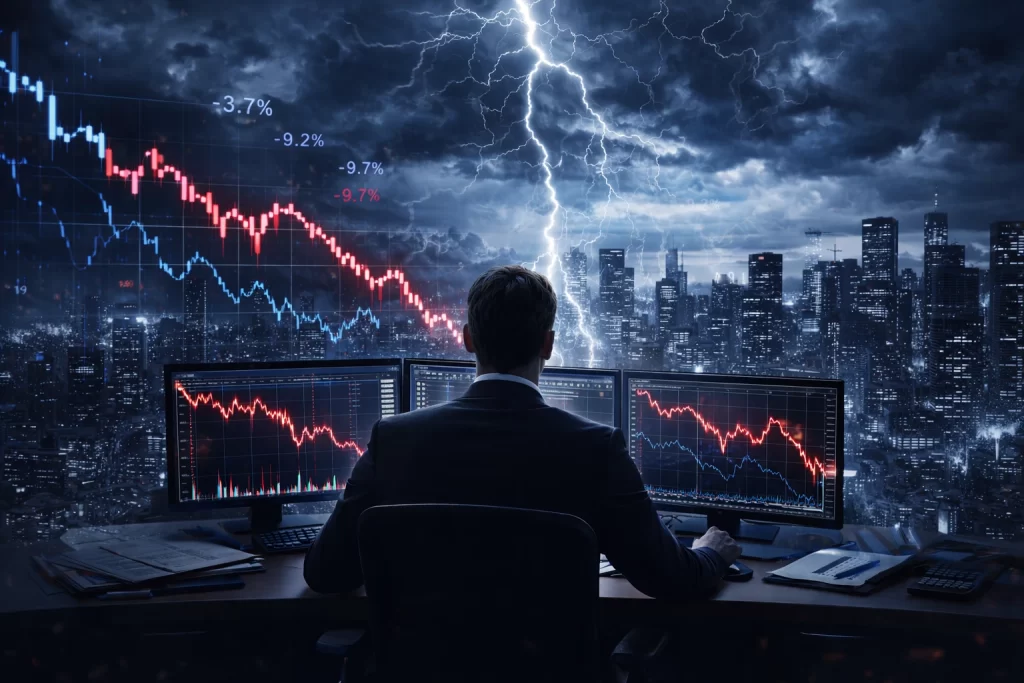
Volatility as a Symptom of Transition, Not a Temporary Shock
The strongest volatility regimes often occur during transition periods. Transition periods are not defined by a single crisis, but by the gradual breakdown of older assumptions. When markets can no longer rely on predictable liquidity, stable policy response, or consistent growth, prices begin to move more violently as participants reassess risk.
In 2026, markets may be transitioning from a framework of easy monetary support and stable global trade expectations toward a more fragmented and constrained environment. This transition creates disagreement among investors, and disagreement creates volatility. Some participants price in soft landings and recovery narratives, while others focus on recession probability, geopolitical disruption, and structural inflation. When these narratives compete, markets oscillate rather than trend.
Policy Constraints and the Limits of Stabilisation
A major reason the market volatility forecast for 2026 is elevated is the reduced flexibility of policy tools. When central banks have room to cut rates aggressively and governments can stimulate freely, markets tend to stabilise quickly after shocks. In 2026, policy may be constrained by inflation sensitivity, debt burdens, and political limitations.
This constraint changes how markets respond to stress. If investors begin to believe that authorities cannot neutralise risk as effectively as in the past, volatility can become self-reinforcing. Markets reprice faster, risk premiums rise, and investors demand more compensation for uncertainty. Even small policy surprises can trigger large moves because the margin for error becomes narrow.
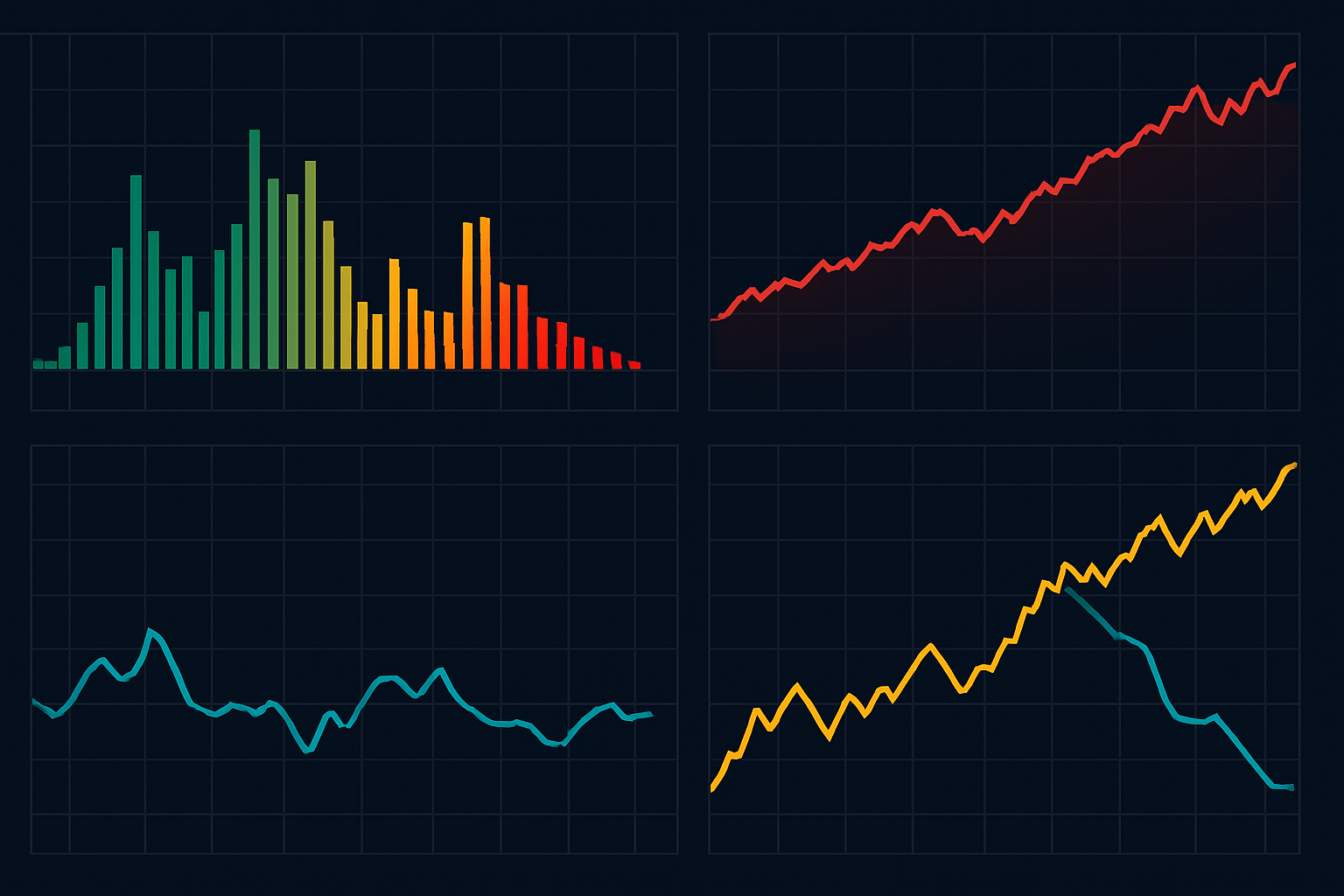
Recession Probability and Global Growth Divergence
Growth divergence is another driver of volatility. When the global economy expands in a coordinated way, markets tend to reward risk-taking. When growth is uneven, capital flows become unstable. Some regions experience resilience while others slow sharply. This divergence impacts currencies, trade, earnings expectations, and investor sentiment simultaneously.
In 2026, recession risk in major economies, including the United States, may remain a persistent narrative. Even without an immediate contraction, the possibility influences positioning. Markets often trade the probability of recession long before it becomes official. This creates choppy price action as expectations repeatedly adjust with each new data release.
Liquidity Cycles and the Fragility of Market Depth
Liquidity is the quiet engine that supports market stability. When liquidity is abundant, markets absorb large orders without dramatic price impact. When liquidity tightens, even moderate selling can produce sharp declines. Liquidity is influenced by interest rates, bank lending standards, leverage conditions, and institutional risk appetite.
The market volatility forecast for 2026 reflects the possibility of uneven liquidity conditions. Liquidity can look healthy during calm periods but vanish quickly during stress. This liquidity fragility creates sudden price gaps and accelerates moves. It also increases the frequency of failed breakouts and rapid reversals, as markets struggle to sustain trend momentum.
Geopolitical Stress and the Return of Policy Shock Risk
Geopolitical stress has become a consistent volatility catalyst. Unlike normal economic cycles, geopolitical shocks often arrive without warning and are difficult to hedge. They can affect energy prices, trade routes, supply chains, and risk sentiment across global markets. In 2026, geopolitical tensions and policy-driven shocks may remain elevated, contributing to high-volatility conditions.
Trade conflicts and tariff risks also amplify volatility because they introduce uncertainty into corporate forecasting and inflation expectations. When businesses cannot plan confidently, markets respond with higher risk premiums. This dynamic supports the view that volatility in 2026 may not be limited to equities, but could spill across currencies, bonds, and commodities.
Inflation does not need to rise dramatically to increase volatility. What matters is sensitivity. When markets are highly sensitive to inflation prints, each data release becomes a potential trigger. Inflation influences central bank decisions, bond yields, equity valuation multiples, and commodity pricing. In a sensitive environment, even small surprises can shift narratives sharply.
In 2026, inflation may remain a key variable because energy and food costs can fluctuate quickly. Markets may repeatedly swing between inflation fear and growth fear. This oscillation is a classic driver of volatility because it forces constant repricing across asset classes.
Corporate Earnings Visibility and Equity Market Swings
Equities are forward-looking. They price expectations, not certainty. When earnings visibility declines, equities become more volatile because valuation depends on assumptions that are unstable. In 2026, corporate guidance may remain cautious as businesses navigate uncertain demand, higher funding costs, and policy-driven disruptions.
When guidance is weak, markets may react sharply to earnings updates, especially in sectors priced for growth. This creates higher dispersion, where some stocks or sectors outperform while others suffer large drawdowns. Dispersion is a hallmark of volatile years because leadership becomes unstable and rotation accelerates.
Currency Volatility and Global Capital Flows
Currencies play a central role in global volatility. When growth divergence increases and policy paths differ, exchange rates can move sharply. Currency volatility affects corporate earnings, import costs, and investor returns, especially in international portfolios.
In 2026, currency moves may contribute to broader market instability. When currencies swing, investors often adjust risk exposure across regions, which can trigger additional moves in equities and commodities. This feedback loop can intensify volatility and reduce the stability of diversification strategies.
Why High Volatility Creates Opportunity and Risk
Volatility is often viewed as a threat, but it also creates opportunity. High volatility produces mispricing, forced selling, and emotional extremes. The key is discipline. Investors who understand volatility regimes can avoid the most damaging behavior, such as chasing rallies or panic-selling into drawdowns.
In 2026, a high-volatility environment may reward those who focus on risk management, patience, and timing. Long-term success in volatile years often comes from avoiding large losses, maintaining liquidity, and acting decisively when opportunities appear during fear-driven periods.
Understand the Cycle Before Policy Shocks Hit Markets
Trade wars and tariff decisions rarely unfold in isolation. They interact with economic cycles, market psychology, liquidity conditions, and long-term capital flows. The Annual Letter 2026 by Rajeev Prakash Agarwal is a comprehensive research publication designed to help investors understand these deeper forces before they become visible in market prices.
Volatility as a Reflection of Fragile Confidence
Volatility increases when confidence becomes conditional rather than stable. In confident markets, investors accept temporary setbacks because they trust the broader trajectory. In fragile markets, confidence depends on continuous validation. Every data release, policy statement, or geopolitical headline becomes a test. When validation fails, even briefly, markets react sharply.
In 2026, confidence may remain fragile because narratives are competing rather than reinforcing. Growth optimism, recession risk, inflation concern, and policy uncertainty coexist. This coexistence creates hesitation. Markets hesitate not because they lack information, but because they lack consensus. Volatility thrives in this environment of disagreement.
Late-Cycle Behaviour and Rapid Sentiment Shifts
Late-cycle markets are known for sudden sentiment reversals. Optimism can dominate one month and collapse the next, even without dramatic changes in fundamentals. This pattern occurs because late-cycle participants are highly sensitive to risk signals. They want to stay invested but fear being the last to exit.
The market volatility forecast for 2026 reflects this late-cycle psychology. Investors may attempt to position for upside while keeping exits ready. This behaviour produces sharp rallies followed by abrupt pullbacks. Momentum becomes unstable, and trend-following strategies face frequent whipsaws.
Meet Our Team
Get to know our dedicated team of experts. With a diverse range of skills and years of experience, we’re committed to providing you with the best market analysis and investment guidance.

Mr. Rajeev Prakash Agarwal
Founder
Expert in financial & personal astrology for 20 years+. Rajeev is a well-known astrologer based in central India who has a deep understanding of both personal and mundane astrology.

Mr. Shashi Prakash Agarwal
Technical Head
Shashi is a technology leader with a strong background in global business.He holds a B. Tech in Computer Science & MBA in Finance from Narsee Monjee Institute of Management Studies, one of the top B-Schools in India.
The Role of Leverage in Amplifying Market Moves
Leverage magnifies volatility when conditions change. During calm periods, leverage increases returns and compresses volatility. When markets shift suddenly, leverage accelerates selling and forces liquidation. Even modest declines can trigger margin calls and risk reduction.
In 2026, leverage sensitivity may be higher because borrowing costs remain elevated compared to previous cycles. Higher costs reduce the tolerance for drawdowns. As a result, markets may experience faster and more aggressive de-risking when sentiment turns negative. This dynamic increases the speed and intensity of volatility episodes.
Institutional Positioning and Crowded Trades
Volatility often rises when positioning becomes crowded. When many participants hold similar trades, exits become narrow. Crowded positioning does not always cause immediate instability, but it increases vulnerability. When a trigger arrives, everyone attempts to move at once.
The market environment in 2026 may feature several crowded themes driven by narrative conviction rather than valuation comfort. As these themes are tested, repositioning can occur abruptly. This contributes to sudden sector rotation and sharp price adjustments even in the absence of new fundamental information.
Why Choose Us ?
Astrodunia guides you through the market’s ups and downs with the help of planetary science. Our team of experts in financial astrology provide valuable insights and predictions to assist you in market wise investment decisions and navigate the global market with ease.

Market Forecasting
Experience the advantage of enhanced market predictions. Our unique approach combines traditional analysis with astrological insights for more accurate predictions and better investment opportunities.

Decades of Market Timing Expertise
For over 20 years, we’ve honed our skills in market timing within the stock market. Our extensive experience allows us to navigate market trends with precision and confidence.

Trusted by Discerning Investors
Our clients choose us for our proven track record of success and our commitment to providing them with the most reliable market insights. Join the ranks of satisfied investors who trust our expertise
Data Dependence and Market Overreaction
Modern markets are highly data-dependent. Economic releases, inflation prints, employment reports, and policy guidance can all move markets within seconds. When sensitivity is high, markets overreact to marginal surprises. This overreaction often reverses later, but not before volatility increases.
In a high-volatility year like 2026, markets may repeatedly overprice short-term data while underestimating longer-term structural trends. This mismatch leads to frequent corrections and reinforces instability across asset classes.
Volatility Across Asset Classes, Not Just Equities
High volatility in 2026 is unlikely to be confined to equity markets. Bonds, currencies, and commodities may all experience heightened swings. Bond markets can become volatile when inflation expectations and growth fears alternate. Currency markets can move sharply as capital flows adjust to policy divergence. Commodities can react quickly to geopolitical stress and supply disruption.
Cross-asset volatility is particularly challenging because diversification benefits weaken when correlations rise. Investors who rely on static diversification may find portfolios behaving more synchronously than expected during stress periods.
Information Speed and the Compression of Market Reaction Time
Information now travels instantly. Social media, algorithmic trading, and automated news analysis compress reaction time. Markets respond faster than human judgement can comfortably process. This speed increases volatility because price discovery occurs before reflection.
In 2026, this compression may intensify volatility as narratives spread rapidly and trigger automated responses. Markets may overshoot in both directions, requiring greater discipline from investors who wish to avoid emotional decision-making.
Testimonials
Discover what our satisfied customers have to say about their experience with us. Read our testimonials from people just like who have benefited from our services.
Market singals have helped me to make quick and informed decisions for trades in stock market. resulting in significant profits for my portfolio. The team is highly professsional and always available to answer your questions and provide the best customer service.
SK Jhunjhunwala
Investor based in Mumbai
I have been using the astrodunia’s services for over 4+ years now and have been extremely impressed with level of experties and precions they bring to the table. Their live market signals have helped me make quick and informed decisions.
N. Patel
Pennsylvania , US
Excellent service. This is undoubtedly the best market forecast newsletter that i have ever subscribed. None of the other newsletter are anywhere close to this terms of accuracy. Please continue with the good work !
Withheld
Fixed income trader with a required foreign bank in asia
i am an entrepreneur based in Australia and have been subscriber of astrodunia services from the past two years.i have found their NewsLetter , Live Signals and Annual Letter to be incredibly valueable.
Z. Irani
Australia
Volatility as a Test of Investment Discipline
Volatile years separate discipline from impulse. When prices move violently, investors face constant temptation to act. Acting can feel productive, even when it is counterproductive. Discipline becomes more important precisely when volatility is highest.
The market volatility forecast for 2026 highlights the importance of having predefined rules, risk limits, and patience. Investors who attempt to trade every swing often suffer from exhaustion and reduced returns. Those who understand volatility regimes focus on survival first and opportunity second.
Whether you’re a seasoned investor or just starting out, our financial astrology tools can be tailored to your specific investment goals. Gain valuable insights to achieve your financial aspirations.
Address
1301, 13th Floor, Skye Corporate Park, Near Satya Sai Square, AB Road, Indore 452010
+91 9669919000
© All Rights Reserved by RajeevPrakash.com (Managed by AstroQ AI Private Limited) – 2025