
Long-Term Thinking in Short-Term Markets
Modern financial markets move faster than ever. News cycles are compressed into minutes, prices react instantly to headlines, and narratives shift before investors have time to reflect. In this environment, short-term noise often dominates decision-making, even for those with long-term objectives. Long-term thinking has not disappeared, but it has become harder to practice. Yet it is precisely in fast-moving, reactive markets that long-term discipline becomes most valuable.
Long-term thinking in short-term markets is not about ignoring volatility. It is about understanding it. Markets fluctuate because expectations constantly adjust to incomplete information. Prices overshoot in both directions, driven by emotion, leverage, and liquidity rather than fundamentals alone. Investors who react to every move often find themselves trading the noise instead of investing in value.

The Structural Conflict Between Speed and Strategy
There is a natural conflict between market speed and strategic thinking. Short-term markets reward immediacy. They incentivize rapid response, frequent adjustment, and emotional engagement. Long-term strategy, by contrast, requires patience, restraint, and the ability to wait while others react.
This conflict creates a trap. Investors may believe they are making rational decisions while actually responding to short-term stimuli. Over time, this reactive behavior erodes performance through overtrading, poor timing, and increased transaction costs. In contrast, those who slow their decision-making process often gain clarity, even if they act less frequently.
Noise Is Not Information
One of the most important distinctions in investing is the difference between noise and information. Noise is abundant. It includes daily price fluctuations, media commentary, and short-term forecasts that change with each data release. Information is scarce. It includes structural trends, balance-sheet strength, valuation discipline, and long-term cycles.
Short-term markets amplify noise because it is easily tradable. Information unfolds slowly and requires interpretation. Investors who confuse the two often feel informed but act inconsistently. Long-term thinkers filter noise and focus on variables that matter over extended horizons, even when markets are loud.
Cycle Awareness as an Anchor
Market cycles provide a framework for long-term thinking. Cycles remind investors that expansions and contractions are normal, that optimism and fear alternate, and that price does not move in a straight line. Awareness of cycles helps contextualize volatility rather than fear it.
During late-cycle phases, long-term thinking encourages caution even when markets appear strong. During stress phases, it encourages patience and selective opportunity rather than panic. Cycle awareness does not require predicting exact turning points. It requires recognizing when risk is rising or when pessimism is becoming excessive.
The Cost of Narrative Addiction
Narratives simplify complexity, which makes them appealing. However, short-term markets cycle through narratives rapidly. What is convincing today may be discredited tomorrow. Investors who anchor decisions too tightly to narratives often find themselves perpetually repositioning.
Long-term thinking weakens narrative addiction by anchoring decisions to valuation, cycle positioning, and balance-sheet resilience. Narratives become context rather than instruction. This shift reduces the emotional pull of headlines and improves decision stability.
Policy and interest-rate transitions create particularly noisy markets. Expectations shift quickly, and forward guidance is reinterpreted repeatedly. Short-term reactions can be violent, even when long-term outcomes change little.
The Cost of Impatience
Impatience is one of the most expensive behaviors in financial markets. It pushes investors to chase performance, abandon positions prematurely, and react emotionally to short-term losses. In fast markets, impatience feels justified because opportunities appear fleeting. In reality, true opportunities persist longer than most people expect.
Long-term investors understand that missing a move is often less damaging than entering at the wrong time. They accept that patience may lead to temporary underperformance but reduces the risk of permanent loss. This trade-off is uncomfortable, but it is essential for durable results.
Valuation as a Discipline, Not a Timing Tool
Valuation plays a central role in long-term thinking, but it is often misunderstood. Valuation is not a precise timing tool. Markets can remain overvalued or undervalued for extended periods. However, valuation provides a discipline that informs risk management.
When valuations are elevated, long-term thinkers adjust expectations, reduce concentration, and preserve liquidity. When valuations compress, they become more willing to commit capital. This approach does not eliminate volatility, but it aligns decision-making with probability rather than emotion.
Annual Letter 2026 – Strategic Outlook for Investors
Markets are entering a phase where innovation, geopolitics, and capital cycles are intersecting with unusual intensity. The Annual Letter 2026 is designed to help investors and traders interpret these shifts with clarity and discipline. It offers a structured view of global market cycles, leadership transitions, and risk phases expected during the year, supported by long-term cycle analysis and timing frameworks.
This research publication goes beyond headlines and short-term noise. It connects innovation-driven optimism with valuation risk, capital concentration, and sector rotation, helping readers understand where leadership may strengthen and where caution is warranted. The letter also examines how global macro trends and policy decisions could influence equities, commodities, and currencies as markets move through critical inflection points.

Emotional Control in Noisy Markets
Short-term markets test emotional control. Rapid price movements trigger fear and greed, often in quick succession. Without structure, emotions drive decisions. Long-term thinking introduces structure by defining objectives, time horizons, and acceptable risk in advance.
This structure allows investors to remain calm during volatility. Instead of reacting to price changes, they assess whether the underlying thesis has changed. If it has not, they resist the urge to act. If it has, they respond deliberately rather than impulsively.
The Role of Liquidity and Optionality
Liquidity is a form of optionality. Long-term thinkers value it because it allows flexibility during stress. In short-term markets, fully invested positions may feel productive during rallies, but they limit response during downturns.
Maintaining liquidity does not mean staying out of the market. It means avoiding overcommitment. Liquidity provides the ability to add risk when others are forced to reduce it. In volatile environments, this optionality can be as valuable as return itself.
Avoiding the Illusion of Activity
Short-term markets reward activity. Frequent trades create the illusion of control and engagement. However, activity is not the same as progress. Many investors underperform not because they lack insight, but because they act too often.
Long-term thinking embraces selective action. It recognizes that doing nothing can be a decision. By reducing unnecessary trades, investors lower costs, reduce errors, and improve consistency. This restraint becomes a competitive advantage in noisy markets.
Strategic Patience During Uncertainty
Uncertainty is uncomfortable, but it is also fertile ground for long-term opportunity. Markets often misprice assets during uncertain periods because emotions dominate analysis. Strategic patience allows investors to observe, learn, and prepare rather than rush.
In 2026, with markets navigating innovation-driven optimism, regulatory shifts, and geopolitical tension, uncertainty is likely to remain elevated. Long-term thinkers accept this environment rather than resist it. They build strategies that can operate across multiple scenarios.
Discipline as the Foundation of Long-Term Success
Discipline is the foundation that connects long-term thinking to real-world results. It ensures that strategy is applied consistently, even when emotions run high. Discipline includes position sizing, risk limits, and predefined exit criteria.
Without discipline, long-term intentions collapse under short-term pressure. With discipline, investors can remain aligned with their objectives despite market noise. This alignment is what allows compounding to work over time.
When Long-Term Thinking Becomes a Psychological Edge
In short-term driven markets, the greatest advantage is often psychological rather than analytical. Most participants have access to similar information, charts, and data. What differentiates outcomes is how that information is processed and acted upon. Long-term thinking creates emotional distance from daily market fluctuations, allowing investors to respond thoughtfully instead of reflexively.
This distance reduces decision fatigue. When every market move feels urgent, cognitive resources are depleted quickly. Long-term thinkers conserve mental energy by focusing only on decisions that materially affect outcomes. Over time, this leads to clearer judgment, fewer mistakes, and greater consistency. In noisy markets, clarity itself becomes an edge.
The Discipline of Ignoring the Irrelevant
Not every market movement deserves a response. Short-term markets are filled with signals that feel important but have little long-term consequence. Earnings whispers, intraday volatility, social media narratives, and constantly revised forecasts can dominate attention without improving results.
Long-term thinking involves the discipline to ignore what is irrelevant. This discipline is not passive. It is an active choice to allocate attention toward fundamentals, structural trends, and cycle positioning. Investors who master this filter are less likely to be whipsawed by sentiment shifts and more likely to remain aligned with their strategy.
Time Horizon as a Risk Management Tool
Time horizon is one of the most powerful but underutilized risk management tools. Short time horizons magnify volatility and emotional stress. Longer horizons absorb volatility and smooth outcomes. This does not eliminate drawdowns, but it changes how they are experienced and managed.
By extending the decision horizon, investors reduce the probability of being forced into poor timing decisions. They can tolerate temporary mispricing and allow fundamentals to reassert themselves. In fast markets, simply lengthening the time horizon can materially improve risk-adjusted outcomes.
Why Markets Punish Overreaction
Short-term markets reward speed in the moment, but they punish overreaction over time. Frequent shifts in positioning increase exposure to noise rather than signal. Each reaction introduces friction in the form of costs, slippage, and psychological stress.
Long-term thinkers recognize that markets often overshoot both optimism and pessimism. Instead of reacting to these extremes, they observe them. Overreaction becomes a source of opportunity rather than a trigger for action. This inversion of perspective is central to disciplined investing.
The Role of Conviction in a Rapidly Changing Market Environment
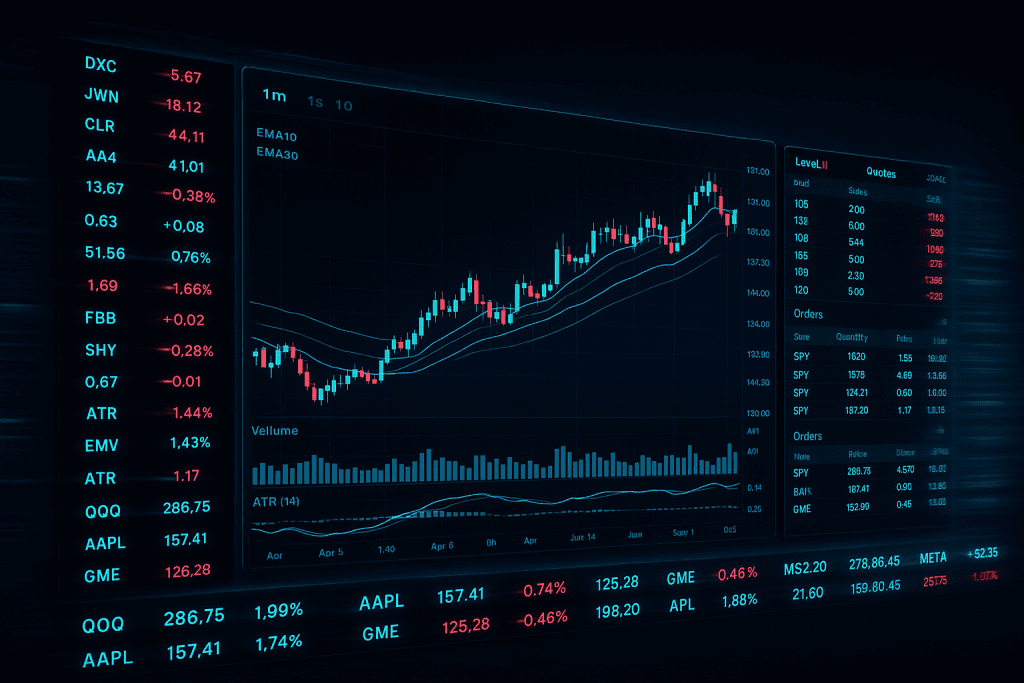
Conviction is often misunderstood as stubbornness. In reality, conviction in investing is the ability to hold a well-reasoned position through volatility without becoming rigid. In short-term markets, price movements can challenge confidence daily. Long-term thinkers distinguish between fluctuations that test patience and information that genuinely changes the thesis.
Strategic Inactivity as a Form of Skill
In environments that glorify constant action, inactivity can feel like failure. In reality, strategic inactivity is a skill. Knowing when not to act requires confidence in one’s framework and acceptance of uncertainty.
Many of the most damaging investment decisions occur during periods of heightened emotion, not due to lack of information. Long-term thinkers reduce exposure to these moments by limiting unnecessary activity. They act decisively when conditions align and remain inactive when they do not.
Separating Outcome From Process
Short-term markets encourage judging decisions by immediate outcomes. A trade that works is viewed as correct. A trade that loses is viewed as a mistake. This outcome-based thinking erodes discipline because it ignores probability.
Long-term thinking emphasizes process over outcome. A well-reasoned decision can produce a negative short-term result and still be correct. Conversely, a poorly reasoned decision can succeed temporarily and still be dangerous. Investors who focus on process build repeatable success rather than relying on chance.
Long-Term Thinking During Drawdowns
Drawdowns are the ultimate test of long-term discipline. Short-term markets amplify fear during declines, making losses feel urgent and permanent. Long-term thinkers reframe drawdowns as part of the investment journey rather than as failures.
This reframing does not trivialize losses. It contextualizes them. By understanding drawdowns within historical cycles and valuation frameworks, investors avoid panic and maintain optionality. This allows them to recover not just capital, but confidence.
Meet Our Team
Get to know our dedicated team of experts. With a diverse range of skills and years of experience, we’re committed to providing you with the best market analysis and investment guidance.

Mr. Rajeev Prakash Agarwal
Founder
Expert in financial & personal astrology for 20 years+. Rajeev is a well-known astrologer based in central India who has a deep understanding of both personal and mundane astrology.

Mr. Shashi Prakash Agarwal
Technical Head
Shashi is a technology leader with a strong background in global business.He holds a B. Tech in Computer Science & MBA in Finance from Narsee Monjee Institute of Management Studies, one of the top B-Schools in India.
The Compounding Effect of Consistency
Consistency is the hidden engine of compounding. Markets reward not brilliance in isolated moments, but disciplined behavior over long periods. Avoiding large mistakes often matters more than capturing every opportunity.
Long-term thinking promotes consistency by reducing emotional swings and behavioral errors. Over time, this consistency compounds quietly. The effect may be invisible in the short run, but it becomes decisive over years and decades.
Long-Term Thinking in a World of Constant Comparison
Short-term markets encourage constant comparison. Performance is measured daily, rankings are updated frequently, and peer benchmarks dominate attention. This environment creates pressure to chase relative performance rather than pursue absolute objectives.
Long-term thinkers resist this pressure. They define success internally, based on goals, risk tolerance, and time horizon. This autonomy reduces the temptation to follow crowded trades or abandon strategy during periods of underperformance.
Preparing in Advance for Volatility
Long-term discipline is most effective when decisions are made before volatility arrives. This preparation includes defining allocation ranges, acceptable drawdowns, and rebalancing criteria. When markets become chaotic, prepared investors rely on pre-established rules rather than emotion.
In short-term markets, preparation creates calm. It transforms volatility from a threat into a known variable. Investors who prepare in advance are less likely to make irreversible decisions under stress.
Why Choose Us ?
Astrodunia guides you through the market’s ups and downs with the help of planetary science. Our team of experts in financial astrology provide valuable insights and predictions to assist you in market wise investment decisions and navigate the global market with ease.

Market Forecasting
Experience the advantage of enhanced market predictions. Our unique approach combines traditional analysis with astrological insights for more accurate predictions and better investment opportunities.

Decades of Market Timing Expertise
For over 20 years, we’ve honed our skills in market timing within the stock market. Our extensive experience allows us to navigate market trends with precision and confidence.

Trusted by Discerning Investors
Our clients choose us for our proven track record of success and our commitment to providing them with the most reliable market insights. Join the ranks of satisfied investors who trust our expertise
Long-Term Thinking and the Role of Humility
Humility is essential in long-term investing. Markets are complex systems influenced by countless variables. Certainty is rare and often misleading. Long-term thinkers accept what they do not know and avoid overconfidence.
This humility supports flexibility. When evidence changes, long-term thinkers adapt without abandoning discipline. They adjust gradually rather than react abruptly. This balanced adaptability is particularly valuable in environments characterized by rapid information flow and shifting narratives.
Integrating Long-Term Vision With Tactical Awareness
Long-term thinking does not mean ignoring short-term realities. It means integrating them into a broader framework. Tactical awareness helps manage risk and identify opportunities without undermining strategic objectives.
In practice, this integration allows investors to reduce exposure during periods of excess and increase it during periods of stress, all while maintaining alignment with long-term goals. It is not about constant adjustment, but about informed responsiveness.
Testimonials
Discover what our satisfied customers have to say about their experience with us. Read our testimonials from people just like who have benefited from our services.
Market singals have helped me to make quick and informed decisions for trades in stock market. resulting in significant profits for my portfolio. The team is highly professsional and always available to answer your questions and provide the best customer service.
SK Jhunjhunwala
Investor based in Mumbai
I have been using the astrodunia’s services for over 4+ years now and have been extremely impressed with level of experties and precions they bring to the table. Their live market signals have helped me make quick and informed decisions.
N. Patel
Pennsylvania , US
Excellent service. This is undoubtedly the best market forecast newsletter that i have ever subscribed. None of the other newsletter are anywhere close to this terms of accuracy. Please continue with the good work !
Withheld
Fixed income trader with a required foreign bank in asia
i am an entrepreneur based in Australia and have been subscriber of astrodunia services from the past two years.i have found their NewsLetter , Live Signals and Annual Letter to be incredibly valueable.
Z. Irani
Australia
Closing Integration
Long-term thinking in short-term markets is a deliberate choice. It requires patience in a culture that rewards immediacy, discipline in an environment that encourages reaction, and clarity amid constant noise.
For serious investors and traders, this mindset is not a limitation. It is a source of resilience and advantage. By focusing on cycles rather than headlines, process rather than outcome, and discipline rather than activity, long-term thinkers position themselves to navigate volatility with confidence.
Markets will continue to move quickly. Narratives will continue to shift. Noise will remain abundant. Those who anchor themselves in long-term thinking do not escape these forces, but they are far less controlled by them. Over time, that difference is what separates enduring success from repeated frustration in short-term driven markets.
Long-term thinking in short-term markets is not about predicting the future or ignoring volatility. It is about maintaining clarity when markets are loud and reactive. It is about respecting cycles, valuing patience, and acting with discipline rather than urgency.
Serious investors and traders who cultivate this mindset gain an edge that does not depend on speed or information overload. They accept that markets will always fluctuate, narratives will always change, and noise will always exist. By focusing on what endures rather than what distracts, they position themselves to navigate uncertainty with confidence and to compound capital over time, even in the most short-term driven market environments.
Whether you’re a seasoned investor or just starting out, our financial astrology tools can be tailored to your specific investment goals. Gain valuable insights to achieve your financial aspirations.
Address
1301, 13th Floor, Skye Corporate Park, Near Satya Sai Square, AB Road, Indore 452010
+91 9669919000
© All Rights Reserved by RajeevPrakash.com (Managed by AstroQ AI Private Limited) – 2025