Your cart is currently empty!
If you are a short term trader
Follow intraday and swing signals on SPX, Nasdaq, Dow, Russell, Gold and more, with timing windows that help you avoid noise and focus on high-probability moves.
Get Live Signals
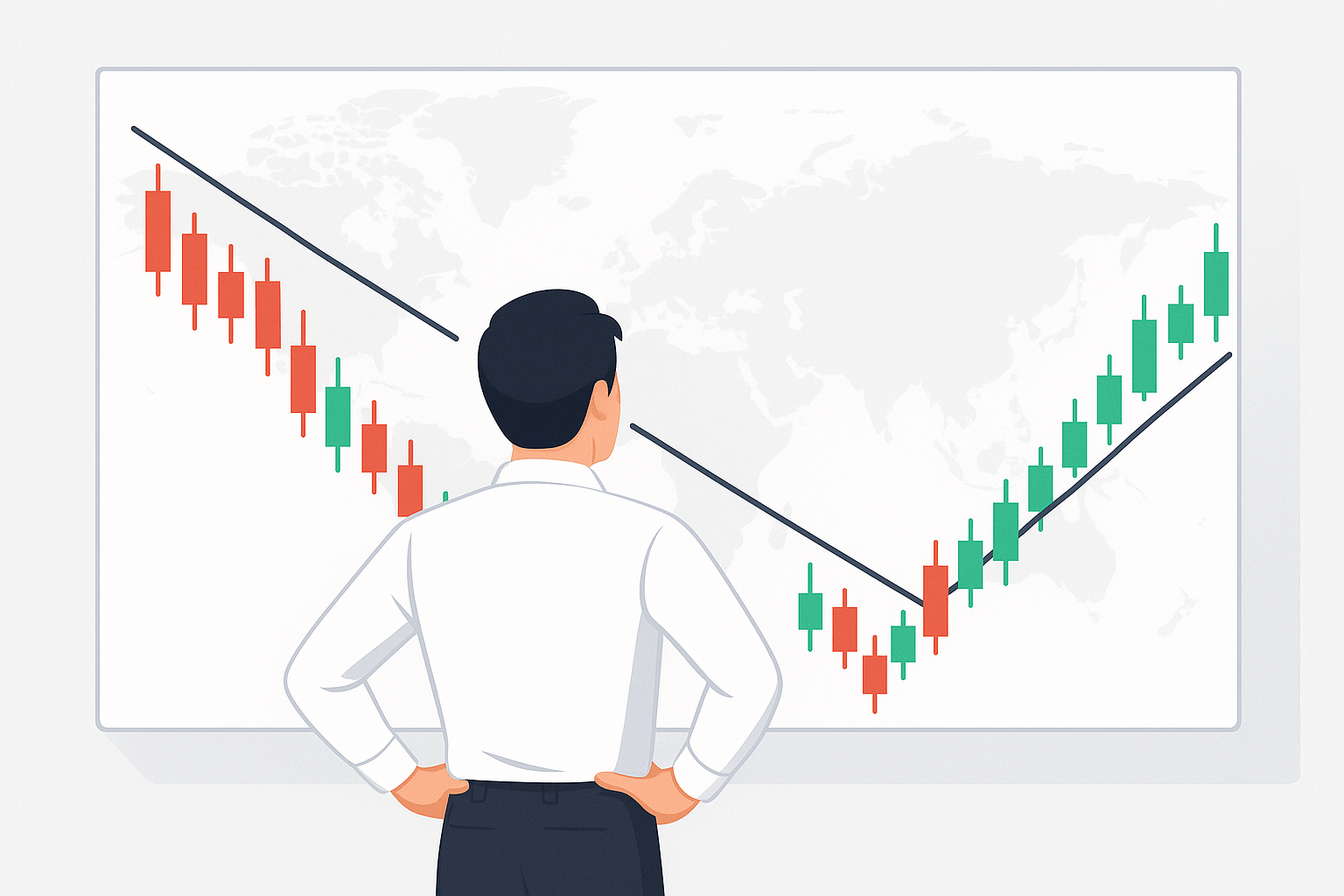
The U.S. equity market is fast, noisy, and increasingly dominated by algorithmic flows. SPX futures react to macro data in seconds. Nasdaq can whipsaw on a single earnings headline or change in AI sentiment. Russell often behaves like a leveraged expression of risk appetite, spiking higher in optimism and collapsing when liquidity tightens. In this environment, live trading signals for U.S. market participants are not a luxury. They are a framework to turn chaos into a structured decision process.
This article explains how to build a content rich WordPress page around your live signals for U.S. traders, focused on timing reversals in SPX, Nasdaq, and Russell. It shows how to explain your approach, how to guide traders to use signals in practice, and how to present four powerful tools on the page. These tools are the Real Time Signal Widget, the Chart Overlay Player, the Backtest Explorer, and the Alert Signup Box.
By the end of this article, you will have a complete long form narrative that can sit on your site as a flagship page. It will educate serious traders, showcase your methodology, and convert engaged readers into newsletter subscribers and live signal clients.
Live trading signals for U.S. market indices are essentially a translation layer. Markets generate constant information through price, volume, volatility, and cross asset moves. Most traders see this as noise. A robust signal engine turns that stream into clear states such as Buy, Hold, or Exit, which can be monitored for SPX, Nasdaq, and Russell.
Instead of reacting emotionally to every spike, the trader can look at the current state of the signal and ask a simple question. Is the system telling me to add risk, manage existing positions, or step aside from fresh exposure. That shift from impulse to structure is the first major benefit of using live signals.
SPX is the institutional benchmark, the index that many global portfolios use to measure performance. Nasdaq is more growth sensitive, driven by technology, software, semiconductors, and high beta innovations. Russell reflects the health of smaller companies and domestic risk appetite.
A single signal for the entire U.S. market is not enough. Traders need to see live trading signals for U.S. market indices separately. When SPX and Nasdaq are both positive while Russell lags, it can suggest that large caps are carrying the market while small caps are under pressure. When Russell leads in a buy phase, risk appetite is broad and risk on trades can be pursued more confidently. Your live signals page should explain this difference clearly so that traders understand why three indices are tracked instead of one.
Live Signals provides intraday and multiday market direction using disciplined timing models.
You will receive alerts that help identify when trends weaken, where reversals form, and which windows offer the highest probability setups.
Most traders lose money by entering too late and exiting too soon. They chase moves once the bulk of the trend has already played out. A focus on timing reversals tries to invert this pattern. The goal is to detect zones where the probability of a turn in SPX, Nasdaq, or Russell is elevated.
These are not perfect turning points, but zones where price is stretched, sentiment is extreme, or time based cycles line up with exhaustion patterns. When traders see these reversal signals in real time, they can shift from reaction to preparation. They can take profits near potential tops, defend capital near potential bottoms, and reduce the urge to trade every small fluctuation in between.
The U.S. market is loud. Prices jump on every headline, futures whip around overnight, and social media amplifies every tick. Without a framework, it all feels like chaos.
Live trading signals for the U.S. market turn that noise into structure.
Behind the scenes, our models continuously process price, volume, volatility, and cross-asset behavior across SPX, Nasdaq, and Russell. On the surface, you see something simple: clear states such as Buy, Hold, or Exit for each index.
Instead of reacting emotionally to every spike, you can glance at the current signal and ask one focused question:
“Is this a time to add risk, manage existing positions, or stay out?”
That shift—from impulse to structure—is the core value of Live Signals.
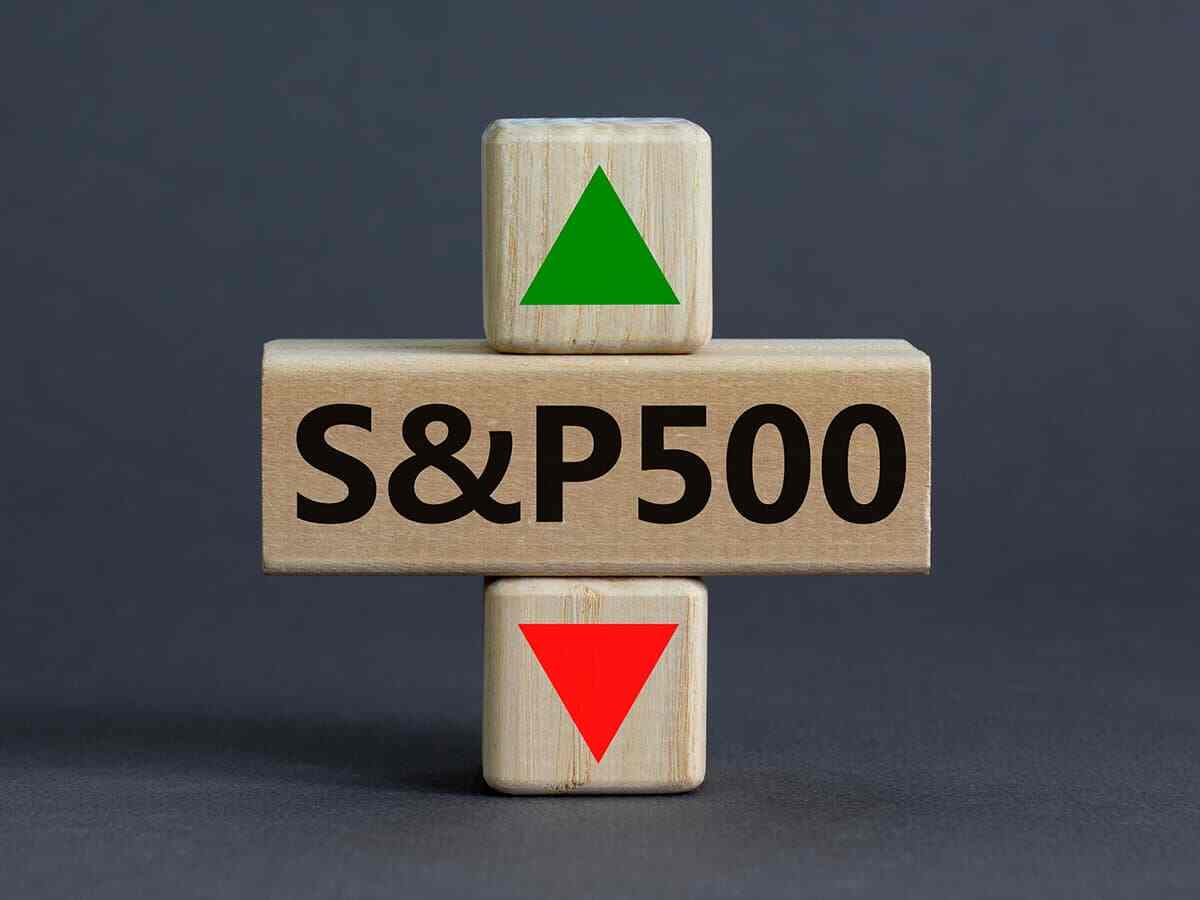
In the last six months, our Live Signals captured major turning points across SPX, Nasdaq, and Russell with high reliability.
We highlighted the pullback in August, the acceleration in September, and the reversal bounce in October—all delivered through timely Buy/Hold/Exit alerts.
The U.S. market is not one story; it’s three intertwined narratives.
S&P 500 (SPX) is the institutional benchmark, the lens through which global portfolios judge performance.
Nasdaq is highly sensitive to growth, innovation, and liquidity—driven by technology, software, and semiconductors.
Russell reflects smaller companies and domestic risk appetite.
A single “U.S. market” signal is not enough.
When SPX and Nasdaq are both in a positive regime while Russell lags, it often means large caps are carrying the tape while small caps struggle. When Russell leads in a buy phase, risk appetite is broad and risk-on trades can be pursued more confidently.
Live Signals track each index separately, so you can see:
This context is essential if you want to position intelligently instead of trading blind.
Most traders don’t lose because they never find a trend. They lose because they enter too late and exit too early.
Live Signals are designed around reversal timing rather than pure trend chasing. The goal is to highlight zones where the probability of a turn in SPX, Nasdaq, or Russell is elevated—not magically picking exact tops and bottoms, but flagging moments when:
When you see those reversal signals in real time, you can act with preparation instead of panic:

During the trading day, the Real Time Signal Widget and main feed will periodically update. Your article should coach traders on how often they should look at these updates and what kind of changes are meaningful.
A shift from Buy to Hold on SPX, especially after a strong run, may signal that the system sees slowing momentum and potential exhaustion. A move from Hold to Exit on Russell after a gap down might highlight the risk of further downside. Traders should learn to combine these changes with price action, not override price completely, but use the signal as a compass.
Encourage readers to think in terms of regimes. When the signal regime is Buy, the trader gives more weight to long setups and accepts that minor pullbacks are part of the trend. When the regime is Exit, traders prioritize capital protection, tighten stops, and avoid fresh high risk entries.
Our Annual Letter 2026 acts as your Market Compass for the year ahead. It helps you ride the strongest trends, sidestep major drawdowns, and position calmly through noise. You get a clear roadmap of equity, metal, energy, FX, and crypto opportunities so your long-term capital can grow with discipline instead of guesswork.
You don’t need formulas to trust a system—but you do need to understand the philosophy. Our live trading signals for the U.S. market are built on four core pillars.
We study how price behaves around key multi-day and multi-week reference levels:
This tells us whether the market is trending, compressing, or transitioning.
Regimes matter. When realized volatility spikes, the system naturally becomes more defensive, even if the broader trend is still up. When volatility compresses, we look for breakouts and trend continuation rather than random chop.
We monitor sector leadership, internal market breadth, and cross-index confirmation. A buy signal backed by broad participation is very different from one driven by a handful of megacaps.
Markets often turn in clusters around recurring time windows. Our models study those windows systematically. When a historically important timing zone overlaps with stretched price and unstable breadth, the system becomes more sensitive to reversal risk.
You see the output of this research in a simple form: Buy, Hold, or Exit on SPX, Nasdaq, and Russell.
We design Live Signals around three simple principles:
Risk first
Signals are more conservative around central bank meetings, major economic releases, or when volatility is already elevated. The priority is to keep you in the game.
Clarity
There are only a few possible states. Traders don’t need another dashboard of 20 conflicting indicators—they need a clear regime.
Consistency
Signals follow predefined rules. They don’t change with mood, headlines, or social media sentiment. The same conditions produce the same output, day after day.
This is what makes the system usable for both professional desks and serious individual traders
The best decisions are made before the bell rings.
Start your day by checking the current live trading signals for U.S. market indices:
With that snapshot, you can map out:
As the session unfolds, the Real Time Signal Widget and the main feed update periodically.
Changes in state matter more than small price wiggles:
The signal is not there to replace price action, but to act as a compass. When the regime is Buy, you give more weight to long setups and accept normal pullbacks. When the regime is Exit, you prioritize capital protection, tighten stops, and avoid chasing aggressive entries.
At the end of the week, revisit the Chart Overlay Player.
You can replay SPX, Nasdaq, and Russell with historical signal timestamps overlaid:
Over time, this review process builds discipline. You see concretely how respecting or ignoring the signals affects your P&L.
Within the article, describe an illustration concept that your design team can implement. For example, a simple horizontal layout showing three labeled boxes, one for SPX, one for Nasdaq, and one for Russell, each with a colored bar indicating Buy, Hold, or Exit. You can explain that this visual should be used both as a static image and as an inspiration for the live widget design.
This keeps the content and visual experience aligned, which is important for trader confidence.
The Real Time Signal Widget is the heartbeat of this page.
Even with a small delay for public visitors, it shows that the signals are alive and constantly updating throughout the U.S. session.
For each index—SPX, Nasdaq, Russell—you’ll see:
Subscribers receive these signals in real time; the public widget offers a preview of the same logic in slightly delayed form.
Some simple patterns matter:
This is not about predicting every tick—it’s about aligning your risk with the prevailing regime.
Decide whether you want high-frequency live signals for intraday trades or a yearly roadmap that guides your long-term allocation.
The Real Time Signal Widget is the heartbeat of this page.
Even with a small delay for public visitors, it shows that the signals are alive and constantly updating throughout the U.S. session.
For each index—SPX, Nasdaq, Russell—you’ll see:
Subscribers receive these signals in real time; the public widget offers a preview of the same logic in slightly delayed form.
Some simple patterns matter:
This is not about predicting every tick—it’s about aligning your risk with the prevailing regime.
The Chart Overlay Player turns historical signals into a learning tool.
You can:
Instead of reading a dry backtest report, you visually experience how the model handled real markets.
It’s a powerful way to:
Backtests don’t need to be intimidating.
The Backtest Explorer lets you pick:
With a single click, you see a simple representation of how a hypothetical one-unit strategy following the signals would have evolved over that period.
You’ll see:
The goal isn’t to promise specific returns—it’s to show:
This makes the power and limitations of the model more transparent and realistic.
After you’ve explored the widget, charts, and backtests, the natural next step is to receive the signals yourself.
The alert signup is simple and focused. Once you subscribe, you can receive:
The promise is not risk-free trading. The promise is structure:
Free trials or sample alerts, where available, give you a chance to experience the rhythm of the system across a full session or week before committing.
Intraday traders use Live Signals as a compass:
Signals help intraday traders avoid fading strong trends or chasing every micro-move against the regime.
Swing traders operate on multi-day to multi-week horizons. They rely on:
Live Signals give them a structured way to time entries and exits around major inflection points, instead of reacting to daily noise.
For portfolio managers and risk desks, Live Signals act as a top-down risk overlay:
It’s a concise dashboard for equity-index risk, grounded in real-time market structure rather than headlines.
Our work includes timing and cycle research, but always framed in a professional, data-driven way.
Markets often exhibit repeated time patterns—windows where turning points cluster more often than random. We study those windows systematically, cross-check them against price behavior and volatility, and only integrate them into the signal engine when they pass robust tests.
In practice, that means:
Timing is an extra lens, not a substitute for real market analysis.
No honest system pretends that losses don’t exist.
Live trading signals for the U.S. market will have:
The difference is that everything happens inside a known framework. You can:
The system provides the map. Discipline is still your responsibility—but you don’t have to navigate the U.S. market blind.
Astrodunia guides you through the market’s ups and downs with the help of planetary science. Our team of experts in financial astrology provide valuable insights and predictions to assist you in market wise investment decisions and navigate the global market with ease.
Experience the advantage of enhanced market predictions. Our unique approach combines traditional analysis with astrological insights for more accurate predictions and better investment opportunities.

For over 20 years, we’ve honed our skills in market timing within the stock market. Our extensive experience allows us to navigate market trends with precision and confidence.

Our clients choose us for our proven track record of success and our commitment to providing them with the most reliable market insights. Join the ranks of satisfied investors who trust our expertise
This page is meant to be more than a one-time sales pitch. Over time, it becomes a hub:
Bookmark it. Visit it before the open, during key inflection points, and on weekends when you review your performance.
The U.S. market will always be noisy. With Live Signals on SPX, Nasdaq, and Russell, that noise can be turned into a structured, repeatable process—so you can trade with more clarity, more discipline, and a far better sense of timing.

Rajeev is a well-known astrologer based in central India who has a deep understanding of both personal and mundane astrology. His team has been closely monitoring the movements of various global financial markets, including equities, precious metals, currency pairs, yields, and treasury bonds.
The Financial Astrology Terminal is a web platform that combines real-time U.S. market data (S&P 500, Nasdaq, Dow, Russell, key stocks and commodities like gold and silver) with planetary cycles, giving traders and investors astro-timing signals on top of normal charts and analysis.
Whether you’re a seasoned investor or just starting out, our financial astrology tools can be tailored to your specific investment goals. Gain valuable insights to achieve your financial aspirations.
Address
1301, 13th Floor, Skye Corporate Park, Near Satya Sai Square, AB Road, Indore 452010
+91 9669919000
© All Rights Reserved by RajeevPrakash.com (Managed by AstroQ AI Private Limited) – 2025