
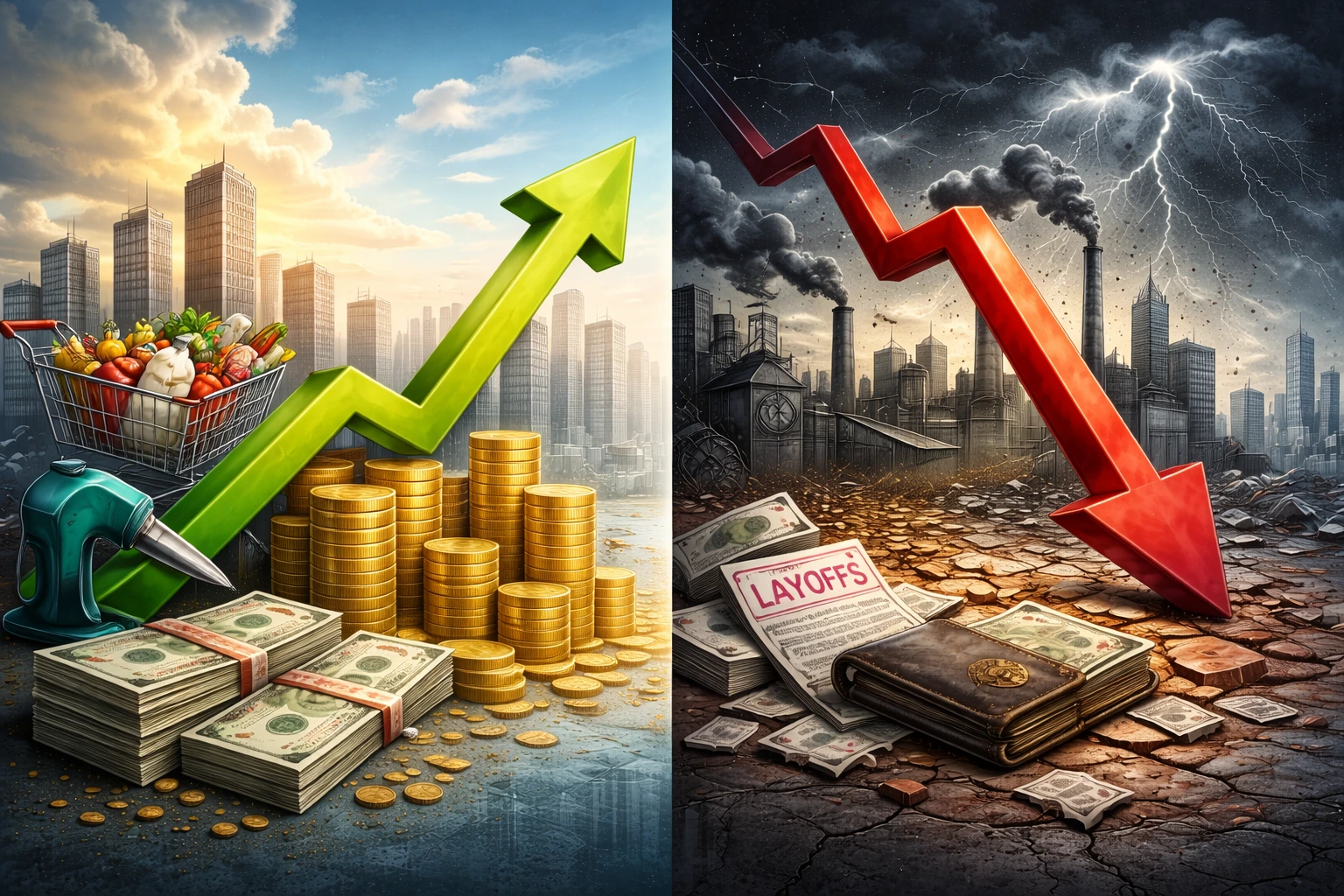
Inflation and stagflation both involve rising prices, so it is natural that many readers treat them as the same thing. Yet in financial markets and economic planning, the difference between inflation and stagflation is not a minor academic point. It changes how central banks react, how bond yields behave, how equities are valued, which sectors can protect purchasing power, and how households should think about savings, debt, and spending. Inflation can be uncomfortable, but if growth remains healthy, the economy still has momentum. Stagflation is more complex because it combines rising prices with weak growth and often rising unemployment, creating a trap where policy choices become difficult and trade-offs become painful.
For investors, understanding inflation vs stagflation helps avoid the wrong assumptions during a market cycle. It helps explain why sometimes stocks can rise even when inflation is elevated, and why in other periods rising prices can coincide with market stress, falling earnings, and prolonged uncertainty. For businesses, the distinction affects pricing power, wage negotiations, and demand forecasting. For households, it influences budgeting, job security expectations, and how to think about fixed-rate loans versus cash savings.
This guide breaks down inflation and stagflation in depth, explains the causes, describes how policymakers typically respond, and shows how different assets and sectors tend to behave in each environment.
What Is Inflation?
Inflation is the general rise in prices across an economy over time, which reduces the purchasing power of money. When inflation increases, the same amount of currency buys fewer goods and services than before. Inflation is measured through price indices that track the cost of a basket of items such as food, energy, housing, transportation, healthcare, and consumer goods. Inflation can be moderate and stable, which many central banks consider desirable because it encourages spending and investment rather than hoarding cash.
Inflation is not always a sign of an unhealthy economy. In many cases, inflation rises when demand is strong, wages are growing, and businesses have enough pricing power to pass higher costs to consumers. This type of inflation often occurs during expansions. If inflation rises too quickly, however, it can destabilize the economy. Purchasing power declines sharply, long-term planning becomes difficult, and central banks may be forced to tighten financial conditions.
Inflation also has different forms. Demand-driven inflation occurs when demand outpaces supply, pushing prices higher. Cost-driven inflation happens when production costs rise, such as wages, shipping costs, or raw materials. Monetary inflation can occur when too much money chases too few goods, often linked to loose monetary policy or rapid credit expansion.
What Is Stagflation?
Stagflation refers to a situation where inflation is high while economic growth is weak or stagnant, often accompanied by rising unemployment or deteriorating job conditions. The word combines “stagnation” and “inflation.” This is why stagflation is feared by policymakers and investors. In normal inflationary periods, central banks can raise interest rates to cool demand, and the economy can withstand that tightening because growth is strong. In stagflation, raising rates can further harm growth and employment, but cutting rates can worsen inflation. Policy becomes trapped between two unattractive options.
Stagflation is typically associated with supply-side shocks or structural issues that raise costs while simultaneously reducing output. Energy shocks, commodity supply disruptions, or persistent productivity problems can reduce economic capacity while prices rise. Stagflation can also emerge when inflation expectations become entrenched, wages rise in response, and businesses raise prices to protect margins, creating a cycle that is hard to break even as the economy weakens.
Stagflation is not just inflation with slower growth. It is a more hostile environment because businesses face rising costs and weak demand at the same time. Profit margins come under pressure. Hiring slows. Investment declines. Consumer confidence weakens. Markets can become volatile because both growth and price stability are threatened.
Inflation vs Stagflation: The Core Difference
The simplest way to understand the difference is this. Inflation is rising prices, and the economy may still be growing. Stagflation is rising prices while the economy struggles to grow and often sheds jobs or experiences stress in labor markets.
Inflation can occur in a healthy expansion, especially when demand is strong. Stagflation tends to occur when supply constraints or structural weaknesses restrict output while costs rise. In inflationary expansions, businesses often can grow revenues because demand is strong. In stagflation, businesses may raise prices, but demand may not keep up, so volumes fall and margins compress.
This difference matters because it changes how monetary policy works. In inflationary growth periods, central banks can tighten and eventually restore balance. In stagflation, tightening can deepen stagnation, yet easing can worsen inflation. That tension can keep uncertainty elevated for longer.
Causes of Inflation: Demand, Cost, and Money Conditions
Inflation often rises when aggregate demand is strong. When consumers spend more, businesses invest more, and governments increase spending, the economy may run hotter than its supply capacity. Prices rise as businesses respond to demand.
Inflation can also rise when supply chains are disrupted or when raw material costs surge. Energy costs are an important driver because energy feeds into transportation, manufacturing, and the cost of goods. Food inflation often reflects weather cycles, fertilizer costs, and logistics. Housing inflation can reflect supply constraints and interest rate dynamics.
Monetary conditions matter as well. When interest rates are very low, borrowing becomes easy. Credit expansion can fuel demand and raise asset prices. If money supply grows faster than real output, prices can rise, especially when capacity is constrained.
Inflation expectations can also become a driver. If workers expect higher inflation, they demand higher wages. If businesses expect higher costs, they raise prices preemptively. This expectation cycle can sustain inflation even when initial shocks fade.
Causes of Stagflation: The Supply Shock Problem
Stagflation is often triggered by supply shocks that raise costs while reducing output. Energy shocks are a classic example because energy is a core input for nearly every industry. When energy prices rise sharply due to supply disruptions, production costs increase and consumer purchasing power falls. Businesses may pass costs into prices, and consumers may cut discretionary spending, weakening growth.
Another driver is declining productivity growth. If an economy produces less output per worker over time, costs rise relative to output. That can push prices up while limiting real growth. Structural bottlenecks, such as underinvestment in infrastructure, weak labor participation, or regulatory constraints, can also reduce supply capacity.
Stagflation can also emerge when inflation becomes entrenched due to repeated shocks and policy mistakes. If central banks delay tightening when inflation accelerates, expectations may become unanchored. Then, when tightening finally occurs, growth slows sharply but inflation remains high for a time, creating a stagflation-like window.
How Central Banks Respond to Inflation
Central banks primarily manage inflation through interest rates and financial conditions. When inflation rises above target levels, central banks tend to increase policy rates. Higher rates raise borrowing costs, reduce demand, cool asset prices, and slow credit growth. Central banks may also reduce liquidity by shrinking their balance sheets, which tightens financial conditions further.
The goal of tightening is to reduce demand pressure and anchor inflation expectations. If inflation falls, central banks may slow or pause rate increases. They generally want to avoid creating a deep recession, but they also need credibility. If the public believes inflation will remain high, wage and price setting behavior can keep inflation elevated.
In an inflationary expansion, policy tightening often works with fewer trade-offs because the economy has momentum. Employment may remain strong even as growth cools. This is why inflation without stagnation is a more manageable challenge.
How Policymakers Respond to Stagflation
Stagflation is harder because policy tools are blunt. If central banks raise rates to fight inflation, they may worsen unemployment and suppress growth further. If they cut rates to support growth, they may reinforce inflation. Fiscal policy can help but it also has trade-offs. Government spending can support demand, yet it may worsen inflation if supply capacity is constrained.
In stagflation, policymakers often focus on restoring supply-side stability. Energy policy, supply chain normalization, productivity reforms, and targeted measures to reduce bottlenecks become more important. Central banks may still tighten to restore credibility, but they must communicate clearly to avoid destabilizing markets.
The painful reality is that stagflation often requires time to resolve because supply-side adjustments are slower than demand-side tightening. The economy needs new investment, new capacity, and improved productivity to grow without fueling inflation.
How Inflation Typically Impacts Stocks
In moderate inflation with strong growth, stocks can perform reasonably well because corporate revenues grow with nominal demand. Companies with pricing power can raise prices without losing customers. Earnings can expand, and stocks can maintain valuations if interest rates do not rise too aggressively.
However, when inflation rises sharply, stocks can face valuation pressure. Higher inflation often leads to higher interest rates. Higher rates increase discount rates used in valuation models, which tends to compress price-to-earnings multiples. Growth stocks can be more sensitive because their valuations rely on earnings farther in the future.
The stock market response depends on whether inflation is seen as temporary or persistent. If inflation is expected to fall, stocks may look through it. If inflation appears entrenched, markets may reprice.
How Stagflation Typically Impacts Stocks
Stagflation is generally more negative for equities because it hits both sides of the profit equation. Costs rise, and demand weakens. Businesses struggle to protect margins. Earnings estimates are revised downward. At the same time, inflation keeps interest rates elevated, which compresses valuation multiples. This combination can create sustained pressure on stocks.
In stagflation, investors often become selective. Companies with strong pricing power, essential products, and resilient demand may hold up better. Businesses with high debt and weak margins can underperform.
Market leadership often shifts. Speculative sectors may struggle. Defensive and real-asset-linked sectors sometimes perform relatively better, depending on the nature of the inflation.
How Inflation and Stagflation Affect Bond Markets
Inflation is a primary enemy of bond investors because fixed coupon payments lose purchasing power when prices rise. If inflation expectations rise, bond yields tend to rise as investors demand higher returns. Rising yields push existing bond prices lower.
If inflation is rising but growth is strong, yields can rise sharply. If central banks tighten aggressively, yields can remain elevated until inflation cools.
In stagflation, bond behavior can be complex. Inflation pushes yields higher, but weak growth can create demand for safe assets. Markets may anticipate future easing if recession risk rises. Yield curves can become volatile. Credit spreads can widen because corporate default risk increases when growth is weak. Lower-quality credit can suffer.
Real Assets and Commodities in Inflation vs Stagflation
Real assets are often discussed as inflation hedges because their value can rise when prices rise. Commodities can perform well when inflation is driven by commodity supply shocks. Energy and industrial metals may rise in such periods. However, commodities are cyclical. If inflation is driven by demand and then policy tightening slows growth, commodity prices can eventually fall.
In stagflation driven by supply constraints, certain commodities may remain firm while growth weakens. This can happen in energy-driven stagflation. However, if stagnation deepens into recession, demand destruction can eventually weigh on commodity prices.
Real estate can hedge inflation when rents rise, but higher interest rates can reduce affordability and slow property demand. The net effect depends on local housing supply, wage growth, and financing conditions.
Currency Behavior During Inflation and Stagflation
Currencies respond to interest rate differentials and growth expectations. During inflation with aggressive rate hikes, a currency may strengthen because higher yields attract capital. A stronger currency can reduce imported inflation.
In stagflation, currency outcomes depend on credibility. If investors believe policymakers can control inflation, the currency may hold up. If inflation appears unmanageable and growth is weak, the currency may weaken due to declining confidence and capital outflows.
Currency volatility often increases in stagflation because markets struggle to price policy direction.
How Businesses Experience Inflation vs Stagflation
Businesses can often cope with inflation when demand is strong. Revenues grow in nominal terms, and companies with pricing power can protect margins. Wage costs rise, but sales volumes may remain healthy.
In stagflation, businesses face higher costs with weaker demand. Customers become price-sensitive. Volumes fall. Discounting increases. Inventory management becomes harder. Profit margins compress. Hiring freezes become common. Investment slows because uncertainty is high and financing costs are elevated.
This is why stagflation tends to pressure both corporate earnings and business confidence.
Household Impact: Cost of Living and Job Security
Inflation reduces purchasing power, especially for households with fixed incomes. Essentials such as food, fuel, and housing often rise quickly, which increases stress.
If inflation occurs during strong growth, job markets may remain healthy, which offsets some of the pain through wage gains. Yet wage gains may still lag inflation.
In stagflation, households face the worst combination. Prices rise while job security weakens. Wage growth may not keep up, and unemployment risk increases. Consumer confidence can decline sharply, which reduces spending and reinforces stagnation.
How Investors Can Position in Inflation
In inflationary periods with growth, investors often focus on pricing power and cash flow strength. Businesses that can pass costs to customers without losing demand tend to hold up better.
Investors also watch duration risk. Long-duration assets, such as high-growth equities and long-term bonds, tend to be more sensitive when rates rise.
Diversification across sectors and asset types becomes important. The goal is not to predict every data point, but to reduce vulnerability to one narrative.
How Investors Can Position in Stagflation
In stagflation, investors often emphasize resilience. Quality balance sheets, stable demand, and essential services matter. Defensive sectors may hold up relatively better. Cash flow reliability becomes valuable.
Investors also consider real assets and inflation-linked dynamics, but they remain careful because recession risk can harm cyclical assets. Risk management becomes central. Stagflation tends to produce volatility and regime shifts.
Portfolio strategy in stagflation is often about survival and patience. Investors aim to avoid forced selling and maintain flexibility for opportunities that arise when markets overshoot pessimism.
How to Tell Whether the Economy Is Moving Toward Stagflation
Stagflation signals appear when inflation stays elevated while growth slows. Employment may weaken, job openings may decline, and consumer demand may soften while price pressures remain persistent.
Another sign is when central banks continue to emphasize inflation control even as growth indicators weaken. This suggests inflation is the binding constraint.
If business surveys show falling output expectations alongside rising input costs, stagflation risk increases. If corporate earnings guidance weakens while cost pressures remain, markets may begin pricing a stagflationary environment.
The Key Takeaway: Inflation Is Not Always Stagflation
Inflation is a broad concept describing rising prices. It can occur during healthy expansions, and markets can sometimes perform well if earnings grow and inflation is manageable.
Stagflation is a more difficult environment where inflation remains high while growth stagnates and unemployment risk increases. It challenges policymakers and often creates persistent market stress.
Knowing the difference helps investors interpret headlines, understand policy reactions, and choose strategies that match the economic regime.
Conclusion: Why This Difference Should Shape Your Financial Decisions
Inflation vs stagflation is not just a vocabulary issue. It is a practical framework for understanding risk. Inflation can be uncomfortable but manageable when growth is strong and policy has flexibility. Stagflation is more dangerous because it combines rising prices with weak growth, creating difficult trade-offs for central banks and governments.
For investors, recognizing whether the economy is in an inflationary growth phase or moving into stagflation can influence decisions about sector exposure, risk levels, and time horizon. For businesses, it shapes pricing strategy, hiring plans, and cost control. For households, it affects budgeting and expectations around job stability.
Markets are ultimately driven by liquidity, earnings, and expectations. Inflation and stagflation change all three. When you understand the difference, you can navigate uncertainty with clearer thinking and better preparation.