
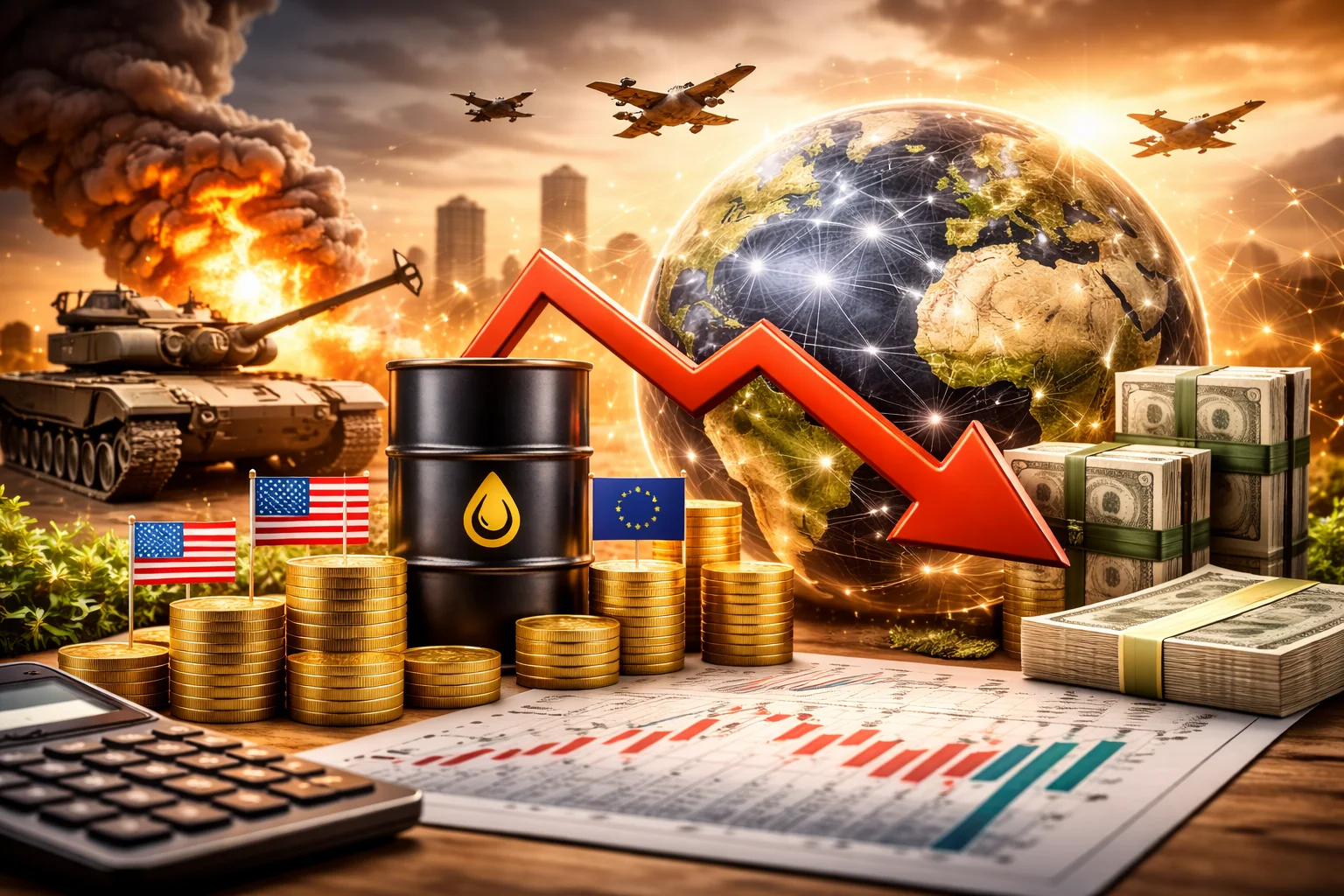
Geopolitical tensions can reshape stock markets in ways that feel sudden, confusing, and sometimes unfair. A company can report strong earnings, yet the stock falls because investors fear sanctions, disrupted trade, higher oil prices, or a shift in global interest rates. In another moment, a market can rally on a single headline about a ceasefire, even when economic data remains weak. This is the nature of geopolitical risk. It changes expectations, and markets are forward-looking machines.
When investors talk about geopolitics, they are not only talking about wars. They are talking about the full spectrum of global power dynamics: trade conflicts, sanctions, elections with foreign policy consequences, maritime disruptions, cyber threats, diplomatic ruptures, and tensions around strategic resources like energy, semiconductors, rare earths, and food supply chains. The stock market responds because these events can alter corporate profits, supply chains, inflation, currency flows, and investor confidence.
This page explains how geopolitical tensions affect stock markets, why the first market reaction is often emotional, how that reaction evolves, which sectors tend to benefit or suffer, and how long-term investors can protect portfolios without constantly guessing headlines.
What Counts as Geopolitical Tension in Market Terms
From a market perspective, geopolitical tension is any political or strategic conflict that increases uncertainty about trade, capital flows, economic stability, or access to resources. Markets respond not only to actual events but also to the probability of events. A stand-off that increases the chance of sanctions can move markets even before sanctions are announced. A buildup near a trade route can lift shipping costs even if no disruption occurs.
Geopolitical tensions typically fall into a few broad categories. Military conflict risk is the most obvious. Trade disputes and tariff escalation can also be powerful because they affect corporate margins and global growth. Sanctions and export controls matter because they can instantly change who can sell, buy, or access financial infrastructure. Energy and commodity disruptions matter because they can raise inflation and compress consumer demand. Cyber and hybrid warfare risks matter because they can hit infrastructure, financial systems, and corporate operations without traditional conflict.
The market does not react to geopolitics because it cares about politics in a moral sense. The market reacts because geopolitics changes the distribution of future outcomes. More uncertainty usually means a higher risk premium, and a higher risk premium often means lower stock prices.

Why Stock Markets React So Fast to Geopolitical Headlines
Stock markets move quickly because they are continuous auctions of expectations. When new information arrives, investors revise probabilities. Even if the news does not change today’s earnings, it can change the expected range of earnings next quarter or next year. It can also change discount rates through inflation expectations and central bank policy.
There is also a practical reason. Large institutions manage risk with rules. When uncertainty rises, risk managers often reduce exposure. This selling can amplify the move. Markets can also become more correlated during geopolitical stress, meaning many assets move together. In those moments, investors are not analyzing each company’s fundamentals. They are adjusting exposure to risk itself.
The first reaction to geopolitical tension is often a liquidity move rather than a valuation move. Investors sell what they can, not necessarily what they should. High-beta sectors fall quickly. The most liquid indexes move sharply. Then, as information becomes clearer, investors rotate into assets and sectors that fit the new environment.
The Three Phases of Market Behavior During Geopolitical Stress
Geopolitical market moves often follow a recognizable sequence.
The first phase is shock and repricing. Volatility rises, indexes drop, and safe-haven assets often rally. Traders reposition rapidly because uncertainty has increased and nobody wants to be overexposed.
The second phase is differentiation. Markets begin separating direct exposure from indirect exposure. Companies with supply chain risk, regional revenue exposure, or commodity sensitivity begin to move differently. Investors start pricing winners and losers rather than selling everything.
The third phase is normalization or escalation. If tensions ease, risk premium declines and markets can rebound strongly, sometimes quickly. If tensions escalate or become prolonged, markets adjust to a new regime where higher defense spending, altered trade flows, and higher energy prices become structural rather than temporary.
Understanding these phases helps investors avoid interpreting the first move as the final move. Early price action is often a stress response, not a long-term verdict.
Risk Premium: The Invisible Channel That Often Matters Most
The simplest way to understand geopolitics and stocks is through risk premium. Stocks are priced not only by expected earnings but also by the return investors demand to hold risky assets. When geopolitics raises uncertainty, investors demand more compensation for risk. That means valuations compress.
A higher risk premium is like gravity. Even if earnings forecasts do not change immediately, the valuation multiple investors are willing to pay often declines. Growth stocks can be particularly sensitive because their value depends heavily on future cash flows discounted back to the present. When the discount rate rises or risk premium expands, those long-dated cash flows become less valuable.
This is why geopolitical shocks can hit high-valuation sectors harder, even if those companies are not directly exposed to the conflict.
Inflation and Interest Rates: The Secondary Shock That Can Drive the Bigger Move
Geopolitical tensions often influence inflation, especially when they affect energy, food, shipping, or industrial metals. If oil prices spike, inflation expectations can rise. If inflation expectations rise, bond yields can rise. If yields rise, equity valuations can fall.
This is the second-order effect that investors often underestimate. Sometimes geopolitics is not the core reason stocks fall. The core reason is that geopolitics changes the inflation path, and that changes central bank policy expectations.
For example, a conflict that disrupts oil supply can act like a tax on consumers. It reduces disposable income. It also forces central banks to balance inflation control against growth stability. Markets react to this policy uncertainty.
Geopolitical events that lift inflation can create a difficult environment where both stocks and bonds struggle. In those regimes, investors may shift to quality, cash flow, and pricing power.
Currency Moves: Why Geopolitics Can Shift Global Capital Quickly
Currency markets are a major transmission channel from geopolitics to equities. When risk rises, capital often moves toward perceived safety and liquidity. That can strengthen certain currencies and weaken others. Currency changes affect multinational earnings because foreign revenue translates into home currency differently.
A stronger domestic currency can pressure exporters because their goods become relatively more expensive and because overseas profits translate into fewer domestic currency units. A weaker domestic currency can lift exporters but can also increase imported inflation, especially for energy importers.
Currency moves can also influence foreign investor flows. If investors fear currency depreciation, they may reduce exposure to that market even if the local stock fundamentals look good.
In short, geopolitics is not only about stocks. It is about the entire cross-asset system, and currency is often the bridge.
Liquidity and Volatility: Why Market Structure Amplifies Geopolitical Shocks
During geopolitical stress, volatility usually rises. When volatility rises, options become more expensive, and many strategies that rely on stable volatility must reduce risk. Some leveraged funds and risk-parity portfolios adjust exposure based on volatility. That can create mechanical selling when volatility spikes.
Liquidity can also thin out during stressful moments. Fewer buyers step in, spreads widen, and price gaps become more common. This can make moves look irrational. Often they are not irrational. They are the result of market structure adjusting to uncertainty.
Retail investors often interpret these moments as manipulation or chaos. In reality, it is a risk management cascade. That cascade can reverse quickly when volatility stabilizes, which is why markets sometimes rebound sharply after the initial shock.
Which Sectors Tend to Suffer During Geopolitical Tensions
Not all sectors react the same way. Geopolitical risk changes the relative attractiveness of different earnings profiles.
Cyclical sectors often suffer early. These include industrials, consumer discretionary, and companies dependent on global trade. If geopolitics threatens growth or supply chains, these sectors face margin pressure and demand uncertainty.
Technology can also be vulnerable, especially when geopolitical tensions involve export controls, supply chain restrictions, or semiconductor-related policy. Tech valuations can be sensitive to discount rates, which may rise if inflation risk increases.
Financials can be mixed. Banks may face risk if credit conditions tighten or if markets become unstable. However, certain financial companies benefit from higher volatility and trading activity, depending on the business model.
Small caps often suffer more than large caps because they have less liquidity, less pricing power, and less access to capital in stress periods.
Which Sectors Can Benefit During Geopolitical Tensions
Certain sectors can benefit, at least relative to the market, when geopolitics increases uncertainty.
Defense and aerospace can benefit when tensions raise expectations of higher defense spending and procurement. The market often anticipates increased government orders and long-term budgets.
Energy can benefit when geopolitical stress threatens supply routes or increases oil and gas prices. Higher prices can lift cash flows for producers, though this can be complicated by policy responses and demand destruction if prices rise too far.
Cybersecurity can benefit when cyber risk rises or when governments and corporations increase spending to harden infrastructure.
Some commodity producers can benefit if disruptions lift prices. However, commodity cycles can reverse quickly if the market shifts from supply fear to demand fear.
Certain defensive sectors can hold up better. Consumer staples, utilities, and healthcare often show relative resilience because demand for their products is steadier even when confidence falls. They may still decline, but sometimes less than the broader market.
Global vs Local Markets: Why Regional Exposure Changes Everything
Geopolitical risk is rarely evenly distributed. Markets closest to the tension zone often react more sharply because investors fear direct disruption, capital flight, and currency instability. However, global markets also respond because supply chains and financial flows are global.
A conflict in one region can impact a market thousands of kilometers away if it affects energy supply, shipping lanes, or strategic materials. This is why investors must consider second-order links. A company may not operate in a conflict zone, but it may depend on inputs from that zone, or it may sell to countries affected by sanctions.
Large multinational companies often have geographic diversification, which can cushion local shocks. However, they can still be exposed through currency translation, trade restrictions, or shifts in global demand.
Trade Wars and Tariffs: The Slow-Burn Geopolitical Risk
Not all geopolitical risk is sudden. Trade disputes often unfold over months or years. They can be less dramatic than military conflict headlines, but their impact can be large because they change corporate cost structures and investment decisions.
Tariffs can raise input costs, reduce demand, and compress margins. Export restrictions can block revenue. Companies may respond by diversifying suppliers, moving manufacturing, or investing in redundancy. These adjustments are expensive in the short term but can create longer-term resilience.
Trade conflicts also affect market leadership. Companies with flexible supply chains and strong pricing power may outperform. Companies reliant on a single manufacturing geography may underperform until they adapt.
The market often misprices trade war risk early because the effects are slow and spread across many channels. Over time, investors begin pricing the new reality more accurately.
Sanctions and Financial Restrictions: When Markets Reprice Overnight
Sanctions can have immediate market impact because they can cut off revenue, disrupt payments, and block access to technology or capital. Sanctions can affect targeted companies, but they can also affect entire sectors if compliance becomes complex or if counterparties avoid risk.
Financial restrictions can raise the cost of capital quickly. Even companies not directly sanctioned can face higher funding costs if they operate in the same ecosystem. When markets fear sanctions expansion, risk spreads.
Sanctions can also create winners. If a supplier is removed from a market, competitors can gain market share. If a country shifts to new trade partners, some companies benefit from the re-routing of demand.
The key is that sanctions can change business models, not just earnings.
Commodities, Shipping, and Supply Chains: The Physical World Matters
Geopolitical tensions often hit the physical economy first. Shipping routes become riskier, insurance costs rise, freight rates change, and delivery times stretch. Even if goods still move, uncertainty increases.
Energy is the most obvious case. Oil and gas are globally traded and tightly linked to geopolitics. A threat to supply can lift prices quickly. Food and fertilizers can also become geopolitical when export routes are disrupted or when major producers face sanctions or conflict.
Industrial metals matter too. When tensions involve resource-rich regions, markets price potential scarcity. That can lift input costs for manufacturers, affecting margins across many industries.
Supply chain disruptions can also create corporate inventory stress. Companies may increase inventories for safety, which ties up cash. They may face stockouts, which reduce sales. They may face higher costs, which pressure margins. These operational impacts eventually show up in earnings, but the market often prices them early.
Investor Sentiment: Fear Moves Faster Than Fundamentals
Geopolitics affects the psychology of markets. Fear compresses time horizons. Investors focus on downside scenarios and reduce exposure. News cycles intensify emotion. Social media and rapid headlines amplify the sense of urgency.
During geopolitical stress, markets often trade on narrative rather than data. This can create mispricings. Some assets get oversold because investors want immediate safety. Some assets get overbought because investors chase perceived protection.
This is why long-term investors often benefit from having a process. If you rely on emotion during geopolitical headlines, you may buy high and sell low repeatedly.
A stable process does not ignore geopolitics. It simply prevents geopolitics from overriding discipline.
Why Markets Often Recover Faster Than Headlines Suggest
A common surprise is how quickly markets can recover even when tensions remain unresolved. This happens for two main reasons.
First, markets adapt. Businesses adjust supply chains, pricing, and operations. Governments respond with policy support. Investors begin to see that the worst-case scenario did not occur, so risk premium declines.
Second, markets care about marginal change. If the situation is bad but stable, markets can rally because uncertainty stops increasing. Investors stop selling because they have already repriced risk.
This does not mean geopolitics is irrelevant. It means the market is constantly updating expectations, and stabilization itself can be bullish.
Long-Term Investing During Geopolitical Risk: Principles That Work
Long-term investors do not need to predict every geopolitical headline. They need to manage exposure to uncertainty.
The first principle is diversification across sectors and geographies. If your portfolio is concentrated in one region or one supply chain, geopolitical risk can be more damaging.
The second principle is balance sheet strength. Companies with strong cash flows, low refinancing risk, and pricing power tend to endure stress better. In uncertain periods, weak balance sheets become more dangerous because capital becomes more expensive.
The third principle is liquidity discipline. Investors should avoid being forced sellers. Maintaining adequate liquidity or a cash buffer reduces the risk of selling at the worst time.
The fourth principle is valuation discipline. During geopolitical shocks, prices can overshoot. Investors who understand valuation can identify when fear has created opportunity.
The fifth principle is scenario thinking. Instead of predicting, consider multiple outcomes and assess whether your portfolio survives each one reasonably well.
Tactical Risk Management Without Overreacting
Some investors want tactical tools during geopolitical stress. The goal should be risk control, not perfect timing.
If you decide to hedge, it should be aligned with your vulnerability. Broad market hedges can reduce drawdowns, but they have costs. A hedge that is too large can harm long-term compounding if markets rebound quickly.
Rebalancing can also be a disciplined tactical response. If equity declines have reduced your equity allocation below your target, rebalancing forces you to buy when prices are lower. If a geopolitical rally has pushed risk assets above target, rebalancing trims risk.
The most damaging tactical behavior is changing strategy repeatedly. In geopolitical markets, whipsaws are common. Investors often sell after a drop and then re-buy after a rebound, locking in losses. A consistent framework reduces this risk.
How Different Types of Geopolitical Events Tend to Hit Markets
Not all geopolitical events affect stocks the same way.
A short, contained event often creates a sharp volatility spike and then normalization. In those cases, the market reaction is dominated by risk premium and positioning.
A prolonged conflict can reshape industries and budgets. Defense spending may rise. Energy markets may restructure. Trade routes may shift. Companies may invest in resilience rather than efficiency.
A trade war often creates persistent uncertainty and gradual margin pressure. Businesses change supply chains and investment decisions, which can slow growth.
A sanctions regime can rewire market access. Winners and losers emerge based on who can trade, who can manufacture, and who can access technology.
A cyber shock can hit specific sectors fast, especially if it affects financial infrastructure or critical services. It can also raise long-term spending on security.
Understanding the type of event helps investors avoid assuming every geopolitical shock is identical.
The Role of Time Horizon: The Most Underrated Variable
Time horizon determines whether geopolitical risk is mostly noise or a structural shift.
Short-term traders face headline risk. They must manage volatility, liquidity, and rapid repricing. For them, geopolitics is a major driver.
Long-term investors face a different problem. Many geopolitical shocks are temporary relative to a multi-year horizon. Markets often recover, and companies adapt. For long-term investors, the greatest danger is abandoning a sound strategy due to fear.
However, not all geopolitical changes are temporary. Some reshape supply chains, energy policy, and technology access for years. Long-term investors must distinguish between temporary stress and structural regime change. That distinction comes from watching policy, trade flows, and corporate adaptation over time.
Conclusion: Geopolitics Moves Markets Through Uncertainty, Not Just Events
Geopolitical tensions affect stock markets because they reshape expectations about growth, inflation, supply chains, corporate margins, and the global cost of capital. The first market move is often a fear-driven repricing of risk premium. Then, as information becomes clearer, markets differentiate winners and losers and eventually normalize or adapt to a new regime.
The most important lesson is that geopolitics is a risk-management problem, not a prediction contest. Investors who build resilient portfolios, focus on balance sheet strength, diversify intelligently, and maintain valuation discipline can survive geopolitical storms without constantly reacting to headlines. Markets may swing violently in the short run, but over time they reward adaptability, cash flow, and disciplined decision-making. When uncertainty rises, the market does not only punish risk. It also creates opportunity for investors who can stay calm, think clearly, and keep the long-term plan intact.