
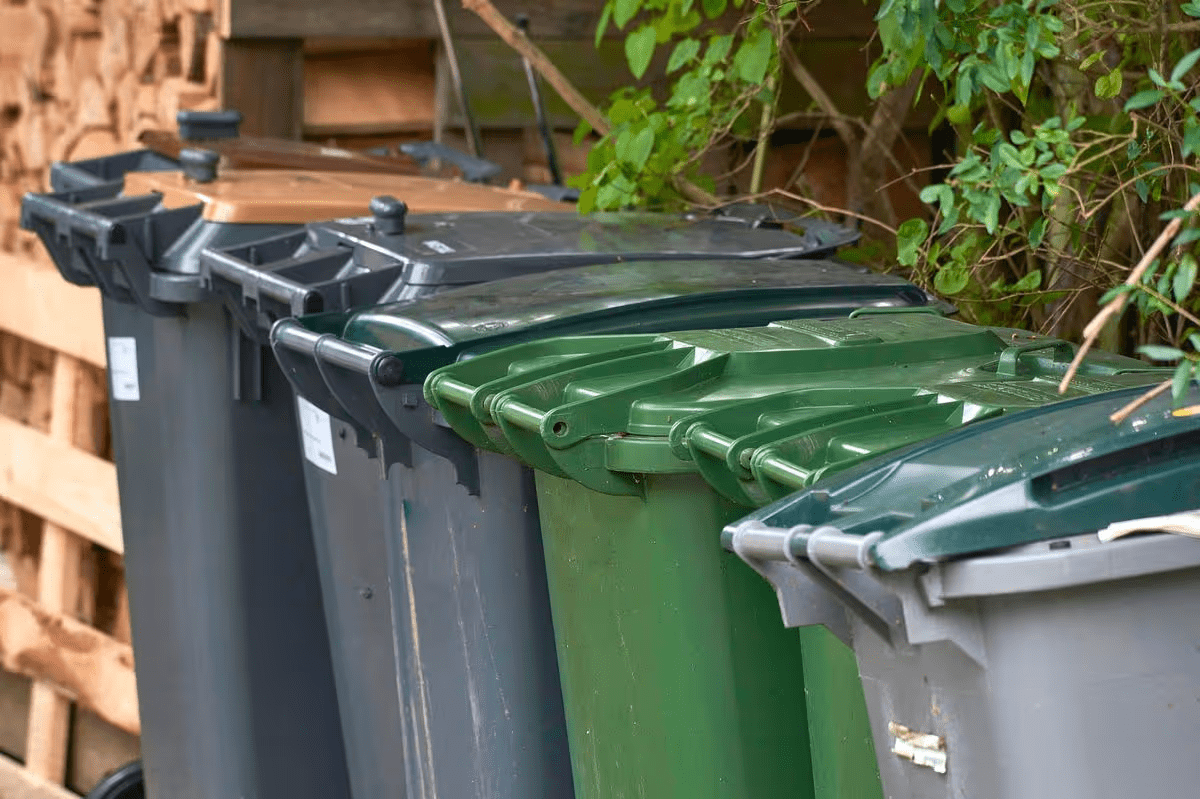
The “food waste recycling bin” story is no longer just a household hygiene topic. In England, it has become a regulated infrastructure rollout with real implications for local authority capex, waste and recycling contractors, anaerobic digestion and bioenergy operators, packaging supply chains, and the wider circular economy investable universe. The catalyst is the government’s Simpler Recycling reforms, which require weekly, free-of-charge household food waste collections, supported by new funding and a staged compliance timeline across households and workplaces.
For UK HNIs and institutional allocators, the right way to read this is as a multi-year policy-driven demand signal: higher collection volumes, more standardised service expectations, and rising enforcement and reporting pressure. That shifts cashflows across the waste value chain and forces a new round of investment decisions.
What the “Food Waste Recycling Bin” Rule Actually Requires
Under the UK government’s Simpler Recycling guidance for households in England, food waste must be collected weekly and free of charge. Local authorities are expected to provide two containers: a smaller kitchen caddy and a larger outdoor bin for collection. The guidance also states there is no requirement to provide caddy liners, although councils can encourage low-impact liners if used.
This is a direct change for councils that previously offered only garden waste or mixed organic services, or that relied heavily on residual waste disposal.
On the business side, the workplace guidance requires organisations to separate food waste from dry recyclables and non-recyclable waste before collection, reinforcing that food waste separation is a distinct stream in policy and operations.
Why 2026 Is the Inflection Point
The UK government has repeatedly tied the policy to a 31 March 2026 milestone for weekly household food waste collections in England, and has backed it with targeted funding to help councils buy containers and vehicles.
There is also a practical “real world” constraint: not every council is ready. Industry reporting based on a BBC investigation said almost a quarter of councils in England were expected to miss the deadline for weekly food waste collections, which highlights the execution risk and the likely uneven rollout pattern.
For investors, this mismatch between regulation and readiness creates a familiar opportunity set: emergency procurement, phased delivery contracts, fleet upgrades, and a pipeline of catch-up capex.
The Investable Value Chain: Where Money Flows When Food Waste Gets Separated
Once food waste is separated at source, it moves into a specialised chain that looks very different from mixed residual waste. The investable logic is that separation increases the volume and quality of organic feedstock, which can improve economics for processing and energy recovery.
1) Collection and logistics
Weekly collection is costlier than fortnightly schedules, and organics collections often require dedicated rounds and vehicles. That means demand for fleet procurement, depot capacity, route optimisation software, and contract labour rises in the early phase.
The government’s own funding announcement explicitly referenced support for new food waste containers and specialist collection vehicles, which reinforces that this is capex-led.
2) Processing: anaerobic digestion and composting
Separated food waste typically goes to anaerobic digestion (AD) or composting. AD is particularly investable because it produces biogas (used for electricity, heat, or upgraded to biomethane) and digestate (used as a fertiliser substitute), linking waste policy to energy security and agricultural inputs.
While the government household guidance does not mandate the exact end destination, the operational model across England commonly uses AD for food waste because contamination is lower and energy recovery is attractive when feedstock quality is high.
3) Packaging and liners: a quiet industrial sub-theme
The household guidance is explicit that councils do not have to provide liners, and it encourages choosing liners with lower carbon and environmental impacts where they are used.
WRAP research on household collections has also highlighted that how liners are distributed affects usage and participation, which matters because participation drives tonnage and therefore downstream economics.
For investors, liners and caddies are a procurement category rather than a “story stock,” but procurement scale can still move mid-cap suppliers and service contractors.
Why This Matters to Stock Market Professionals and Fund Managers
A food waste recycling bin rollout becomes a market story when it changes cashflow visibility and contract structures.
Policy-driven demand tends to be “stickier” than discretionary demand
When councils are required to offer the service, the demand does not disappear in a slowdown. It becomes a mandated service level that councils must fund and deliver. The question becomes how it is delivered: in-house, through outsourcing, or through hybrid models that create multi-year contract opportunities.
It increases the importance of operational execution and contamination control
Food waste collections only “work” economically if contamination is low. If households misuse the bin, councils see higher rejection, more treatment costs, and reputational pressure. Over time, that pushes investment into public comms, bin design, and monitoring systems.
It changes the economics of residual waste
If food waste is diverted out of black bins, residual waste composition changes. That can alter the economics of energy-from-waste plants, landfill diversion rates, and disposal contracts. For allocators, this is where second-order effects appear: changes in gate fees, contract renegotiations, and capacity planning.
Execution Reality: Participation Isn’t Mandatory, but the Service Must Exist
Council communications increasingly make the point that separating food waste is encouraged but not compulsory, while confirming that councils must offer the service and provide caddies and bins. This underscores a key operational truth: councils are building the infrastructure regardless, but participation rates will determine environmental impact and long-run unit economics.
For investors, participation rates become a proxy for whether the policy delivers the promised benefits, and whether it justifies future expansion and upgrades.
Risks and Controversies Investors Should Not Ignore
Cost pressure and council readiness
The readiness gap is real. If councils miss deadlines, the policy can shift into “managed transition” mode, with continued procurement and delayed benefits.
This can be positive for contractors in the short term, but it can also create political pressure around spending.
Inflation and labour
Weekly collections are labour-intensive. Wage inflation and recruitment constraints can squeeze margins for contractors, especially on fixed-price contracts.
Infrastructure bottlenecks
More food waste collected requires more processing capacity. If AD or composting capacity is constrained locally, transport distances rise and economics weaken.
Reputational and enforcement pressure
Waste policy is increasingly tied to public trust. Contamination, missed collections, and poor performance can become headline issues fast, affecting contract retention risk.
A Practical Lens for UK HNIs and Institutional Allocators
If you are allocating capital or managing exposure across UK infrastructure and industrials, the food waste recycling bin rollout is best understood through three questions.
The first is “who gets the contracts.” Follow the local authority procurement cycles, framework awards, and fleet tenders, because those are the earliest, most visible cashflow signals.
The second is “who processes the feedstock.” AD and organics processing operators gain the most direct volume tailwind if contamination stays low.
The third is “who benefits indirectly.” Route optimisation, fleet maintenance, container manufacturing, liner suppliers, and compliance-tech vendors can see steady demand without taking commodity-like gate fee risk.
Conclusion: A Household Bin That Signals a Multi-Year Infrastructure Cycle
The food waste recycling bin in England is now part of a regulated national standard: weekly, free household food waste collections, with councils expected to provide kitchen and outdoor containers, and businesses required to separate food waste as part of workplace recycling rules.
With government funding directed at containers and specialist vehicles, and evidence that many councils face readiness gaps, the rollout looks less like a single deadline and more like a multi-year implementation cycle that reshapes procurement and investment across the waste and resource recovery sector.