
A New Timing Intelligence Layer for institutional Investors
Institutional investors already operate in a world of dense information. Macroeconomic releases, policy guidance, earnings revisions, factor spreads, liquidity data, and alternative datasets all compete for attention on the same Bloomberg or internal dashboard. Yet even with this abundance of information, the question that keeps surfacing inside investment committees and risk meetings is remarkably simple: are we early, late, or on time in this trade?
The Financial Astrology Terminal by Rajeev Prakash is designed to answer precisely that timing question in a non-correlated way. It does not replace macro research, factor models, or discretionary judgment. Instead, it adds a cycle-based intelligence layer on top of what institutions already use. By systematically mapping planetary cycles to price, volatility, and liquidity regimes across global asset classes, the terminal provides an additional, independent lens on when conditions are likely to shift.
For hedge funds, family offices, sovereign wealth funds, quant desks, and global macro teams, the appeal is straightforward. In markets where edge comes from marginal information and better timing, a non-correlated timing signal that is structurally different from mainstream indicators can be valuable, not because it is mystical, but because it is orthogonal to consensus tools. The Financial Astrology Terminal treats celestial cycles as an external timing framework that sits alongside macro data, valuations, technicals, and sentiment, and is evaluated with the same discipline as any alternative data source.
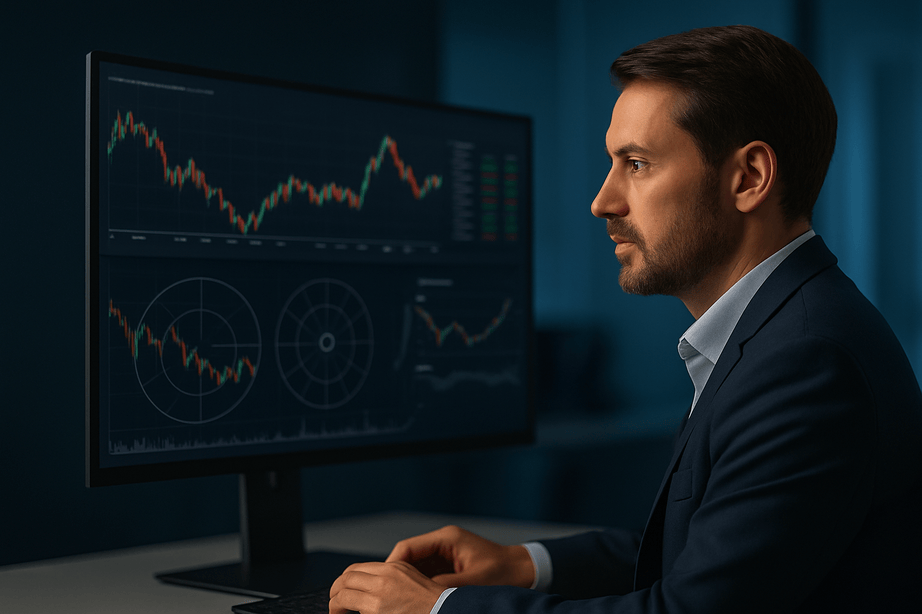
A Cycle-Based Intelligence Layer That Complements Existing Frameworks
Institutional research frameworks have become multi-dimensional. A typical process today blends top-down macro views, bottom-up fundamental analysis, cross-asset correlations, volatility and liquidity regimes, crowding and positioning data, and an expanding universe of alternative data. The Financial Astrology Terminal slots into this architecture as a time-structured overlay.
The core idea is that certain planetary configurations tend to cluster around regime change and inflection points. Instead of treating these as mystical events, the terminal encodes them as time windows where the probability of macro re-pricing, trend exhaustion, or volatility expansion rises. These windows are then mapped against existing institutional signals such as valuation extremes, factor dislocations, policy transitions, or stretched positioning.
For a global macro fund, the terminal may flag a forthcoming high-tension window around which the team re-examines crowded trades in equities, credit, or FX. For a quant equity shop, cycle windows might be used as conditional filters, helping to distinguish between signals that are likely to trend smoothly and those more likely to experience whipsaw. For a sovereign wealth fund, long-cycle mappings help frame multi-year allocation decisions in equities, bonds, commodities, real estate, and even crypto, anchoring when to scale in or derisk around major global cycle turns.
Crucially, the terminal is not a black box. It exposes the underlying cycle structures, shows how they overlap with market regimes, and presents timing information in a way that is compatible with institutional research notes and risk frameworks.
Why Institutions Need a Cycle-Based Intelligence Layer
In practice, most institutions already think in cycles, even if they never use the word astrology. There are business cycles, credit cycles, policy cycles, inventory cycles, volatility cycles, and liquidity cycles. What the Financial Astrology Terminal does is to add an additional layer of cycle structure based on celestial patterns that repeatedly coincide with these macro rhythms.
Long-cycle liquidity shifts often build over months and years before triggering sharp re-pricing. Volatility clusters tend to appear around concentrated windows rather than randomly scattered points. Risk-off phases frequently align with external stress markers that cut across regions and asset classes. Trend reversals, whether in equity indices, bond yields, commodities, currencies, or digital assets, are usually the result of a complex confluence rather than a single data point.
The observation from two decades of practice is that many of these inflection zones tend to line up with certain recurring planetary configurations. When treated as a research hypothesis rather than a belief system, this becomes testable. If a subset of celestial cycles repeatedly overlaps with periods of macro stress, cross-asset rotation, or regime change, then institutions can treat those cycles as timing markers, just as they treat seasonality patterns, futures curve dynamics, or options term structure.
In this framework, planetary cycles are not mystical elements. They are used as externally defined calendars that cut across geographies and asset classes, unaffected by local policy or corporate decisions. When these cycles are mapped against liquidity data, volatility indices, factor spreads, credit conditions, and positioning, they sometimes reveal recurring structures that are difficult to explain via traditional variables alone. This is precisely where a cycle-based intelligence layer matters. It flags the windows when existing signals should be interpreted with extra caution or extra conviction.
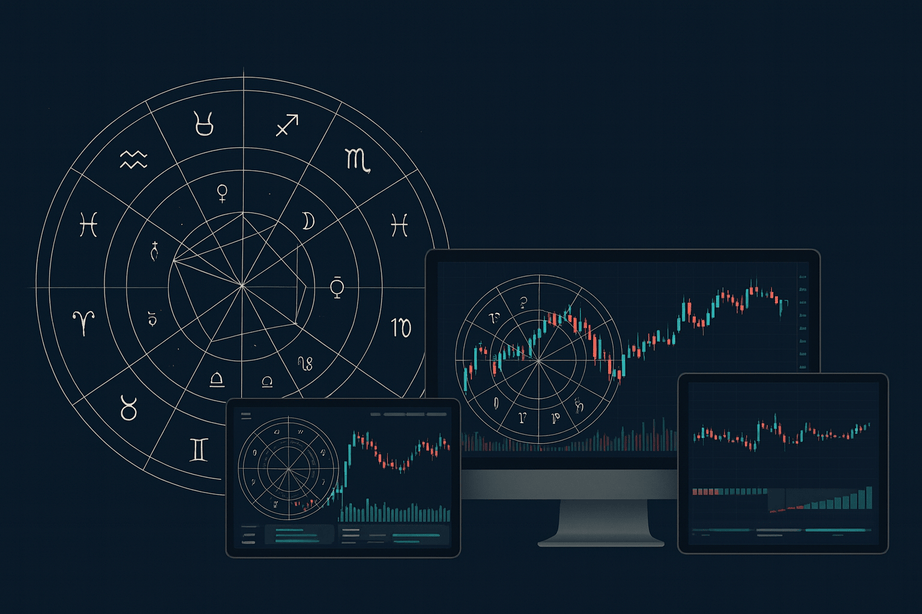
Market Timing for Institutional Investors
Imagine accessing a timing framework that operates outside traditional macro data, sentiment models, and valuation cycles. In an environment where every basis point matters, institutions increasingly seek non-correlated tools that sharpen conviction and reduce noise. That is the role of the Financial Astrology Terminal by Rajeev Prakash.
What Makes Financial Astrology Relevant for Institutional Trading
Relevance for institutions does not come from storytelling; it comes from correlation structures, conditional probabilities, and repeatability. Over many years, Rajeev Prakash’s work has focused on how specific celestial configurations tend to align with certain classes of market events.
For example, clusters of volatility spikes in equity indices and commodities often appear within narrow windows around particular planetary alignments. Periods of macro rotation, when capital flows move from growth to value, from developed markets to emerging markets, or from risk assets to defensive ones, often overlap with these same time bands. Trend exhaustion in major indices, long bond yields, or key currency pairs has repeatedly occurred near cycles that the terminal now encodes as potential exhaustion or reversal windows.
The Financial Astrology Terminal does not claim that planetary cycles cause market events in a deterministic sense. It instead focuses on correlations and conditional likelihoods. When a historically sensitive configuration is approaching, and when that configuration has previously aligned with stress events, liquidity compression, or breakouts from extended ranges, the terminal flags an elevated probability window. Institutions can then overlay their own macro, technical, and quant signals on top of this timing band.
A credit strategist may see a widening in spreads and a deterioration in market internals. If this coincides with a high-tension celestial window that has historically overlapped with global risk-off episodes, the strategist might argue for faster derisking or tighter risk limits. A commodity desk observing tight inventories and positive momentum may see a strong trend extended into a time band historically associated with spikes and reversals. The combination of stretched fundamentals, momentum, and an elevated cycle window becomes a risk management input, not a guarantee.
Relevance, in other words, is framed in terms of how cycle windows help distinguish normal noise from phases where the distribution of potential outcomes becomes fatter and more asymmetric.
Rajeev Prakash’s Two-Decade Track Record
Since 2005, Rajeev Prakash has operated at the intersection of market practice and cycle research. Over this period, he has provided long-cycle forecasts, tactical timing maps, and cross-asset guidance to traders, proprietary desks, high-net-worth individuals, and, increasingly, institutional investors across India, Europe, and the United States.
Across multiple market regimes, from pre-crisis liquidity expansions and post-crisis repair phases to commodity super-cycle waves and the emergence of digital assets, his work has focused on two things: mapping planetary cycles to macro structure, and translating those insights into actionable timing for real-world positions.
Institutional users who engage with his research are typically not looking for a guru. They are looking for a practitioner who understands how desks function, how stop placements and risk budgets are set, and how difficult it is to maintain discipline through volatility spikes and news-driven whipsaws. Over the years, Rajeev has built his reputation by integrating cycle insights with standard market language, speaking in terms of trend structures, ranges, volatility regimes, and risk management guidelines, rather than in symbolic or mystical terms.
This two-decade journey is reflected inside the Financial Astrology Terminal. The models embedded in the platform are the result of iterative refinement, live market feedback, and repeated testing across different cycles. Many of the institutions and professional traders who follow his work do so because they have seen how cycle-based timing, when applied with discipline and aligned with their own frameworks, can help reduce drawdowns and avoid the most chaotic parts of the market.
Advanced Cycle Intelligence for Institutional Investors
Imagine having a timing model that moves beyond traditional macro indicators and reveals when markets are quietly preparing for major transitions. The Financial Astrology Terminal gives institutional investors access to a non-correlated timing framework that enhances existing research workflows.
Instead of predicting price, it highlights when volatility, liquidity shifts, or trend inflections historically cluster. For hedge funds, global macro teams, sovereign wealth funds, and quant desks, this adds a layer of clarity during periods when signals conflict or narratives are noisy.

How the Financial Astrology Terminal Works for Institutions
The Financial Astrology Terminal is built as a professional research and timing environment, not as a retail prediction tool. The interface is structured for desks that already work with complex dashboards.
On the front end, users see multi-asset support spanning global equities, indices, commodities, currencies, bonds, and crypto. For each asset or basket, the terminal overlays live planetary mapping on top of price charts and volatility measures, showing where the current market sits relative to key cycle zones. These zones are not random date markers; they are pre-computed windows based on celestial configurations that have historically coincided with regime shifts, stress clusters, or trend extensions.
The platform provides trend probability windows that indicate where the likelihood of continuation, consolidation, or reversal is historically elevated. Timing dashboards summarize upcoming high-sensitivity dates and bands for each asset class, allowing risk teams to contextualize their existing exposure. Cycle alerts can be configured so that portfolio managers and traders receive signals before entering or during these windows, helping them adjust size, tighten stops, or delay aggressive entries.
For quants, the terminal exposes signal confidence ranges derived from historical overlaps between cycle windows and realized market behavior. This allows cycle data to be treated as a distinct factor or as a conditioning variable in internal models. For discretionary traders, the interface presents clean commentary on which windows demand special attention and which are expected to be relatively low-tension periods.
The architecture is designed to be compatible with institutional workflows. Notes can be exported and incorporated into internal investment committee decks. Time windows can be cross-checked against house views, macro calendars, and risk scenarios. Over time, desks can build their own experience of how the cycle intelligence layer behaves in conjunction with their specific strategies.
Use Cases for Hedge Funds and Professional Desks
Different types of institutional investors use the Financial Astrology Terminal in different ways, reflecting their mandates and risk appetites.
Global macro funds tend to use the platform as a higher-level map across equities, bonds, currencies, commodities, and crypto. They look at where cycle tension is rising across the cross-asset complex and align that with their views on growth, inflation, policy, and liquidity. When a celestial window suggests elevated risk of regime change and the macro narrative is already fragile, they may choose to reduce gross and net exposure, or to reorient portfolios toward safer assets.
Quant teams and systematic funds treat cycle signals as an additional timing filter. For example, a mean-reversion strategy might be down-weighted or temporarily suspended during windows historically associated with volatility clusters, while trend-following models might be sized more aggressively in windows where the probability of strong directional movement is higher. The key is that cycle data becomes a structured feature in the research stack, subject to the same backtesting and validation rules as any other signal.
Long-only asset managers and family offices often use the terminal to improve their entry and exit timing without changing their core investment universe. When secular conviction exists in a stock, sector, region, or theme, cycle windows help refine when to accumulate, when to sit through noise, and when to be more cautious. For large long-horizon pools of capital, avoiding the most adverse few weeks in a year can have a disproportionate effect on drawdowns and behavioral pressure.
Commodities and currency desks, which are highly sensitive to macro shifts and liquidity waves, use the platform to anticipate periods where pricing may disconnect from incremental fundamentals and become more flow-driven. During these windows, desks may choose to scale down leverage, widen risk limits for intraday volatility, or hedge exposures more proactively.
Derivatives traders incorporate timing intelligence to structure options strategies around expected volatility windows. If a future period is historically associated with larger price swings, they may explore long volatility or spread structures. If a period is expected to be relatively muted, they may focus on premium harvesting strategies, always subject to risk controls and internal models.
Across these use cases, the common thread is that cycle-based intelligence is not treated as a magic answer. It is treated as a structured, non-correlated timing input that helps professionals make better decisions at the margin.
Testimonials
Discover what our satisfied customers have to say about their experience with us. Read our testimonials from people just like who have benefited from our services.
Market signals have helped me make quick and informed decisions for my stock market trades, resulting in significant profits for my portfolio. The team is highly professional and always available to answer questions and provide excellent customer service.
SK Jhunjhunwala
Investor based in Mumbai
I have been using Astrodunia’s services for over four years and have been extremely impressed with the level of expertise and precision they bring. Their live market signals have consistently helped me make quick and informed decisions.
N. Patel
Pennsylvania , US
Excellent service. This is undoubtedly the best market forecast newsletter I have ever subscribed to. None of the other newsletters come close to this level of accuracy. Please continue the good work!
Withheld
Fixed income trader with a required foreign bank in asia
I am an entrepreneur based in Australia and have been a subscriber of Astrodunia’s services for the past two years. I have found their Newsletter, Live Signals, and Annual Letter to be incredibly valuable.
Z. Irani
Australia
Annual Letter 2026 as a Strategic Compass for Long-Horizon Investors
Beyond daily and weekly signals, long-horizon investors require an annual map that frames the big arcs of risk appetite changes, sector leadership, and cross-asset rotation. The Annual Letter by Rajeev Prakash, including the upcoming Annual Letter 2026, is designed to work as this strategic compass.
The Annual Letter synthesizes the key planetary cycles that dominate the year and translates them into macro themes, likely market regimes, and time bands where large transitions are expected. Instead of focusing on individual trades, it focuses on big questions institutions care about: when risk appetite is likely to be strong or fragile, when credit conditions might tighten, when commodities may regain or lose leadership, and how currencies and yields may respond to these shifts.
Long-term allocators such as pension funds, sovereign wealth funds, and large family offices can use the Annual Letter to align their internal scenario planning with the cycle map. For example, if a particular quarter is highlighted as a probable stress zone with increased probability of volatility clusters, institutions might choose to enter the year with a more conservative risk posture, or at least with a plan for how to respond if conditions deteriorate.
Similarly, if the Annual Letter frames certain parts of the year as conducive to trend development in specific sectors or themes, asset managers can anchor their sector rotation framework around those windows, blending it with their own fundamental and macro views. The goal is not to forecast every market move, but to provide a structural timing backdrop that makes it easier to stay patient through normal noise and more vigilant during high-risk transition bands.
Viewed this way, the Annual Letter 2026 is not marketing commentary. It is a cycle-informed macro guide that sits alongside institutionally accepted research inputs and supports real-world allocation and risk decisions.
If you are a institutional investor
For institutional investors, the Annual Letter 2026 functions as a high-level strategic compass rather than a forecast. It offers a structured, cycle-driven roadmap that helps investment teams navigate the broader forces shaping global markets. Instead of focusing on short-term volatility, it emphasizes the long-horizon cycles that influence asset allocation, liquidity behavior, sector leadership, and risk-on/risk-off transitions.
Live Signals for Tactical Traders and Shorter-Term Desks
While long-horizon investors require strategic maps, many desks live in the daily and weekly rhythm of markets. For them, the Financial Astrology Terminal provides live signals that are designed to be actionable for professional traders without being prescriptive.
Daily and weekly cycle notes identify high-probability windows for volatility expansion, trend continuation, or mean-reversion risk. Instead of giving simplistic buy or sell calls, the terminal frames expectations in terms of risk conditions. A trader might see language pointing to potential shakeouts, breakout confirmation risk, or likely range expansion, all anchored around specific time windows.
For intraday and swing traders in equities, indices, commodities, FX, bonds, and crypto, the value lies in avoiding aggressive risk-taking right into cycle windows that historically produce whipsaw and false breakouts. Equally, when price is aligned with the broader direction of a favorable cycle window, traders may have more confidence holding positions through minor adverse moves.
Risk managers can use the live cycle information to identify upcoming sessions when existing positions might be more vulnerable to gaps, news sensitivity, or liquidity air pockets. They can then pre-plan hedge structures or adjust exposure guidelines.
The emphasis throughout is on risk-aware application. Cycle signals are treated as probability bands. They help focus attention, but they do not override stop-loss rules, portfolio limits, or internal risk constraints.
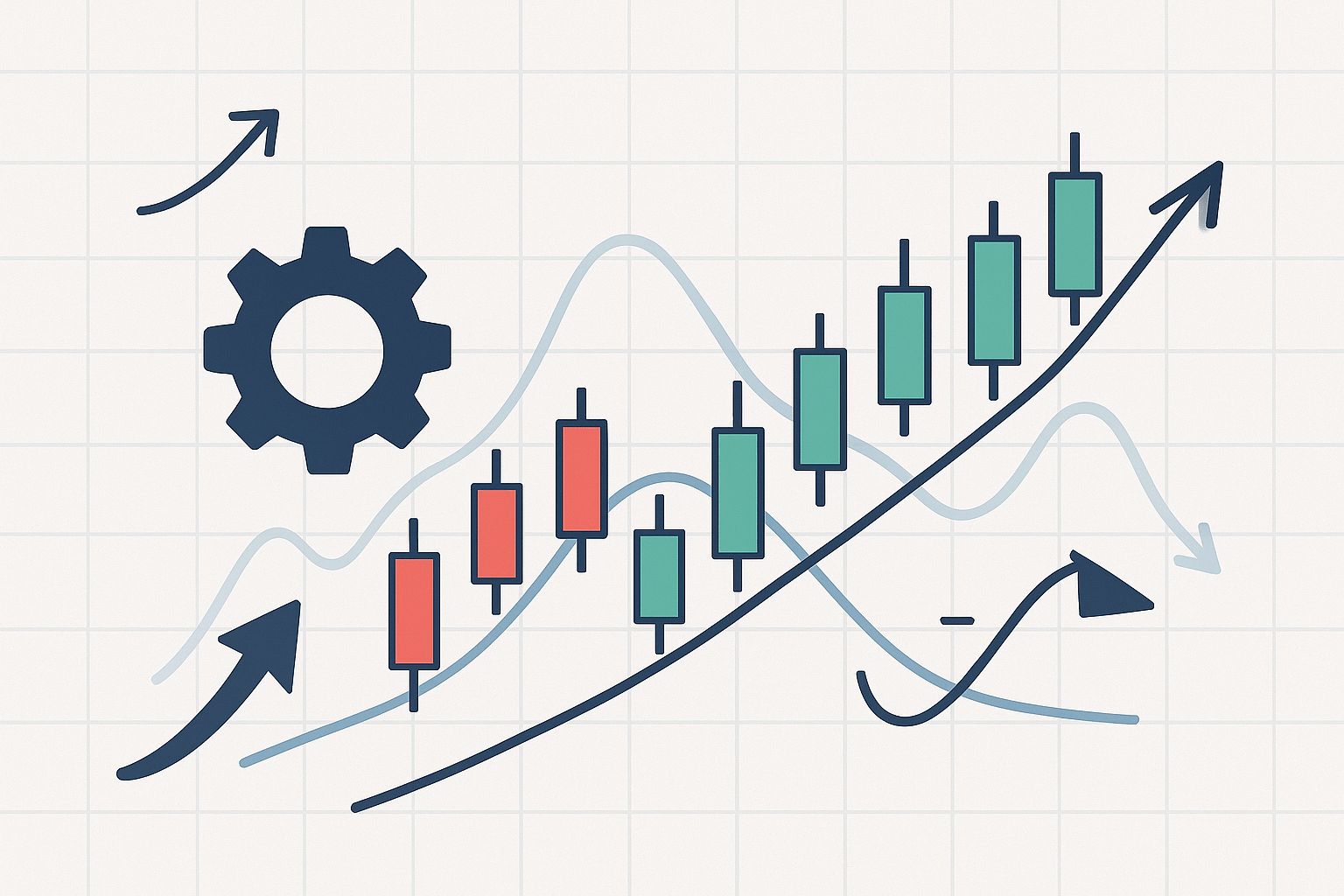
Live Cycle Signals for Tactical Traders
The Financial Astrology Terminal delivers a continuous stream of real-time cycle windows that give traders a clearer view of how volatility is likely to evolve across the next few hours, days, and weeks. Instead of offering simplistic buy or sell instructions, the terminal maps out probability zones that highlight where markets historically tend to expand, compress, reverse, or accelerate. This gives traders a structured framework for timing decisions without interrupting their existing models, rules, or internal risk protocols.
These cycle windows help identify moments when trend pressure is building beneath the surface, even before price fully confirms the move.
Why Institutions Are Integrating Alternative Cycle Data in 2026
The broader context for the Financial Astrology Terminal is a structural shift in how institutions think about alternative data and cycle research. Over the past decade, funds have increasingly experimented with non-traditional timing tools, including lunar-cycle volatility studies, solar-cycle overlays on macro series, and sentiment-linked astronomical patterns.
These efforts are not about belief; they are about statistical edge. If certain externally defined cycles can be shown to have consistent overlap with volatility clusters, policy inflection points, or cross-asset rotation phases, they become candidates for serious research. The fact that they are independent of human decision-making and policy choices makes them attractive as potentially non-correlated timing anchors.
By 2026, many sophisticated investors accept that markets are shaped by overlapping rhythms, not just linear extrapolations. Monetary policy lags, corporate investment cycles, behavioral feedback loops, and global information flows create complex dynamics that often manifest in cyclical ways. Alternative cycle studies add further structure to this picture.
The Financial Astrology Terminal positions itself squarely in this emerging landscape. It systematizes a specific branch of cycle research that has been refined in live markets for two decades and packages it in a way that institutions can test, validate, integrate, or even challenge within their own research environment. Rather than pushing a belief system, it invites professional scrutiny.
Meet Our Team
Get to know our dedicated team of experts. With a diverse range of skills and years of experience, we’re committed to providing you with the best market analysis and investment guidance.
Mr. Rajeev Prakash
Founder
Expert in financial & personal astrology for 20 years+. Rajeev is a well-known astrologer based in central India who has a deep understanding of both personal and mundane astrology.
Mr. Shashi Agarwal
Technical Head
Shashi is a technology leader with a strong background in global business,.He holds a B. Tech in Computer Science & MBA in Finance from NarseeMonjee Institute of Management Studies, one of the top B-Schools in India.
Professional Risk Language, Transparency, and Integration into Institutional Processes
Any tool that touches trading and allocation decisions must be grounded in clear risk language and procedural transparency. The Financial Astrology Terminal is built on the principle that astrology is a timing input, not a standalone trading system and not a substitute for risk management, macro analysis, or fundamental work.
All markets carry risk of loss, including the potential for large and rapid drawdowns. Cycle windows can and do fail. External shocks, policy surprises, geopolitical events, structural breaks in regimes, and model limitations can cause outcomes that diverge from historical patterns. No signal, including those derived from planetary cycles, can guarantee positive performance or protect capital in all conditions.
Transparency is therefore central. The terminal explains the nature of its signals, the logic behind timing windows, and the confidence ranges associated with different configurations. Institutions are encouraged to treat the platform as input into their existing processes, not as an override. Typical integration paths include using cycle windows as an additional column in internal risk dashboards, overlaying them on cross-asset charts, and incorporating them into scenario analysis and investment committee discussions.
Compliance teams can review how the terminal is used in practice, ensuring that its role is framed accurately in internal documents and that marketing materials do not overstate its capabilities. Risk committees can set guidelines on how much weight to place on cycle-based timing, which strategies are allowed to use it, and how its impact on performance is monitored over time.
In short, professional use of the Financial Astrology Terminal treats it as one more tool in a rigorous process. The emphasis remains on diversification of signals, strong governance, and disciplined execution.
Why Choose Us ?
Astrodunia guides you through the market’s ups and downs with the help of planetary science. Our team of experts in financial astrology provide valuable insights and predictions to assist you in market wise investment decisions and navigate the global market with ease.
Astrological Market Forecasting
Experience the advantage of astrology-enhanced market predictions. Our unique approach combines traditional analysis with astrological insights for more accurate predictions and better investment opportunities.
Decades of Market Timing Expertise
For over 20 years, we’ve honed our skills in market timing within the stock market. Our extensive experience allows us to navigate market trends with precision and confidence.
Trusted by Discerning Investors
Our clients choose us for our proven track record of success and our commitment to providing them with the most reliable market insights. Join the ranks of satisfied investors who trust our expertise
Conclusion: A Distinct Timing Edge for Institutional Investors
In an environment where alpha is scarce and crowding is pervasive, edge increasingly comes from differentiated perspectives that are still grounded in discipline and data. The Financial Astrology Terminal by Rajeev Prakash offers institutional investors a non-correlated, cycle-based intelligence layer that speaks the language of markets, not mysticism.
By structurally mapping planetary cycles to macro regimes, volatility clusters, and cross-asset rotations, the terminal creates timing windows that can be tested, integrated, or rejected within existing research frameworks. It does not compete with macro analysis, valuations, quant models, or alternative data; it complements them by adding a distinct axis of information that is external to conventional drivers.
For hedge funds, family offices, sovereign wealth funds, quant desks, and global macro teams, the potential value lies in better timing rather than in prediction for its own sake. Avoiding the most unstable parts of the market, entering trends during stronger cycle windows, and aligning annual allocation plans with long-cycle structures can all contribute to smoother drawdown profiles and more resilient performance.
Supported by two decades of practice from Rajeev Prakash and anchored in professional risk language, the Financial Astrology Terminal is positioned as a serious, research-driven tool for institutions that are willing to explore cycle-based intelligence with an open but critical mind. Used correctly, it can help decision-makers see the market’s time dimension with greater clarity and reduce the ambient noise that often overwhelms traditional signals.
Whether you’re a seasoned investor or just starting out, our financial astrology tools can be tailored to your specific investment goals. Gain valuable insights to achieve your financial aspirations.
Address
1301, 13th Floor, Skye Corporate Park, Near Satya Sai Square, AB Road, Indore 452010
+91 9669919000
© All Rights Reserved by RajeevPrakash.com (Managed by AstroQ AI Private Limited) – 2025