

Financial markets move on earnings, liquidity, policy, geopolitics, and human psychology. Financial astrology does not replace those drivers. Instead, it works like a timing lens, helping you anticipate when sentiment shifts, volatility spikes, narratives break, and sector leadership rotates.
In 2026, several high-impact sky events cluster in ways that traders usually feel as “regime change” weeks rather than ordinary cycles. Two eclipse seasons, a major Saturn phase that continues the global restructuring story, and multiple retrograde windows create a year where timing matters as much as direction. The aim of this page is to map the most sensitive dates and translate them into practical market expectations, so you can plan entries, hedges, rebalancing, and risk controls with more discipline.
Throughout this guide, I combine classical astrological logic with market behaviour patterns traders recognise: risk-on versus risk-off swings, liquidity squeezes, crowded positioning unwinds, and sudden policy-driven repricing. I also include a clear calendar of key astrological dates for 2026 so you can align research, watchlists, and execution windows.
How Financial Astrology Times Market Moves
Financial astrology works because markets are a collective nervous system. When certain planetary cycles repeat, they tend to coincide with repeatable psychological conditions: optimism versus fear, speculation versus caution, acceleration versus consolidation.
A practical framework for timing is built on four pillars.
First, eclipses behave like market catalysts. They often correlate with sudden turning points, surprise headlines, gap moves, and trend reversals. Eclipses do not guarantee direction, but they frequently change the storyline.
Second, Saturn periods tighten the system. Saturn correlates with regulation, constraints, accountability, and reality checks. When Saturn shifts strongly, markets become less tolerant of weak balance sheets, inflated narratives, or policy illusions.
Third, Mercury retrograde cycles increase execution friction. In markets, this can show up as miscommunication, data confusion, algorithmic whipsaws, “leaks” that reverse, and sharp moves around revisions or clarifications. Mercury retrograde is less about doom and more about re-pricing information.
Fourth, lunar nodes mark collective trend migration. When the nodes change signs, the market’s attention often migrates toward new themes, new leadership, and new cultural obsessions.
In 2026, all four pillars are active, which is why the year is ideal for timing-based strategy.
The 2026 Macro Sky Story in One Sentence
2026 is a year of structural reset with event-driven volatility windows, where disciplined risk management outperforms impulsive prediction.
This tone comes from three big sky signatures.
Saturn continues its Aries cycle beginning again from February 13, 2026, and running into 2028, reinforcing themes of constraint, accountability, and “prove it” pressure in systems and leadership.
Two major solar eclipses occur in 2026, including an annular solar eclipse on February 17 and a total solar eclipse on August 12, making the year unusually punctuated by dramatic sentiment shifts.
Mercury retrograde appears three times, and Venus retrograde also happens in late 2026, increasing the probability of reversals, re-ratings, and narrative resets in the second half.
The Eclipse Factor: Why 2026 Has Strong “Turning Point” Weeks
Eclipses are among the most tradable timing tools in astrology because they behave like punctuation marks. Markets often react within a window that starts about a week before an eclipse and can run for several weeks after, with the sharpest sensitivity typically within a few days of the exact date.
In 2026, the eclipse calendar is clean and powerful.
An annular solar eclipse occurs on February 17, 2026.
A total lunar eclipse follows on March 2 to March 3, 2026.
A total solar eclipse arrives on August 12, 2026.
A partial lunar eclipse follows on August 27 to August 28, 2026.
The market implication is straightforward. Expect two major “headline seasons” in late February and again across August. If 2026 is trending strongly before those windows, eclipses can produce blow-off tops or sharp accelerations. If 2026 is weak going into those windows, eclipses can produce capitulation lows and sudden reversals.
Saturn From February 13, 2026: The Year’s Structural Pressure
Saturn re-enters and occupies Aries from February 13, 2026 and remains there well beyond the year, into April 2028.
From a market perspective, Saturn in Aries often correlates with a world that demands action backed by structure. Aries is fast, competitive, and decisive. Saturn is slow, demanding, and conservative. Put them together and you get a theme: speed must be earned.
This is typically supportive for sectors and companies that can demonstrate real execution, strong margins, real cash flow, resilient supply chains, and defensible strategy. It is often challenging for businesses living on promises, hype, or fragile funding.
Timing-wise, the weeks around mid-February can feel like a gear shift. If markets have been euphoric, Saturn can introduce a sobering correction, often triggered by policy, regulation, or a suddenly “less friendly” liquidity narrative. If markets have been depressed, Saturn can stabilise conditions by forcing realistic expectations and encouraging long-term capital allocation into quality.
Mercury Retrograde in 2026: The Three “Repricing” Cycles
Mercury retrograde is one of the most visible timing cycles for day-to-day market behaviour because it frequently coincides with communication errors, revised data, re-issued guidance, and sudden reversals. In 2026, the three main Mercury retrograde periods are:
February 26 to March 20, 2026.
June 29 to July 23, 2026.
October 24 to November 13, 2026.
These dates matter even more because the first retrograde overlaps the March eclipse season, creating a classic setup for mixed signals and sharp repricing.
Trading implication for Mercury retrograde is not “do nothing.” It is “trade cleaner.” Keep risk smaller, widen time horizons, demand confirmation, and be careful with breakouts that look perfect on the first attempt. In these windows, markets can break out, fail, then break out again after the retrograde ends, or they can crash, bounce violently, then resume the trend later.
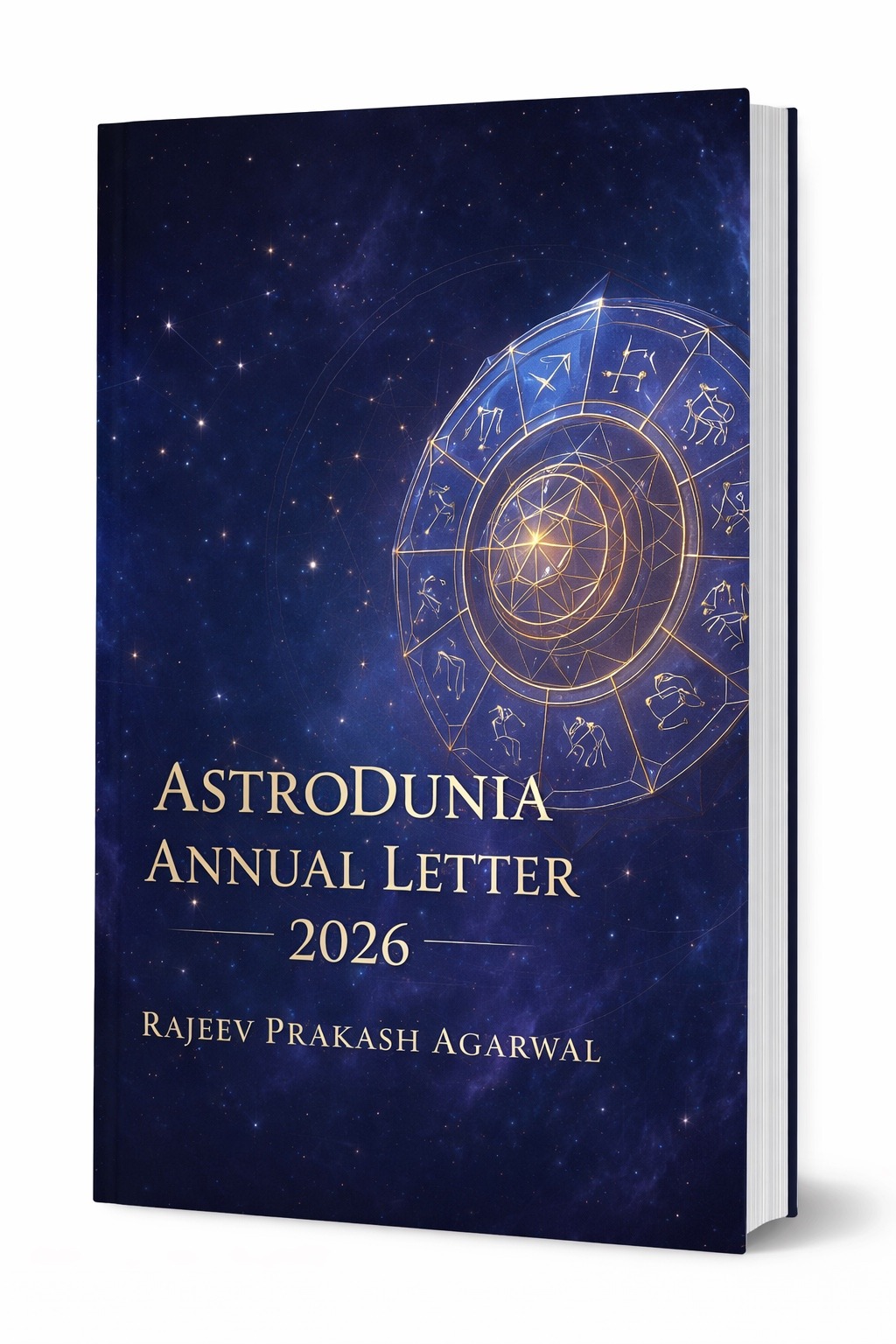
Annual Letter 2026 by Rajeev Prakash Agarwal
The Annual Letter 2026 is a long-term strategic outlook designed for serious investors, traders, and decision-makers navigating a rapidly shifting global economy. It decodes the year ahead through planetary cycles, macroeconomic forces, market psychology, and structural turning points across equities, commodities, currencies, digital assets, and global capital flows.
This letter is not a short-term trading guide or a collection of predictions. It is a framework for understanding how 2026 reshapes risk, opportunity, regulation, and wealth creation across financial markets. Every section focuses on timing, probability, and capital protection, helping readers prepare for regime shifts rather than react to headlines.
Venus Retrograde in Late 2026: Values, Pricing, and Market Taste Shifts
Late 2026 includes Venus retrograde from October 3 to November 13, 2026.
Venus correlates with value, money psychology, desirability, and what the crowd is willing to pay for growth, quality, beauty, and brand. When Venus retrogrades, valuation debates intensify. It often corresponds with style rotation, sector ranking shifts, and a re-think of what deserves premium multiples.
This is especially notable because Venus retrograde overlaps Mercury retrograde in late October to mid-November.
That overlap can produce a “double retrograde” feeling in markets: price discovery becomes messy, narratives reverse, and leadership changes can happen quickly.
The Lunar Nodes Shift on July 26, 2026: Trend Migration
On July 26, 2026, the True North Node enters Aquarius, and the nodes remain in this axis into 2028.
In market language, this often corresponds with collective attention migrating toward Aquarius themes: technology, networks, AI systems, electrification, space and satellite ecosystems, future infrastructure, unconventional finance, and social or regulatory debates around innovation. Aquarius also correlates with crowd behaviour, which can mean speculative manias return in pockets even while the broader system stays cautious under Saturn’s influence.
The node shift arrives between the June to July Mercury retrograde and the August eclipse season.
That sequencing suggests a narrative transition in mid-year, followed by a major volatility event in August.
Timing Major Market Moves in 2026: The Practical Windows
Below are the timing windows most likely to coincide with major market moves, using a trader’s lens rather than a purely mystical one.
Late February to Late March 2026: Eclipse Season With Mercury Retrograde
This is the most sensitive timing cluster of the year because an annular solar eclipse on February 17 is followed by Mercury retrograde from February 26 to March 20, and then a total lunar eclipse on March 2 to March 3.
Expect faster headlines, confusing narratives, and sharp reversals. If you trade indices, this is a prime period for volatility expansion. If you trade single stocks, this is a period where guidance, rumours, and revisions can dominate technicals.
A classic pattern here is “false certainty.” Markets can rally hard on a story, then reverse once details emerge. Or markets can panic sell, then rebound when the true information is clarified. This is why position sizing and confirmation matter more than prediction in this window.
Mid-February 2026: Saturn’s Gear Shift
Saturn’s Aries phase resumes from February 13, 2026.
When Saturn flips strongly, markets often re-evaluate leadership, policy credibility, and risk appetite.
If you are building a longer-term 2026 portfolio, mid-February is a useful time to assess quality bias. Under Saturn influence, defensive quality, cash flow discipline, and strong governance often matter more, especially when volatility increases later.
Late June to Late July 2026: The Summer Reprice
Mercury retrograde from June 29 to July 23 tends to bring a mid-year reassessment.
This can align with earnings revisions, macro narrative changes, and sector rotations.
Practically, this is a good period for reviewing what worked in the first half of 2026 and what stopped working. Markets often reveal leadership fatigue here. A sector that led strongly earlier can churn sideways, while a neglected group starts building a base.
Late July 2026: Nodes Shift and Theme Rotation
On July 26, the North Node enters Aquarius.
This can mark a “new obsession” phase, where attention flows toward future-tech narratives, infrastructure transformation, network platforms, and innovation policy stories.
In market timing, node shifts can coincide with leadership changing hands. The chart may still look bullish overall, but the winners can change. Traders who track relative strength and breadth often notice this first.
August 2026: The Big Second-Half Inflection
August is the second major turning point season because a total solar eclipse occurs on August 12, followed by a lunar eclipse on August 27 to 28.
Solar eclipses often correlate with leadership events, policy announcements, and headline-driven volatility. A total solar eclipse tends to feel louder, sharper, and more dramatic. It can coincide with a major market top, a major bottom, or a violent midpoint reversal depending on the trend going into it.
This period is well-suited for hedging decisions and for reducing overconfidence. If you have large profits, consider protecting them. If you have a watchlist of long-term names, this is often a period where “unfair prices” appear quickly, offering opportunity for patient entries.
Late October to Mid-November 2026: The Double Retrograde Reset
Mercury retrograde from October 24 to November 13 overlaps with Venus retrograde from October 3 to November 13.
This is a classic period for valuation repricing, brand and sentiment reversals, and sudden rotation between growth and value, or between speculative and defensive. Markets can become extremely sensitive to language in central bank statements, earnings calls, and political messaging.
If you trade actively, this can be a high-opportunity window, but it is not forgiving. Clean setups matter, stops matter, and leverage can be punished by whipsaws.
Sector Themes for 2026: What the Sky Favors
Sector timing is always probabilistic. Still, 2026 has clear thematic signatures.
Saturn’s Aries influence supports industries linked to discipline, security, engineering, defence readiness, industrial execution, and systems that demand accountability. It also tends to reward companies that can deliver in real time rather than “next year.”
The Aquarius node shift supports technology networks, AI adoption, electrification, energy transition infrastructure, data ecosystems, and future-facing platforms. It can also bring regulatory stories around innovation and consumer protection into sharper focus.
Eclipse seasons tend to produce cross-sector volatility, with the biggest action usually in crowded trades. If a theme becomes too popular in early 2026, the February to March cluster can punish it. If a theme becomes too hated by mid-2026, the August cluster can revive it.
A Simple 2026 Playbook for Traders and Investors
The most profitable use of financial astrology is planning, not predicting. If you treat 2026 as a year of volatility windows, your behaviour becomes more professional: you plan risk before the market forces it on you.
Use February to March for humility. Trade smaller, expect reversals, and focus on protecting capital while gathering information.
Use June to July for review and rotation. Rebalance, upgrade quality, and watch for leadership changes.
Use late July into August for preparedness. Expect a second-half inflection and make hedging decisions proactively rather than emotionally.
Use October to November for valuation discipline. Assume price discovery becomes noisy and avoid forcing trades that need perfect conditions.
2026 Key Dates Calendar for Market Timing
February 13, 2026: Saturn’s Aries phase resumes, bringing a structural, discipline-heavy tone.
February 17, 2026: Annular solar eclipse, a strong catalyst window.
February 26 to March 20, 2026: Mercury retrograde, classic for reversals and repricing.
March 2 to March 3, 2026: Total lunar eclipse, often tied to turning points and sentiment extremes.
June 29 to July 23, 2026: Mercury retrograde, mid-year reassessment and churn risk.
July 26, 2026: North Node enters Aquarius, signalling theme migration and leadership rotation.
August 12, 2026: Total solar eclipse, a major second-half inflection window.
August 27 to August 28, 2026: Partial lunar eclipse, follow-through volatility and trend confirmation or reversal.
October 3 to November 13, 2026: Venus retrograde, valuation and taste shift cycle.
October 24 to November 13, 2026: Mercury retrograde, communication noise and whipsaws, overlapping Venus retrograde.
Final Word: How to Use These Predictions Responsibly
The strongest edge in 2026 is not knowing the future. It is respecting timing. When the sky signals high volatility windows, reduce position size, tighten process, and demand confirmation. When the sky signals structural tightening, upgrade quality and avoid weak narratives. When the sky signals theme migration, watch relative strength and adapt early.