
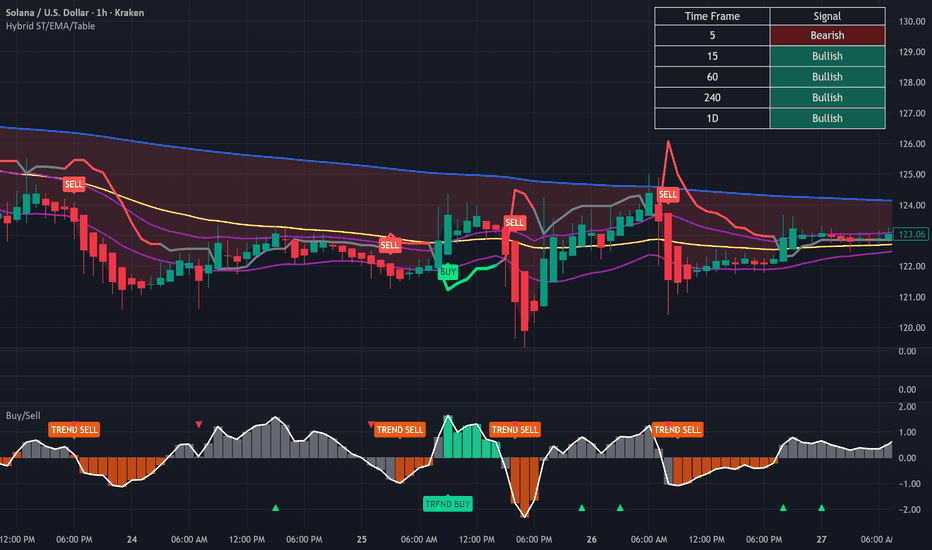
Breakouts are one of the most widely followed ideas in trading because they capture a simple reality: when price escapes a well-defined range, the next move can become fast and emotionally charged. Traders watch the same levels, react to the same triggers, and often place orders in similar places. That shared attention can turn a quiet chart into a momentum event. However, the same popularity that makes breakout trading powerful also makes it tricky. Markets know where the obvious levels are, and false breakouts happen precisely because so many people act the same way.
This guide explains breakout trading in a structured and practical way. You will learn what a breakout truly is, how to identify high-quality setups, how to manage risk without guessing, and how to avoid the most common traps. By the end, you should be able to approach breakouts with a repeatable framework rather than relying on excitement when price starts moving.
What a Breakout Really Means
A breakout happens when price moves beyond a clearly visible boundary that previously held it in place. That boundary can be a horizontal resistance line, a support floor, a trendline, a channel edge, or a volatility band that price repeatedly respected. The key idea is not simply that price touches or slightly pierces a level. The real meaning of a breakout is that the market has shifted from balance into imbalance.
Balance is a period where buyers and sellers are relatively matched. Price oscillates, volatility compresses, and movement becomes less directional. Imbalance begins when one side becomes more aggressive and the other side steps away. A breakout is the visual expression of that imbalance. The best breakouts are not random. They tend to appear after the market has built tension through consolidation, and they tend to accelerate when new participation enters, such as trend traders, breakout traders, or forced exits from those caught on the wrong side.
A breakout is not automatically bullish or bearish. It depends on direction. A breakout above resistance signals a potential shift to higher prices, while a breakdown below support signals a potential shift to lower prices. In both cases, the underlying principle is the same: price moves out of a region where it repeatedly failed to advance.
Why Breakouts Attract Traders
Breakout trading appeals to traders because it promises clarity. The chart draws a line. Price crosses it. The trade seems obvious. In reality, what attracts traders is that breakouts can provide a clean framework for entries and exits. You can define your invalidation point near the broken level and aim for momentum-driven follow-through.
Breakouts also offer the possibility of asymmetry. When markets move from consolidation into expansion, the move can be large relative to the risk taken. This is why breakouts are popular in stocks, indices, forex, crypto, and commodities. A strong breakout can produce directional movement that continues for hours, days, or even weeks depending on the timeframe.
Yet the same simplicity can be dangerous. Many traders see a breakout and chase it late, place stops in obvious places, and get shaken out by a fast reversal. The goal of mastering breakout strategy is to trade the idea without falling into the crowd’s predictable mistakes.
The Foundation of Breakout Trading: Structure and Context
Before you focus on entries, you need to focus on structure. Breakouts work best when the market is in a recognizable state. The most reliable breakouts tend to come from consolidation patterns where levels are respected multiple times. This repetition matters because it forms a visible reference point that many participants agree on.
Context also matters. A breakout in a strong trending market often behaves differently from a breakout in a choppy, range-bound environment. In a trend, breakouts can continue with speed because the broader market bias supports them. In a range, breakouts can fail more often because the market repeatedly returns to its mean.
Timeframe is another part of context. A breakout on a one-minute chart can be meaningful for a scalper, but it may be noise to a swing trader. A breakout on a daily chart can be meaningful for weeks. Your breakout strategy becomes stronger when you align it with your intended holding period and the timeframe that matches that period.
Types of Breakout Setups That Traders Commonly Use
Breakouts come in different shapes, but the logic behind them stays consistent. The most common breakout structures include horizontal ranges, triangles, channels, and multi-touch resistance or support zones.
A horizontal range breakout happens when price moves between a relatively flat ceiling and floor. Over time, traders see the resistance and support clearly. When price finally pushes through one side, it can trigger momentum.
A triangle breakout happens when price compresses with higher lows and lower highs. The range narrows, volatility decreases, and a move becomes more likely as pressure builds. The breakout is often sharp, but false breaks can occur because the pattern can break early before the real move begins.
A channel breakout happens when price trends within parallel boundaries. When price breaks beyond the channel, it can signal acceleration or a change in trend behavior.
A multi-touch level breakout happens when a resistance or support zone is tested multiple times across a longer period. These levels can become psychologically powerful. When they break, the move can be meaningful because many participants have anchored decisions around that zone.
No matter the pattern, the questions stay the same. Is the level clear? Has the market respected it? Is volatility compressing in a way that suggests energy building? Is there a reason to believe new participation will appear at the breakout?
The Difference Between a Clean Breakout and a False Breakout
False breakouts are not accidents. They are a feature of markets. They happen because liquidity often sits near obvious levels. When price approaches resistance, breakout buy orders may cluster above it, and stop orders from short sellers may also cluster above it. Markets often move into that liquidity, trigger the orders, and then reverse.
A clean breakout typically shows follow-through. That means after price breaks the level, it continues moving in the breakout direction rather than immediately collapsing. Follow-through may look like consecutive candles closing beyond the level, increased range expansion, or a smooth continuation with limited pullback.
A false breakout often shows rejection. That means price moves beyond the level, fails to sustain, and then quickly returns into the range. The failure can happen within one candle or within a few candles. What matters is that the market demonstrates it cannot hold the new territory.
To trade breakouts well, you must accept that false breakouts will happen. The goal is not to eliminate them completely. The goal is to reduce your exposure to low-quality breakouts and manage risk so that when a breakout fails, the loss stays small.
Confirmation Versus Early Entry: Choosing Your Style
Breakout traders generally fall into two camps: those who want confirmation and those who want early entry.
Confirmation traders wait for evidence that the breakout is real. They might wait for a candle close beyond the level, a second candle continuing in the same direction, or a successful retest of the broken level. Confirmation reduces false breakouts, but it can also reduce reward because entries happen later.
Early-entry traders attempt to enter near the level before confirmation, often during the final stage of consolidation. They want better price, tighter risk, and higher potential reward. However, early entries can be stopped out more often because the breakout has not yet occurred.
Neither style is universally better. The best approach is to pick one style and build rules around it. Many traders eventually blend them by using partial entries. They might take a small position early and add only when the breakout confirms. This approach can balance risk and opportunity while keeping discipline intact.

False Breakouts: Why Markets Trap Traders at Key Levels
False breakouts occur when price briefly moves beyond a well-defined support or resistance level but fails to sustain that move and quickly returns back into the prior range. These situations are common because obvious levels attract clustered orders from breakout traders and stop losses from traders already positioned. Markets often push into these liquidity zones, trigger orders, and then reverse once that liquidity is absorbed.
The Retest Entry: One of the Most Practical Breakout Techniques
One of the most widely used breakout methods is the retest entry. The concept is simple. Price breaks a key level, then returns to test that level from the other side. If the level holds, it can act like a new support after a bullish breakout or a new resistance after a bearish breakdown. Traders then enter on the retest.
The retest method has advantages. It often provides a more controlled entry, it reduces the need to chase momentum, and it can filter out some false breakouts because weak breakouts often fail during the retest.
However, retests are not guaranteed. Some of the strongest breakouts never retest because momentum is too strong. If you only trade retests, you will miss some moves. That is not necessarily a problem if your goal is consistency rather than capturing every opportunity.
A disciplined retest trader defines what a valid retest looks like. A valid retest typically shows price approaching the broken level, slowing down, and then reacting in the breakout direction. An invalid retest often shows price cutting through the level and closing back inside the old range.
Volume and Volatility: The Two Breakout Signals Many Traders Misread
In markets where volume is meaningful, such as stocks and many futures contracts, volume can add context. Strong breakouts often happen with increased volume, suggesting participation and commitment. Weak breakouts often happen on low volume, suggesting a lack of conviction.
But volume is not a simple confirmation tool. Sometimes breakouts happen on modest volume and still work, especially in quiet conditions. Sometimes volume spikes at the top because late buyers rush in and then the market reverses. The key is to interpret volume in context rather than treating it as an on or off switch.
Volatility is equally important. Breakouts are more reliable when they follow volatility compression, such as tight candles, narrowing ranges, or reduced price swings. Compression suggests the market is coiling. Expansion suggests the breakout is underway. A breakout that happens without prior compression can still work, but it may be less predictable because there was no clear build-up of tension.
A practical way to think about this is that breakouts need energy. Compression builds energy. Expansion releases it. Your job is to recognize when the market has likely built enough pressure to produce a meaningful move.
Stop Placement: The Most Important Skill in Breakout Trading
Many breakout traders lose money not because their idea is wrong, but because their risk placement is inconsistent. A breakout trade needs a clear invalidation point. That means you must decide where the trade is proven wrong.
In a bullish breakout, the simplest invalidation point is below the broken resistance. If price breaks above resistance and then closes back below it, the breakout idea weakens. In a bearish breakdown, the invalidation point is above the broken support.
However, you cannot place stops in obvious places without thinking. Obvious stops get hunted because liquidity gathers there. The solution is not to place wide stops randomly. The solution is to place stops based on structure, not emotion.
A structurally sensible stop might sit beyond the nearest swing low in a bullish breakout or beyond the nearest swing high in a bearish breakdown. The distance should reflect the typical volatility of the instrument and timeframe. If you place a stop too tight in a volatile market, you will be stopped out even when the breakout eventually succeeds.
The consistent approach is to define a rule that matches your timeframe. A short-term trader might use recent candle lows or highs. A swing trader might use a broader structure point. What matters is that your stop placement is intentional and repeatable.
Profit Targets and Trade Management: Letting Winners Run Without Giving Back Everything
Breakouts can produce strong trends, but not every breakout becomes a major move. You need a plan for exits. This is where many traders become inconsistent. They take profits too early because they fear losing gains, or they hold too long without a plan and watch profits evaporate.
A structured approach begins with understanding that breakouts often move in waves. Price may surge, pause, pull back, and then continue. If you expect a straight line, you will be emotionally unsettled by normal pullbacks.
Some traders use predefined targets based on the height of the range. If a range is a certain size, they project that distance from the breakout point as a potential target. This gives a logical framework without relying on hope.
Other traders use trailing exits. They might trail below swing lows in an uptrend or above swing highs in a downtrend. This method allows the trade to run if momentum continues.
A blended approach can also work. You might take partial profit at a reasonable target and then trail the remainder. This reduces stress and avoids the all-or-nothing mindset.
Your method should match your personality. If you hate giving back gains, you may prefer partial profit. If you want larger winners, you may prefer trailing exits. The key is consistency rather than perfection.
Psychology: Breakout Trading Is a Test of Discipline
Breakout trades trigger emotions because they move fast. When price breaks out, it feels urgent. This urgency leads to chasing entries, over-sizing positions, and abandoning rules. Many traders make their worst decisions during breakout moments because the chart feels alive.
To master breakouts, you need a pre-planned process. You define your levels before the breakout, decide what confirmation you need, and decide your risk size. Then you execute without improvisation.
Another psychological trap is revenge trading after a false breakout. False breakouts feel unfair because the setup looked good. A disciplined breakout trader treats them as a cost of doing business. The response is not to double down. The response is to follow the next valid setup with the same risk process.
You also need to avoid the myth that every breakout should work. Markets are probabilistic. Even excellent setups fail. Your edge comes from taking many trades with the same rules and letting the probabilities work over time.
Common Mistakes That Destroy Breakout Results
A common mistake is trading levels that are not clear. If you cannot see the level quickly and easily, the market likely does not care about it. Breakouts work best at obvious levels because many participants watch them.
Another mistake is trading breakouts in extremely choppy conditions where the market constantly reverses. In such environments, breakouts fail frequently because there is no sustained imbalance.
Another mistake is ignoring higher timeframe context. A breakout on a small timeframe that runs straight into a major daily resistance is a lower-quality trade than a breakout that has open space above it.
Many traders also fail by entering too late. When a breakout candle is already extended, the risk-to-reward may become poor. The solution is to use retests or structured confirmation rather than chasing.
Finally, inconsistent risk sizing destroys breakout strategies. If you risk too much on one trade and too little on the next, your results will be dominated by emotional decisions rather than the edge of the method.
Building Your Own Breakout Plan
A breakout strategy becomes powerful when it is written as a simple decision flow. You define what qualifies as a valid level, what qualifies as a valid breakout, what confirmation you require, where your stop goes, and how you manage exits.
The plan should include the timeframe you trade, the markets you focus on, the time of day you prefer, and the conditions you avoid. A plan that avoids poor conditions can be as valuable as a plan that identifies good entries.
You also need a feedback loop. Track your trades, note whether the breakout had compression or not, note whether it retested, note how often you were stopped out by noise, and note whether you entered too late. Over time, this data will reveal what works for you and what does not.
Mastery comes from refining your rules based on evidence, not based on the emotional memory of a big winner or a frustrating loss.
Conclusion: Turning Breakouts Into a Repeatable Edge
Breakout trading is not about predicting. It is about responding. You identify a clear structure, wait for the market to shift from balance into imbalance, and then manage risk with discipline. The strongest breakouts tend to emerge from well-defined consolidations, and the most consistent breakout traders focus on quality, not frequency.