
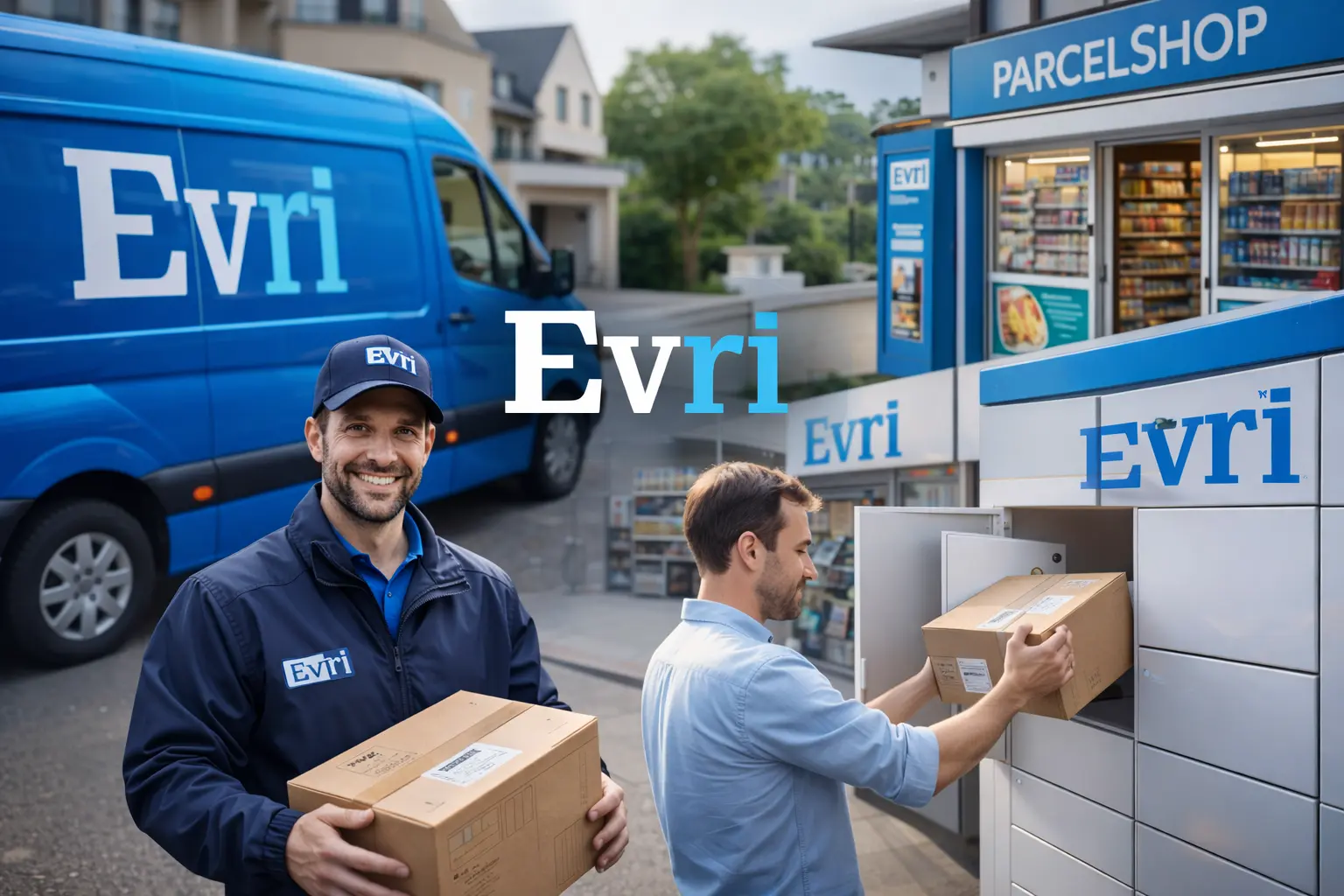
Evri is one of the most recognised parcel delivery brands in the United Kingdom, closely linked to the daily engine of e-commerce. For millions of shoppers, Evri is the last-mile link between an online checkout and a front door, parcel locker, or convenience store pickup. For retailers, marketplaces, and small businesses, Evri is part of the operational infrastructure that determines delivery speed, returns convenience, and customer satisfaction.
This page is written as a WordPress-ready, long-form guide for RajeevPrakash.com. It explains what Evri is, how it evolved, how its network works, what strategic moves are reshaping the company, and what consumers and market watchers should understand about the modern parcel delivery sector. The aim is clarity rather than hype, with a structure that can be updated over time as the UK delivery market changes.
What Is Evri and Why It Matters in the UK Delivery Ecosystem
Evri is a UK parcel delivery company headquartered in Leeds, operating a large courier-led network and a growing out-of-home pickup and drop-off footprint. It was launched in March 2022 after Hermes UK rebranded to Evri, a shift intended to reset brand perception and signal improvements in service and technology.
Evri matters because the parcel market has become a core part of household life. Online retail habits, second-hand marketplaces, and returns-driven shopping have turned deliveries into a high-frequency service. In that environment, delivery companies compete on convenience, tracking transparency, first-attempt success, cost, and returns handling. Evri’s scale means it is often part of that conversation, whether the topic is operational performance, courier models, or the rapid growth of parcel lockers and convenience-store parcel points.
The Hermes to Evri Rebrand: What Changed and What Stayed the Same
The Hermes brand carried strong recognition in the UK, but it also faced reputational challenges in public perception over the years. The shift to Evri in 2022 was designed to create a new identity and highlight transformation investments in technology and operations. Evri itself frames the brand change as part of a broader modernisation programme.
Rebrands in logistics are rarely cosmetic. They typically accompany changes in customer communication, tracking tools, operational investments, and service promises. However, a rebrand does not automatically change the reality of last-mile complexity. Parcel delivery is one of the hardest operational games in consumer services because it combines time windows, address accuracy, weather, traffic, building access, and human variability at scale. The more deliveries a network runs, the more it must rely on process discipline and technology to keep performance consistent.
For readers, the useful lens is to treat the Evri brand as a signal of intent, while judging outcomes through the daily experience of delivery accuracy, reliability during peak seasons, and how the company handles exceptions such as delays, missed deliveries, or address issues.
Scale and Network: How Evri Operates at National Volume
Evri is widely described as one of the UK’s largest dedicated parcel delivery networks. The company has referenced very large annual parcel volumes, and public communications describe a workforce that includes a significant courier base alongside employees and operational sites.
At a high level, Evri operates through a combination of hubs, depots, couriers, and out-of-home parcel points. Parcels move from retailer or marketplace induction points into the network, pass through sorting and distribution stages, and then enter the local delivery stage for final mile completion. The local stage can be home delivery or delivery to a ParcelShop or locker location, depending on the selected service and recipient preference.
For an e-commerce economy, this structure is central because it determines how quickly and cheaply goods can move. When the delivery network is efficient, it lowers friction for online shopping and returns. When the network struggles, it creates customer dissatisfaction that can reflect back on retailers and marketplaces, not only on the delivery brand.
Out-of-Home Delivery: ParcelShops, Lockers, and the Shift in Consumer Behaviour
One of the most important trends in parcel logistics is the rapid expansion of out-of-home delivery. Instead of attempting delivery to a home address, parcels can be collected from a nearby convenience store location or a locker. This improves first-attempt success rates and gives consumers more control over timing. It can also reduce operational complexity during peak periods because out-of-home drop points can accept bulk deliveries more efficiently than scattered door-to-door attempts.
Evri has emphasised the growth of its ParcelShop and locker footprint, and it has announced investment aimed at expanding out-of-home infrastructure over the coming years.
This matters because the UK parcel market is increasingly competitive on convenience rather than only on speed. Consumers who work long hours, live in apartments with restricted access, or simply prefer flexible pickup options often choose lockers or local collection points. Retailers also prefer delivery options that reduce failed deliveries and customer support workload. Over time, the delivery company that builds the most reliable out-of-home network can improve cost efficiency and retention with major commerce partners.
Technology and Operations: Why Modern Parcel Networks Depend on Digital Control
Parcel delivery is a physical business powered by digital coordination. Tracking updates, scan events, route planning, exception handling, locker availability, and customer notifications all depend on systems that must work at massive scale. Small improvements in scanning accuracy or route optimisation can reduce missed deliveries, lower customer complaints, and increase productivity across thousands of couriers.
Evri has repeatedly positioned itself as a business investing in operations and technology, including network transformation for peak periods and partnerships that support more reliable service and improved customer experience.
The operational reality is that technology alone is not enough. The last mile is human and physical. Yet technology can reduce variability by improving information flow. When couriers have better routing and more accurate delivery instructions, first-attempt success can improve. When customers receive clearer notifications, they can adapt their day or redirect deliveries to parcel points. When operations teams get better real-time visibility, they can intervene earlier in disruption scenarios.
Ownership and Strategic Direction: Why Evri’s Corporate Structure Matters
In logistics, ownership can shape investment appetite and strategic speed. Evri has been through notable ownership and strategic changes in recent years, including a deal in which Apollo-managed funds agreed to acquire Evri from Advent International.
For readers, what matters is not the name of the owner but what ownership implies. Private equity ownership often signals a focus on operational efficiency, capital investment where it increases productivity, and strategic transactions that build scale or capability. In parcel logistics, scale matters because it improves density, which lowers cost per delivery. Capability matters because cross-border, returns, and out-of-home networks can create defensible differentiation.
The DHL eCommerce UK Combination: A Major Move in UK Parcels
One of the most important strategic developments around Evri is the announced transaction involving the merger of DHL eCommerce UK with Evri to create a larger combined parcel delivery business. The stated ambition is to deliver over one billion parcels annually, alongside a large volume of business letters, creating a significant player in UK delivery services.
For the UK market, this type of combination matters because it can change competitive dynamics, capacity distribution, and pricing pressure. It also draws scrutiny from competition authorities, especially when a transaction could reduce the number of meaningful rivals in certain delivery segments. Public reporting has noted regulatory attention to the deal, which reflects the importance of competition in the delivery market for retailers and consumers.
From an operational standpoint, mergers in logistics are difficult. The promise is improved scale, stronger networks, and better coverage for business and consumer deliveries. The risk is integration friction, where systems, depots, and service models must be aligned without harming performance. The market typically judges these deals by whether service quality improves over time and whether cost savings translate into competitive pricing without damaging reliability.
Service Experience and Public Perception: Why Delivery Brands Are Judged Differently
Unlike many consumer services, parcel delivery is judged most harshly at the moment of failure. A perfect delivery is almost invisible. A delayed or missing parcel becomes a high-emotion event because it disrupts plans, gifts, work equipment, or time-sensitive items. This is why delivery brands can have polarised reputations. Many deliveries succeed quietly, while a smaller number of failures can dominate public perception and online discussion.
It is also why delivery networks are sensitive to localised disruption. A single partner failure, depot issue, or staffing gap in a specific area can create visible delays for that region even if the wider national network remains stable. Recent reporting, for example, described disruption in a local area following the closure of a delivery partner, leading to delays until operations were reorganised.
For readers, the practical takeaway is that delivery performance is both national and local. Large networks can be strong overall while still experiencing local pain points. The long-term measure of quality is how consistently a company resolves these issues, how transparently it communicates, and whether disruption becomes rare rather than recurring.
Peak Season Pressure: Why Black Friday and Holidays Test Every Parcel Network
Parcel networks have two realities. One is standard-volume performance. The other is peak performance during intense shopping periods such as Black Friday, Christmas, and seasonal sale events. Peak seasons stress every stage of the system, from induction to sorting to local delivery capacity. When volumes surge, even small weaknesses in scanning accuracy, route design, or depot flow can expand into visible delays.
Evri has publicly described investments and preparations aimed at strengthening peak performance, including network transformation and capacity scaling around festive periods.
For commerce partners, peak performance is often the deciding factor in long-term relationships. A carrier that performs reliably in peak periods becomes more valuable than one that is only strong in normal weeks. For consumers, peak reliability shapes trust and future purchasing behaviour, especially for time-sensitive gifting.
Returns and Second-Hand Marketplaces: The Hidden Growth Engine in Parcel Logistics
A major part of modern parcel volume is driven by returns. Many online shoppers purchase multiple sizes or variants and return what they do not keep. In parallel, second-hand marketplaces have grown dramatically, creating a constant stream of small parcels moving between individuals rather than only between retailers and consumers.
This trend supports carriers that offer convenient drop-off solutions, clear tracking, and cost-effective small-parcel services. Out-of-home networks and lockers are especially valuable here because they make returns simple and reduce the need for home collection.
In this environment, delivery brands that integrate seamlessly into marketplace returns workflows gain steady demand. Over time, that demand can be more stable than discretionary retail surges because returns and second-hand transactions have become habitual behaviours rather than occasional events.
Sustainability and the Future of Last-Mile Delivery
Sustainability in logistics often becomes real when it is operationally efficient. Electric vehicles, route optimisation, consolidated drop-off points, and alternative delivery methods can reduce emissions, but they must also maintain cost competitiveness. Out-of-home networks naturally support sustainability because they reduce failed delivery attempts and concentrate deliveries.
Evri has also been associated with experimentation and partnership-led innovation in the UK, including trials of autonomous delivery concepts reported in industry coverage.
The future of last-mile delivery is likely to be multi-modal. Home delivery will remain central, but lockers and parcel shops will expand. Routes will become more optimised through data. More deliveries will be redirected dynamically based on customer availability. Over time, delivery companies will increasingly compete on control and flexibility, not only on price.
Competition in the UK Parcel Market: Why the Space Is Intense
The UK parcel market is intensely competitive. Multiple national carriers and specialised operators compete across consumer-to-consumer parcels, business-to-consumer parcels, returns, and time-definite services. Competition is not only about cost. It is about reliability, out-of-home networks, retailer integration, and last-mile density. Public reporting around sector moves highlights how competitive positioning and network access are strategic priorities across the industry.
For Evri, competition pressure can be both a challenge and a motivator. It pushes continued investment in technology, parcel points, and peak performance. It also means that any decline in service quality can quickly translate into lost volume if major retailers or marketplaces shift allocation to alternative carriers.
What This Means for RajeevPrakash.com Readers
Evri is a practical case study of how modern logistics intersects with consumer behaviour, technology, and business strategy. It is not simply a courier brand. It is part of the infrastructure layer that allows e-commerce, returns culture, and resale marketplaces to function at scale.
If you are reading this from an investor mindset, the key themes to watch are scale, out-of-home expansion, operational technology improvement, and the long-term impact of strategic combinations in the UK market. The most important question is whether the network becomes steadily more reliable and more convenient while keeping cost competitive.
If you are reading this from a consumer or small business mindset, the key themes are convenience and control. Parcel shops and lockers reduce friction. Better tracking reduces uncertainty. Strong peak performance reduces seasonal stress. The delivery market is moving toward giving customers more options, and the networks that invest in those options are likely to remain relevant.
Conclusion: Evri’s Role in a UK Delivery Market That Keeps Evolving
Evri represents a large-scale UK parcel network built for the modern e-commerce economy, shaped by a rebrand designed to signal transformation and supported by ongoing investment in operations, technology, and out-of-home delivery infrastructure. Its strategic direction has been influenced by ownership change and major market transactions, including the announced combination involving DHL eCommerce UK, a move that signals how important scale and network breadth have become in the UK parcel race.
Over the next few years, the most important measure will be consistency. In parcel delivery, trust is built through millions of ordinary successes, especially during peak seasons and during local disruptions when the network is tested. Evri’s story, like the wider logistics sector, is ultimately about turning complexity into reliable routine for households and businesses.