
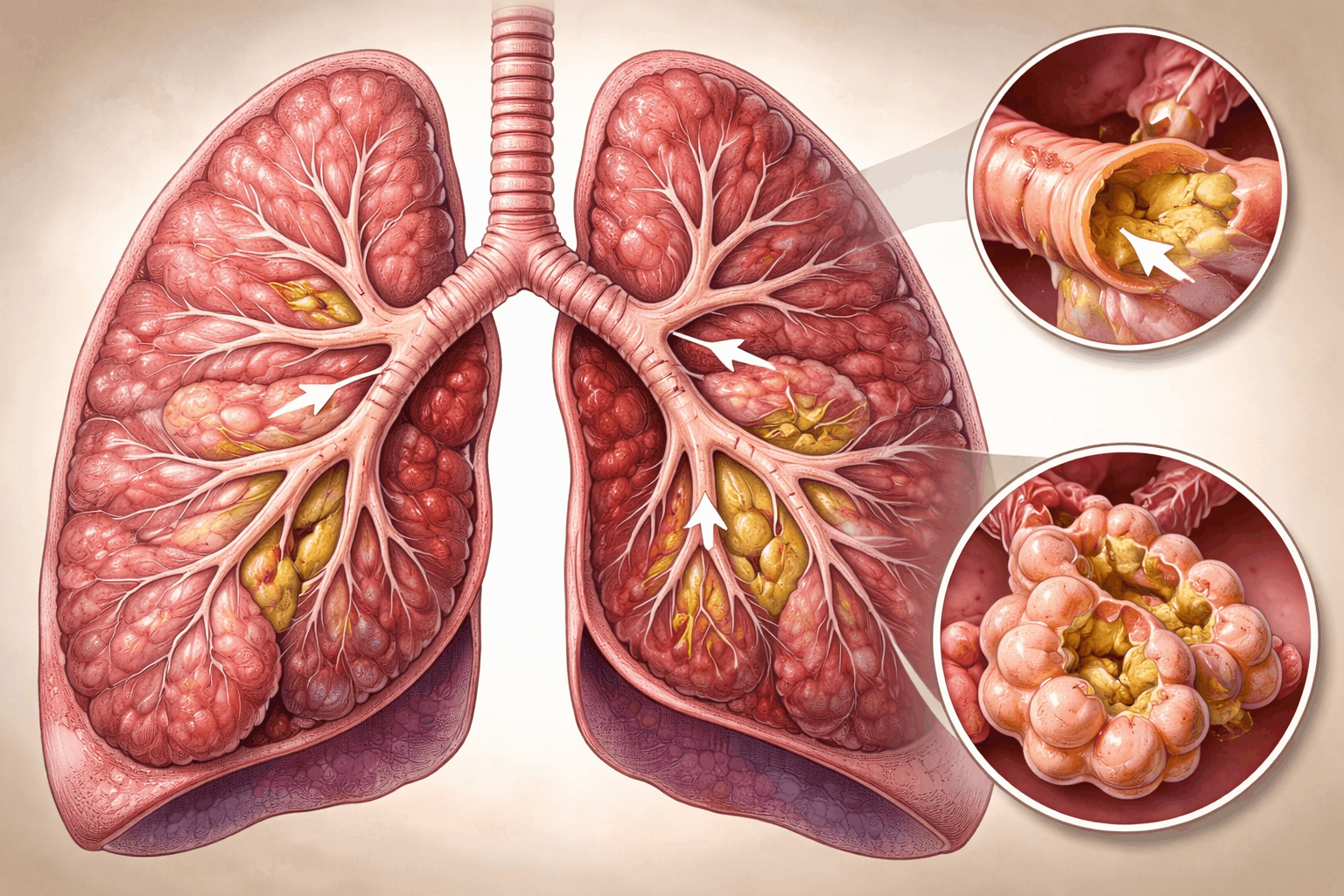
Chronic obstructive pulmonary disease, commonly called COPD, is a long-term lung condition that makes airflow out of the lungs harder over time. The good news is that COPD treatment can substantially reduce breathlessness, improve daily function, cut the number of flare-ups, and improve quality of life. COPD is not “curable” in the strict sense, but it is highly treatable when you combine the right inhaled therapy, lifestyle steps, vaccination, pulmonary rehabilitation, and a clear plan for exacerbations.
This article explains modern COPD treatment using up-to-date guideline thinking, especially the GOLD 2025 strategy documents that many clinicians use worldwide.
The Main Goals of COPD Treatment
COPD treatment has two big goals. The first is symptom control, meaning less shortness of breath, better exercise tolerance, less cough and mucus, and better sleep. The second is risk reduction, meaning fewer and milder exacerbations, slower decline in health status, fewer hospitalisations, and fewer complications.
GOLD emphasises that pharmacotherapy can reduce symptoms and reduce the frequency and severity of exacerbations, and that treatment should be adjusted based on symptoms, exacerbation history, and key biomarkers such as blood eosinophils when considering inhaled corticosteroids.
Step One That Changes Everything: Stop Smoking and Reduce Exposure
If a person with COPD smokes, stopping smoking is the single most powerful intervention to slow disease progression. It also improves response to many treatments. Alongside this, reducing exposure to indoor and outdoor air pollution, occupational dust, and biomass smoke can reduce symptoms and flare-ups. WHO highlights avoidance of smoking and air pollution as core parts of COPD care.
Vaccines and Prevention: A “Treatment” That Prevents Flare-Ups
Respiratory infections are a major trigger for COPD exacerbations. Vaccination against influenza and pneumococcal disease is widely recommended in COPD care pathways, and many clinicians also consider COVID-19 vaccination and boosters based on local guidance and individual risk. Preventing infections often prevents hospitalisations, which is one of the most meaningful outcomes in COPD.
Pulmonary Rehabilitation: The Most Underused High-Impact Therapy
Pulmonary rehabilitation is a structured programme that combines exercise training, breathing strategies, education, and self-management. For many people, it improves exercise tolerance and day-to-day function more than any single inhaler change. WHO specifically lists pulmonary rehabilitation as a key COPD treatment option alongside medicines and oxygen.
Inhalers Are the Foundation: Bronchodilators First
Inhaled bronchodilators are the core medicines for COPD. They relax airway smooth muscle and keep the airways open, reducing breathlessness and improving activity tolerance. WHO notes that bronchodilator inhalers are the most important medicines for treating COPD.
There are two main long-acting bronchodilator classes. One class is long-acting beta agonists (LABA). The other is long-acting muscarinic antagonists (LAMA). Many people start with one long-acting bronchodilator and move to dual long-acting bronchodilation (LABA plus LAMA) if symptoms persist or if exacerbation prevention is a priority.
GOLD 2025 highlights evidence that LABA plus LAMA tends to rank highly for reducing COPD exacerbations compared with single long-acting bronchodilators.
When Inhaled Corticosteroids Help, and When They Can Harm
Inhaled corticosteroids, often abbreviated as ICS, are not automatically used for everyone with COPD. They are mainly used to reduce exacerbations in selected patients, especially those with a higher exacerbation risk and higher blood eosinophil counts, because eosinophils can predict a better response to ICS-containing regimens. GOLD 2025 explicitly notes that the treatment effect of ICS-containing regimens is higher in patients with high exacerbation risk and higher eosinophils.
ICS also carry risks, particularly an increased risk of pneumonia in some COPD patients. So the modern approach is targeted use rather than routine use for everyone, and clinicians often reassess whether ICS remains appropriate over time.
Dual Therapy and Triple Therapy: How Escalation Usually Works
If symptoms remain despite one long-acting inhaler, dual bronchodilation with LABA plus LAMA is a common next step. If exacerbations continue despite LABA plus LAMA, or if there is a strong reason to include ICS such as higher eosinophils with exacerbations, many patients move to triple therapy, which means LABA plus LAMA plus ICS.
A 2025 review of what’s new in the GOLD 2025 report notes that, when ICS is indicated, GOLD recommends triple therapy over the older approach of ICS-LABA alone, because preventing exacerbations is central and triple therapy can be more effective in that context.
Short-Acting “Rescue” Inhalers
Many people with COPD keep a short-acting bronchodilator, often called a rescue inhaler, for quick relief of intermittent breathlessness. It does not replace long-acting maintenance therapy, but it can be helpful for episodes of shortness of breath, especially during exertion or early in flare-ups.
Inhaler Technique and Device Choice Can Matter as Much as the Drug
A medication can look perfect on paper and still fail if the inhaler device does not match the patient’s ability or routine. Poor inhaler technique is common and leads to unnecessary symptom burden and exacerbations. In real-world COPD care, clinicians often reassess technique repeatedly and may switch device type if coordination, inspiratory flow, or adherence is an issue.
Treating COPD Exacerbations (Flare-Ups)
A COPD exacerbation is a worsening of symptoms beyond normal day-to-day variation, often with increased breathlessness, cough, and sputum changes. Exacerbations accelerate lung function decline and drive hospital admissions, so early, effective management matters.
Standard exacerbation treatment commonly includes increasing bronchodilator use, and in many cases adding a short course of oral corticosteroids to reduce airway inflammation. Antibiotics may be used when there is evidence of bacterial infection, such as increased sputum purulence, but clinicians tailor this to the clinical picture and local guidance. NICE maintains specific guidance pathways for managing COPD and also has separate antimicrobial prescribing guidance for acute exacerbations.
If a flare-up causes severe breathlessness, low oxygen levels, confusion, bluish lips, chest pain, or inability to speak full sentences, urgent medical care is needed.
Oxygen Therapy: Who Needs It and Why It’s Not for Everyone
Long-term oxygen therapy can be life-extending in people with chronic, significant low oxygen levels at rest, but it is not automatically beneficial for everyone who feels breathless. Oxygen is prescribed based on measured oxygen saturation and arterial blood gases in the right clinical setting, typically when stable, not only during a temporary flare-up. WHO lists oxygen as a treatment option for COPD, emphasising that care should be appropriate to severity and need.
Advanced Options: Non-Invasive Ventilation, Procedures, and Surgery
For selected people with advanced COPD, especially those with chronic respiratory failure or repeated hospitalisations, clinicians may consider non-invasive ventilation in specific scenarios. In carefully selected patients with severe emphysema patterns, lung volume reduction procedures or surgery may improve symptoms and exercise capacity. In the most advanced cases, lung transplantation may be an option in specialised centres. These decisions are highly individual and depend on imaging, physiology, comorbidities, and functional status.
Managing Comorbidities That Worsen COPD Outcomes
COPD often coexists with cardiovascular disease, anxiety, depression, sleep issues, osteoporosis, and metabolic conditions. Addressing these can improve breathlessness perception, exercise capacity, and overall prognosis. Effective COPD care is not only inhalers. It is whole-person management.
New and Emerging COPD Treatments: Biologics and Novel Drugs
COPD is increasingly treated as multiple “subtypes,” and newer therapies are emerging for selected phenotypes. In particular, biologic therapies have begun to enter the COPD space for patients with certain inflammatory patterns such as higher eosinophils, though availability and indications vary by country and regulator. This is an evolving area and usually applies to a narrower group of patients whose disease remains uncontrolled despite optimal inhaled maintenance therapy.
A Simple Way to Think About a “Good” COPD Plan
A strong COPD treatment plan usually includes consistent long-acting bronchodilator therapy, correct inhaler technique, vaccination, pulmonary rehabilitation where possible, a clear exacerbation action plan, and regular follow-up to adjust treatment based on symptoms and flare-ups. GOLD strategy documents emphasise tailoring pharmacotherapy to the individual and stepping up or adjusting therapy to reduce symptoms and prevent exacerbations.
When to Seek Urgent Care
Get urgent medical help if breathing suddenly worsens, oxygen levels drop, you feel unusually drowsy or confused, you have severe chest pain, you cannot walk across a room due to breathlessness, or you are using rescue medication repeatedly with little relief. Exacerbations can become emergencies quickly, and early treatment often prevents hospitalisation.