
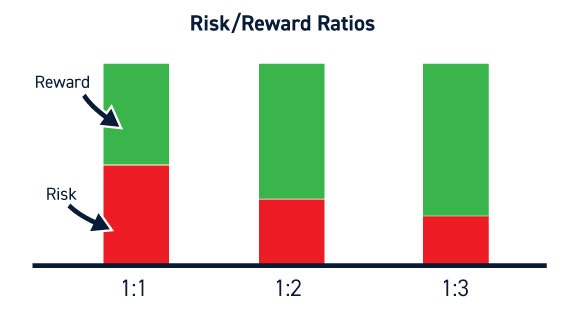
The risk-reward ratio is an essential tool in the world of trading and investing. It helps traders determine whether the potential profit of a trade justifies the risk they are taking. Using a calculator for the risk-reward ratio simplifies the decision-making process by providing an objective way to evaluate the risks and rewards associated with different trades. In this article, we will explore what a risk-reward ratio is, how to use a calculator to determine the ratio, and how to integrate this critical concept into your trading strategy.
Risk Reward Ratio Calculator
1. What is the Risk-Reward Ratio?
The risk-reward ratio is a metric used by traders to evaluate the potential risk versus the potential reward of a trade. It compares the amount of risk (the potential loss) to the amount of reward (the potential profit). This ratio helps traders determine whether a particular trade is worth entering based on their risk tolerance and expected return.
For example, if you risk $500 to potentially make $1,500, the risk-reward ratio is 1:3, meaning for every dollar of risk, you stand to gain three dollars in profit. Many professional traders aim for a minimum risk-reward ratio of 1:2 or higher to maintain long-term profitability.
2. Why Use a Risk-Reward Ratio Calculator?
A risk-reward ratio calculator allows traders to quickly and accurately evaluate whether a trade setup is worth pursuing based on the balance between risk and potential reward.
Some key benefits include:
- Quick decision-making by eliminating manual calculations
- Objective analysis that removes emotional bias
- Better risk management through clearly defined loss and profit levels
Using a calculator ensures that each trade aligns with a disciplined trading approach.
3. How to Use a Risk-Reward Ratio Calculator
A A risk-reward ratio calculator typically requires three main inputs:
- Entry Price – the price at which you enter the trade
- Stop-Loss Price – the level where you exit to limit losses
- Target Price – the level where you take profit
Risk is calculated as the difference between the entry price and stop-loss price, while reward is calculated as the difference between the target price and entry price.
Example:
- Entry Price: $1,000
- Stop-Loss Price: $950
- Target Price: $1,200
Risk = 1,000 − 950 = $50
Reward = 1,200 − 1,000 = $200
The resulting risk-reward ratio is 1:4, meaning the potential reward is four times the risk, indicating a favorable trade setup.
4. Setting Up a Risk-Reward Ratio Calculator in Excel
Creating a risk-reward ratio calculator in Excel is simple and effective for traders who prefer offline analysis.
Step 1: Define Key Columns
- Column A: Entry Price
- Column B: Stop-Loss Price
- Column C: Target Price
- Column D: Risk
- Column E: Reward
- Column F: Risk-Reward Ratio
Step 2: Enter Formulas
Risk-Reward Ratio: =D2 / E2
Risk: =A2 - B2
Reward: =C2 - A2
5. Example of Using a Risk-Reward Ratio Calculator
Suppose you want to evaluate a trade with the following details:
- Entry Price: $1,500
- Stop-Loss Price: $1,450
- Target Price: $1,650
Calculations:
- Risk: 1,500 − 1,450 = $50
- Reward: 1,650 − 1,500 = $150
- Risk-Reward Ratio: 1:3
This means that for every dollar risked, the trader stands to gain three dollars, representing a strong trade setup.
6. Benefits of Using a Risk-Reward Ratio Calculator
Using a risk-reward ratio calculator offers several advantages:
- Objective evaluation of trade quality
- Consistency in decision-making
- Improved risk control by prioritizing favorable setups
Over time, this leads to better capital preservation and more stable trading results.
7. Incorporating the Risk-Reward Ratio into Your Trading Strategy
The risk-reward ratio should be a core component of any trading strategy.
Key applications include:
- Entry and exit planning to ensure potential gains justify the risk
- Stop-loss and target placement based on logical risk parameters
- Trade review and optimization by analyzing past performance
Many successful traders focus on trades with a risk-reward ratio of 1:2 or higher.
8. Application Across Different Asset Classes
The risk-reward ratio is widely used across multiple markets:
- Stocks – to evaluate long and short trade setups
- Forex – to manage leverage and volatility
- Commodities – such as gold, oil, and agricultural products
- Cryptocurrencies – where volatility makes risk management essential
Regardless of the asset class, the principle remains the same: potential reward should outweigh potential risk.
9. Tools Available at RajeevPrakash.com
RajeevPrakash.com offers an online Risk-Reward Ratio Calculator that allows traders to instantly evaluate trade setups by entering basic price levels.
This tool is useful for both beginner and experienced traders looking to make faster, more disciplined trading decisions without manual calculations.
10. Common Mistakes When Using the Risk-Reward Ratio
Some common errors traders should avoid include:
- Ignoring broader market conditions
- Setting unrealistic profit targets
- Relying solely on risk-reward without proper position sizing
The risk-reward ratio works best when combined with sound technical and fundamental analysis.
11. Conclusion: Mastering Risk Management with a Risk-Reward Ratio Calculator
A risk-reward ratio calculator is an essential tool for traders who want to improve consistency and manage risk effectively. By evaluating trades before entering them, traders can avoid poor setups and focus on opportunities with favorable risk-return profiles.
Whether you build your own calculator in Excel or use the online tools available at RajeevPrakash.com, incorporating risk-reward analysis into your trading strategy helps promote discipline, objectivity, and long-term profitability.

Download The Financial Calculator App
Discover all the incredible features of our app designed to enhance your experience. From intuitive tools to unique services tailored for your needs, the app offers endless possibilities. Don’t miss out—click the link below to learn more and see how it can make a difference in your life today.