
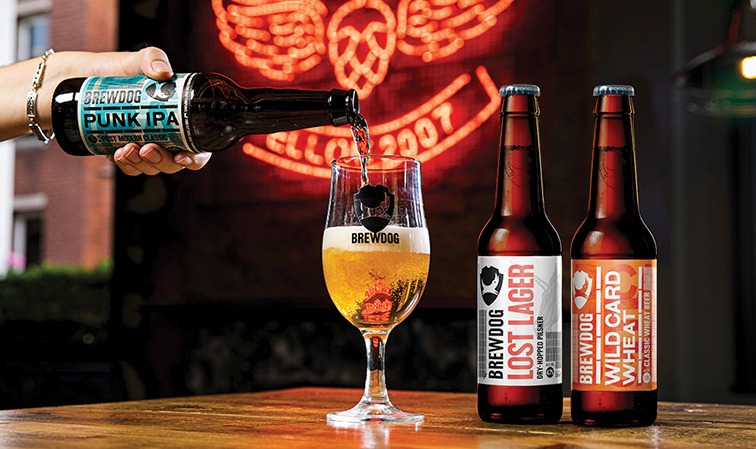
BrewDog is a Scottish-born craft beer company that became one of the UK’s most talked-about brands by combining bold brews, provocative marketing, and community-focused funding. Founded in 2007, BrewDog expanded globally with beers sold in supermarkets, bars, and pubs across dozens of countries. Its flagship Punk IPA became synonymous with the UK craft beer revolution and helped turn the company into a household name in the beer world.
Origins: A Punk Ethos Meets Craft Beer
BrewDog began in 2007 in Fraserburgh, Aberdeenshire, when founders James Watt and Martin Dickie brewed their own beer out of dissatisfaction with mainstream lagers and ales. They poured personal funds into equipment, filled bottles by hand, and initially sold beer at local markets before opening their first bar in Aberdeen in 2009.
From the start, the brand challenged conventional brewery marketing, using contrarian messaging, vivid labels, and headline-grabbing beers like the ultra-strong Tokyo stout that attracted immediate media attention. BrewDog relied on organic buzz rather than traditional advertising, a tactic that helped cultivate its rebellious image early on.
Growth and International Expansion
BrewDog rapidly expanded beyond Scotland. Within a decade, its beers were found in supermarkets and bars across the UK, and BrewDog bars and pubs opened internationally, building a footprint in Europe, North America, Asia, and Australia. By the early 2020s, it claimed availability in over 57 countries with more than 100 bars worldwide.
A pivotal move in its growth story was the Equity for Punks crowdfunding series, which attracted hundreds of thousands of small investors. BrewDog offered perks like beer discounts and bar access in exchange for equity, turning casual drinkers into loyal brand backers. This approach raised tens of millions of pounds and garnered significant public engagement.
Brand and Product Portfolio: Beyond Punk IPA
BrewDog’s beer lineup includes a range of craft styles—from its iconic Punk IPA to more experimental and limited releases. Specialty brews like Dead Pony Club, Elvis Juice, and aggressive high-strength beers helped differentiate the brand. Some releases even entered beer lore for their novelty, such as extreme ABV creations that pushed brewing conventions.
BrewDog’s marketing and product strategy emphasized innovation and shock value, often courting controversy to stay top-of-mind in a crowded beer market.
Leadership and Venture Capital Inflection Points
BrewDog welcomed outside investment in 2017, when TSG Consumer Partners, a US private equity firm, acquired a substantial stake in the business. This deal boosted BrewDog’s valuation but also introduced preferred return clauses that later complicated investor outcomes and perceptions. The founders retained equity and influence even as the brand scaled globally.
Leadership changes have continued in recent years. Founder James Watt stepped down as CEO in 2024, opting for a non-executive role, and subsequent executive turnover reflected a period of strategic reassessment.
Financial Challenges and Market Pressures
Despite strong brand recognition, BrewDog has faced persistent financial headwinds. The company reported consecutive years of losses, posting a pre-tax loss of £36.7 million in 2024, following significant deficits in prior years. Revenues did grow, reaching around £357 million, but rising costs, industry pressures, and underperforming venues strained profitability.
Market challenges also hit BrewDog’s UK operations: its beers were removed from thousands of traditional pubs in favour of competing craft brands, and the company shuttered multiple bar locations including its original Aberdeen venue. These developments illustrate broader pressures in the hospitality sector post-pandemic, compounding BrewDog’s internal strategic shifts.
Sale and Restructuring: A Turning Point
In early 2026, BrewDog initiated a formal sale process and appointed restructuring advisors to explore options for the business, including potential sale, break-up of assets, or acquisition by larger beer groups or leisure operators. Possible suitors could include established brewers like Carlsberg or Heineken, mid-tier pub groups, or private equity buyers.
For investors, this marks a critical juncture. The presence of preferred equity held by firms like TSG means small retail investors from the original Equity for Punks campaigns could see limited recoveries depending on sale terms, a point of significant debate among BrewDog’s investor community.
BrewDog’s Impact on the Craft Beer Industry
BrewDog’s influence on the global craft beer movement is undeniable. It helped popularise hoppy IPAs and creative beer styles in markets traditionally dominated by industrial lagers. BrewDog’s unconventional marketing and engagement with small investors also influenced how modern beverage brands build communities around products.
Its story offers a valuable case study for entrepreneurs on disruptive branding, scaling via alternative finance (crowdfunding), and the challenges of transitioning from rebellious startup to globally scaled enterprise with institutional capital.
The Future Ahead for BrewDog
BrewDog stands at a crossroads. The ongoing sale process, leadership evolution, and industry headwinds will shape its next chapter. Core beer brands like Punk IPA still enjoy market presence, and BrewDog’s cultural imprint persists among craft beer communities. However, its path forward may look very different from the rapid growth trajectory of the 2010s as it navigates profitability pressures and investor expectations.