
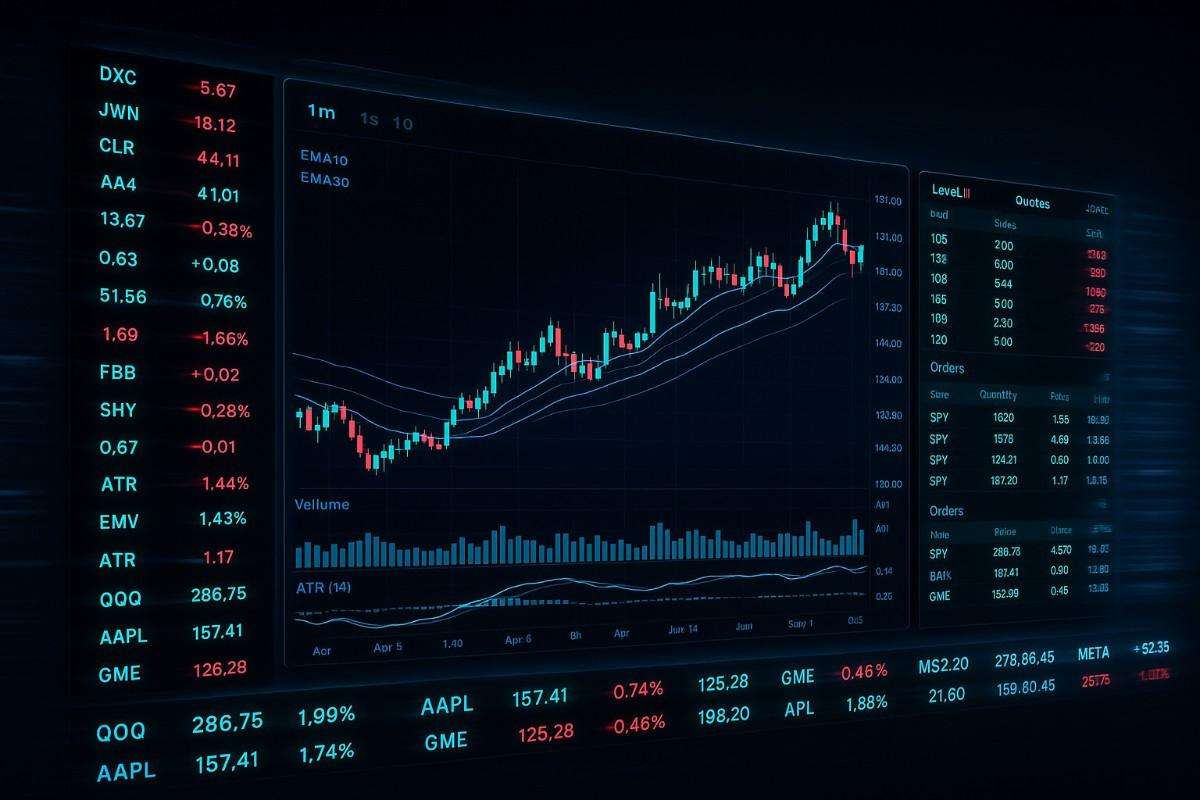
Active traders in the US live and die by speed, reliability, and execution quality. When you place dozens or even hundreds of orders in a single session, the difference between a fast, stable platform and a sluggish one can be the difference between consistent profits and frustrating slippage. The best platforms for active traders in the US are not only about low commissions. They must deliver robust charting, advanced order types, dependable uptime, and professional grade order routing. In this detailed guide, you will explore what truly defines the best day trading platforms US traders rely on, how to compare active trading brokers, and what to look for in a US speed trading platform that can support your style, your strategy, and your risk appetite.
Understanding The Needs Of Active And Day Traders In The US
Before comparing specific platforms, it is important to define what makes a trader “active.” Active traders typically execute trades frequently, monitor the market in real time, and depend on intraday price movement to generate returns. Many of them are day traders or short term swing traders. Their needs are very different from long term investors.
An active trader requires a platform that can handle real time data feeds without lag. They need multi chart layouts so they can track several symbols and timeframes at once. They also need direct access style order routing, hotkeys for rapid order entry, and the ability to customize layouts without the platform crashing at the worst possible moment. The best day trading platforms US based traders use tend to offer advanced features like depth of market views, time and sales windows, complex option strategies, and conditional orders.
Execution Speed: The Heart Of A US Speed Trading Platform
Execution speed is the most critical pillar for any US speed trading platform. When you hit the buy or sell button, the time it takes for your order to reach the market and get filled can have a real impact on your bottom line. Delays increase slippage, especially in fast moving stocks around news events, at the open, or near key economic data releases.
The top active trading brokers invest heavily in low latency infrastructure. They maintain high performance servers, efficient connections to exchanges, and smart order routing systems designed to seek the best available price across venues. For an active trader, this infrastructure is just as important as the commission structure. A platform that charges slightly more per trade but delivers noticeably better fills and fewer rejections may actually lead to better net results than a cheaper but slower alternative.
Charting Tools: The Working Environment For Active Traders
Most active traders in the US rely heavily on technical analysis. That means they live inside their charting workspace for many hours each day. A leading platform must therefore provide powerful and flexible charting tools. Traders expect multiple timeframes, from one minute and tick charts to daily and weekly views. They need a wide library of indicators, such as moving averages, oscillators, volume studies, and volatility measures.
In addition to the indicators themselves, serious day traders look for features like drawing tools, custom indicator scripting, and the ability to save and load templates. A strong US speed trading platform will allow quick switching between different layouts, multiple monitor support, and the capacity to see several symbols simultaneously. For example, a trader may want to watch the S and P 500 futures, a leading stock in the sector, and a volatility index at the same time to gauge market tone. The best day trading platforms US traders use support this multi instrument, multi timeframe approach smoothly and without freezing.
Order Types And Routing: Fine Tuning Your Trading Edge
Order types can significantly influence trading results. Active trading brokers that cater to professional style clients provide more than simple market and limit orders. They support stop, stop limit, trailing stop, bracket orders, and conditional orders that trigger when another symbol reaches a price. Some platforms also allow automated entry and exit strategies so that you can define your trade logic once and let the platform handle the execution.
Order routing is another important area. A high quality US speed trading platform will offer intelligent routing that can scan multiple exchanges and dark pools to find the best price, while also providing the option of routing directly to specific venues for traders who want more control. Level two data and depth of book information can help advanced users see liquidity and potential hidden orders.
Platform Stability, Uptime, And Risk Management
Speed is only useful if the platform is stable. For active traders, platform downtime during market hours is simply not acceptable. The top platforms invest in redundancy and rigorous testing so that they remain operational even during high volume events like Federal Reserve announcements or major earnings days.
Risk management tools are equally critical. A good platform for active trading should make it easy to set maximum daily loss limits, monitor margin usage, and track open positions and exposure in real time. Some active trading brokers provide built in risk controls that can automatically cut off trading for the day if a loss limit is reached. While this may feel restrictive, it can protect traders from emotional decisions and large drawdowns.
Evaluating The User Interface And Customization Options
Even with high speed infrastructure and excellent charting, a platform can still be frustrating if the user interface is clumsy. Active traders need to act quickly and with confidence. That requires a clean, intuitive layout where commonly used actions are just a click or a keystroke away.
The best day trading platforms US based traders favor are typically highly customizable. Traders can arrange windows, resize charts, move order entry panels, and build workspaces specific to their preferred markets, whether that is US equities, options, futures, or foreign exchange. Keyboard shortcuts and hotkeys can be configured for rapid order placement and cancellation. Advanced traders often map frequently used functions like buy market, sell market, cancel all, and reverse position to specific key combinations, reducing the time between decision and execution.
Data Feeds, Market Coverage, And Research Tools
Another factor in choosing the best platforms for active traders in the US is the quality and breadth of market data. Traders rely on real time quotes, tick by tick trade information, and level two order book data. The best platforms provide fast, accurate feeds for major US exchanges and often give access to extended hours trading data.
In addition to raw market data, many active trading brokers also provide research tools. These can include news feeds, earnings calendars, economic release schedules, analyst ratings, and screeners that filter stocks by volume, volatility, price change, or fundamental factors. For day traders, real time news and breaking headlines are particularly useful, since many short term opportunities arise from sudden information flow.
Cost Structure For Active Trading Brokers
Cost remains an important consideration even in a world where many brokers offer zero commission trading for US stocks and ETFs. Active traders must look beyond headline commission rates and examine other charges, such as option contract fees, futures commissions, routing fees, data fees, and interest rates on margin.
In addition, some platforms charge monthly fees for access to advanced tools, premium data feeds, or professional grade routing. Others require a minimum balance or a minimum trading activity level to avoid inactivity fees. The best day trading platforms US traders choose tend to offer a clear and transparent pricing structure. When you know exactly what you will pay for each type of trade and each data package, you can estimate your total monthly cost based on your expected trading volume and strategy.
Comparing Desktop, Web, And Mobile Trading Experiences
Active traders often prefer full featured desktop platforms because they tend to be more powerful and customizable. Desktop software can take better advantage of system resources and can handle sophisticated charting, multiple monitors, and hotkeys. Many of the best platforms for active traders in the US are still desktop first for this reason.
However, modern brokers also provide web based platforms that are accessible from any browser. For some traders, especially those who travel frequently, a strong web platform is essential. It should still deliver real time data and quick order entry, even if it is slightly less customizable than a desktop application.
Mobile trading is also part of the equation. A serious US speed trading platform will have a capable mobile app that mirrors the essential functions of the desktop version. While few day traders rely solely on mobile, it is extremely useful for monitoring positions, adjusting orders, and responding to unexpected market moves when you are away from your desk.
Risk Profile And Suitable Platform Choice
Not all active traders have the same risk profile. Some trade large cap US stocks with high liquidity and modest leverage. Others use options to structure directional bets or hedges. A smaller group engages in highly leveraged trading in small caps, futures, or complex options.
Your platform choice should reflect your risk tolerance and style. For example, an intraday scalper who focuses on narrow spreads in very liquid names may prioritize the fastest possible routing and the tightest bid ask spreads. A swing trader might care more about multi timeframe charting and scanning tools that highlight setups across hundreds of stocks. An options focused trader needs a platform where options chains are easy to navigate and complex spreads are simple to build and manage.
In every case, the theme is the same. The best day trading platforms US traders rely on are those that match their trading style and risk profile rather than simply offering a generic, one size fits all interface.
Education, Support, And Community For Active Traders
Active trading can be demanding both technically and psychologically. Many of the most respected active trading brokers understand this and invest in education and support. They provide webinars, video tutorials, and articles covering platform usage, trading strategies, and risk management. For new active traders, these resources can make the difference between a steep, painful learning curve and a more structured path toward competence.
Customer support is another important dimension. When something goes wrong in the middle of the trading day, you need to reach a knowledgeable support team quickly. The best platforms offer multiple channels, including telephone, chat, and email, and they staff their teams with professionals who understand the needs of active traders. Some platforms also foster community through forums, social features, or integration with external trading communities, which can be valuable for exchanging ideas and staying motivated.
Latency, Co Location, And Professional Grade Access
For a subset of traders who operate at very high frequency or who run algorithmic strategies, latency becomes even more critical. Some US speed trading platform providers offer co location services, where traders can run their servers in data centers physically close to exchange infrastructure. This can shave milliseconds off round trip times, which may be important for certain strategies.
Even if you do not intend to run complex algorithms, it is useful to understand that there are tiers of service within the active trading world. Retail oriented platforms may be more user friendly and accessible, while institutional style platforms prioritize raw speed and direct market access. As your trading experience grows, you may find yourself moving from a mainstream active trading broker to a more specialized provider that offers additional control over routing and connectivity.
Security, Regulation, And Account Protection
Security should never be an afterthought. Active traders hold capital at their brokers and transmit sensitive personal and financial data through their platforms. A reputable US platform will use strong encryption, multi factor authentication, and secure data centers. It will be regulated by appropriate US authorities and provide clear information on account protection and insurance.
When you evaluate the best platforms for active traders in the US, it is wise to confirm that the broker is properly regulated and that client funds are held in segregated accounts where applicable. Although technology and features are exciting, long term success also depends on working with a stable and trustworthy provider.
How To Test And Choose The Best Day Trading Platform For You
Reading reviews and comparisons can help narrow down the list of suitable platforms, but ultimately you should test them yourself. Many active trading brokers provide paper trading accounts or simulated environments where you can practice without risking real money. Using these environments, you can test order entry speed, watch how charts behave in fast markets, and evaluate whether the user interface feels comfortable.
During testing, pay attention to details. Observe how quickly orders are acknowledged, how frequently data updates, and whether the platform ever freezes or disconnects. Notice whether it is easy to adjust stops and targets, close positions quickly, and monitor your overall risk. Consider how the platform handles partial fills, rejected orders, and other real world issues that arise during active trading.
Long Term Perspective On Platform Choice
It is tempting to think in terms of finding a single best day trading platform US traders should always use. In reality, the choice is personal and can evolve over time. As your capital, strategy, and experience grow, your requirements may become more demanding. You might begin with a user friendly platform that helps you learn the basics and later migrate to a more advanced US speed trading platform that offers deeper control and more sophisticated tools.
The key is to approach platform evaluation as an ongoing process rather than a one time decision. Periodically review whether your current broker continues to serve your needs. If you add new products such as options or futures to your strategy, verify that the platform supports them with the same level of quality as it does for equities. If your trading volume increases, revisit your cost structure and ensure that you are not leaving too much on the table in fees or spreads.
Conclusion: Matching The Best Platforms With Your Active Trading Goals
The best platforms for active traders in the US share a core set of characteristics. They provide high speed, reliable execution, advanced charting and order types, robust risk management tools, and transparent pricing. They support active trading brokers who understand the demands of day trading and short term speculation. They operate as true US speed trading platform solutions rather than simple investment portals.
At the same time, no single platform is perfect for everyone. Your ideal choice depends on your preferred markets, your technical analysis style, your risk tolerance, and your budget. When you frame the search around your own goals, the question shifts from a generic search for the best day trading platforms US traders might use to a much more personal question. Which platform gives you the confidence, control, and clarity you need to execute your strategy consistently in live market conditions.
By focusing on execution speed, charting tools, order routing quality, user interface, data, support, and security, you can make a well informed decision. That decision will not only improve your trading experience but can also contribute to better long term results as you pursue active trading opportunities in the US markets.