
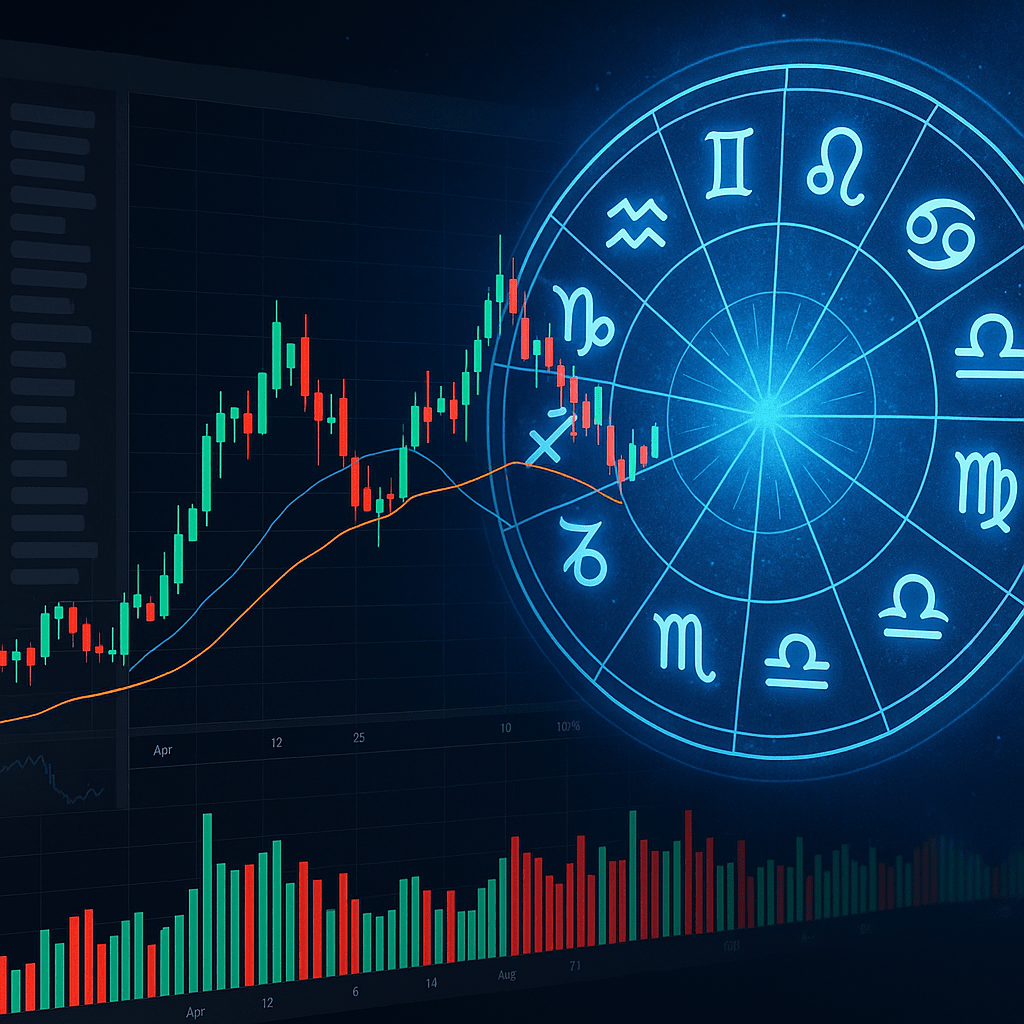
Across Wall Street and major European exchanges, traders search for better timing tools. Traditional indicators no longer provide a clear edge. Most participants use the same charts, macro dashboards, and news feeds.
To stand out, many professionals now explore specialised frameworks. Financial astrology software becomes one such framework. These tools align planetary cycles with price behaviour in U.S. and European markets.
In 2025, this field looks far more advanced than before. Early ephemeris charts evolve into AI-assisted platforms. Many systems now deliver structured timing windows, market-specific forecasts, and workflow-ready insights.
This article explains how modern financial astrology software works today. It compares tools for U.S. and European markets. It also shows how traders evaluate reliability, choose between AI and manual systems, and decide whether free or paid platforms fit their needs.
By the end, you understand how to assess financial astrology software for SPX, Nasdaq, DAX, FTSE, and STOXX trading.
What Financial Astrology Software Does
Financial astrology software links planetary cycles with financial markets. Every serious platform answers one question. How does planetary timing improve trading decisions.
Modern systems rely on three core components.
They use planetary position data from ephemeris engines.
They combine this data with historical and live market prices.
They apply structured logic to create timing windows or directional bias.
Earlier tools depend on manual interpretation. Astrologers study charts and publish dates. Today, software performs most of this work. AI models scan years of price action and planetary data to identify repeating patterns.
Some platforms operate as mobile or web apps. Others function as full research terminals. These terminals combine astro timing, macro context, and market structure in one interface.
This structure separates professional tools from hobby applications.
How Financial Astrology Software Evolves in 2025
In 2025, most advanced platforms rely on automation. They no longer depend only on intuition. AI models test how markets respond to past planetary setups.
This process allows traders to view probabilities instead of narratives. They see how often volatility expands or reversals appear around specific cycles.
Many platforms now support both U.S. and European markets. Some focus on SPX and Nasdaq. Others specialise in DAX and FTSE. A few provide global coverage with region-specific timing maps.
This evolution moves financial astrology closer to professional trading practice.
What Makes Financial Astrology Software Reliable
Reliable financial astrology software avoids absolute predictions. It focuses on structure and transparency.
A strong platform explains how it generates signals. It shows which planetary factors matter. It tests those factors across long market histories.
Serious tools analyse years of SPX, Nasdaq, DAX, and FTSE data. They measure how markets behave around repeated planetary patterns. This approach reduces bias and randomness.
Reliable platforms also emphasise risk language. They treat timing windows as probability zones. They encourage position sizing, stop discipline, and realistic expectations.
Market alignment matters as well. U.S. focused tools track U.S. indices and sessions. European tools respect European hours and macro drivers.
Strong platforms also update dynamically. They adapt as new data arrives.
Financial Astrology Software for U.S. Markets
U.S. traders focus heavily on index futures, ETFs, and macro assets. SPX, Nasdaq, and Russell dominate most strategies. Gold, crude oil, and Bitcoin also influence risk sentiment.
Effective U.S. market software builds around these instruments. It aligns timing windows with New York trading hours. It highlights periods with higher volatility or reversal risk.
Strong platforms separate forecasts by timeframe.
They cover intraday windows.
They highlight multi-day clusters.
They identify broader macro cycles.
A structured terminal approach, similar to AstroDunia-style platforms guided by Rajeev Prakash, reflects this design. These systems focus on SPX and Nasdaq behaviour. They also integrate macro and astro cycles into one roadmap.
This structure helps traders avoid random trades and focus on higher-probability sessions.
Execution Support for U.S. Traders
Top platforms support execution, not just analysis. They avoid overwhelming traders during fast markets.
Many tools export timing bands to charting platforms. Others provide alerts tied to time windows or price zones. This design keeps decision-making clear during volatile sessions.
Execution clarity matters more than complex theory during U.S. trading hours.
Financial Astrology Software for European Markets
European markets follow different rhythms. DAX, FTSE, CAC, and STOXX trade on distinct schedules. Currency flows and export exposure shape their behaviour.
European-focused software respects these differences. It anchors timing windows to London and Frankfurt sessions. It also tracks how U.S. flows affect late-day price action.
Strong platforms highlight ECB meetings and regional data releases. They separate morning volatility from afternoon continuation patterns.
Some systems include sector-specific timing for banks, exporters, and energy stocks. This approach links macro themes with planetary timing.
Many traders prefer platforms that display U.S. and European timing maps side by side. This layout supports smooth session transitions.
AI-Based vs Manual Financial Astrology Tools
AI now plays a central role in financial astrology software. AI systems process large datasets quickly. They test many planetary combinations. They highlight repeatable patterns.
This approach appeals to evidence-driven traders. It reduces reliance on isolated examples.
However, AI models can overfit data. Poor design leads to impressive backtests and weak live results. Transparency remains essential.
Manual tools rely on human experience. Skilled analysts combine cycles with macro understanding. This judgment adds nuance that algorithms still struggle to replicate.
The strongest platforms blend both approaches. AI performs research and filtering. Human analysts provide context and interpretation. This hybrid structure defines modern financial astrology.
Free vs Paid Financial Astrology Software
Many traders begin with free tools. These tools usually provide basic planetary overlays or generic astrology functions.
Free software helps with learning and experimentation. It introduces terminology and basic concepts.
However, free tools rarely deliver market-specific research. They do not provide structured forecasts for SPX, Nasdaq, DAX, or FTSE. They also lack consistent updates.
Paid platforms target active traders. They include curated forecasts, ongoing research, and market-specific timing maps. Many also offer educational support.
For serious traders, paid platforms act like professional research tools. They serve a role similar to advanced charting or news terminals.
Integration With Trading Workflows
Modern traders expect smooth workflows. Financial astrology software must integrate with existing tools.
Many platforms export calendars and timing zones to charting software. Others provide alerts through web or mobile dashboards.
Advanced systems offer APIs. These allow institutions and systematic traders to blend astro timing into broader risk models.
The best platform fits naturally into a trader’s daily routine.
Choosing the Right Financial Astrology Platform
Choosing the right software depends on trading style and temperament.
Scalpers need intraday precision.
Swing traders focus on multi-day clusters.
Investors track macro regime shifts.
Personality matters too. Some traders prefer clear guidance. Others prefer raw data and flexibility.
The best platforms support both approaches. They offer structure without forcing decisions.
Financial Astrology Software for U.S. Market Specialists
Traders focused on U.S. markets benefit from platforms built around SPX and Nasdaq. AstroDunia-style services emphasise U.S. sessions and liquidity cycles.
Day traders use timing bands to manage aggression. Swing traders plan entries around high-probability windows. Investors adjust exposure during macro transitions.
This focused design creates a clear advantage for U.S. market participants.
Conclusion
Financial astrology software in 2025 offers structured, research-driven tools. Traders now choose from free applications, AI-powered platforms, and hybrid research terminals.
Reliable tools share common traits. They rely on data. They remain transparent. They respect market structure and risk.