
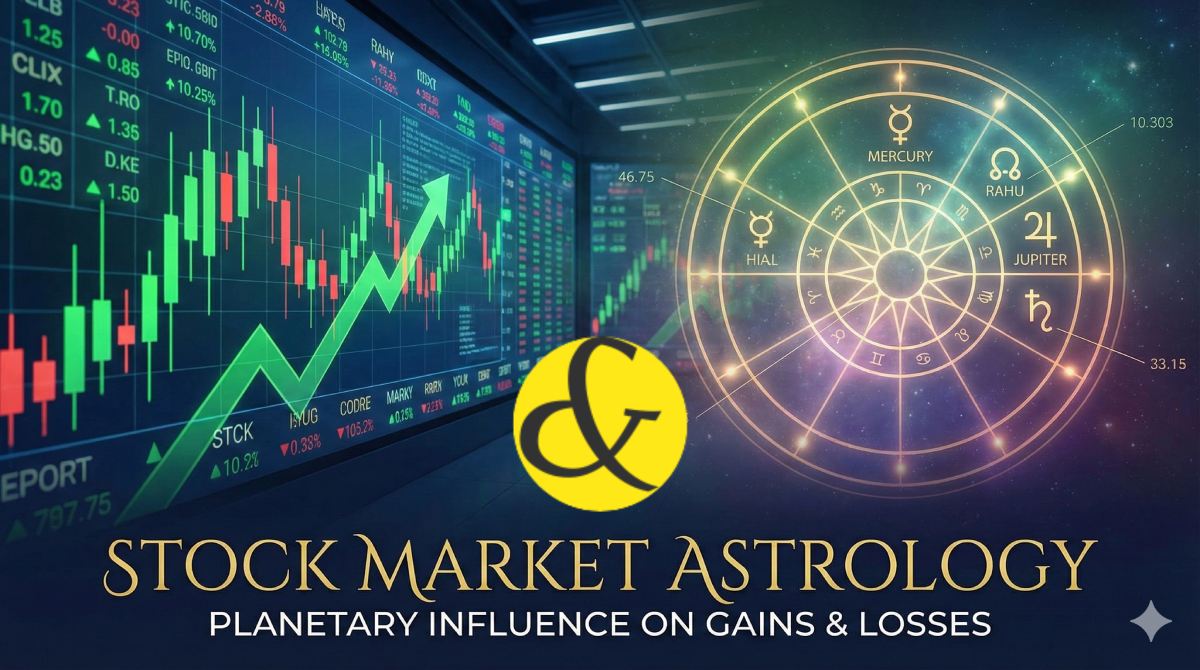
The word “trillionaire” sits at the edge of imagination because it describes wealth on a scale most people never see up close. Yet the idea matters in markets because it reflects something real: the way capital concentrates during certain economic eras, the way technology and monopolistic network effects reshape value, and the way speculative cycles can temporarily inflate paper wealth toward seemingly impossible numbers. When you combine that market reality with financial astrology, the trillionaire concept becomes more than a headline. It becomes a timing question.
Astrology, especially when used for market timing, is not about declaring a single person will become a trillionaire on a specific date. It is about reading cycles. It is about identifying the periods when risk appetite rises, when liquidity and leverage dominate decision-making, when crowd psychology turns euphoric, and when new asset classes or disruptive technologies become the chosen vehicles of capital expansion. In other words, astrology helps you understand the “weather” of markets, and trillionaire narratives often appear during the most intense “heat” in that weather.
This page explores what a trillionaire really is, why the idea has become more plausible in the modern financial system, and how planetary cycles can be used as a framework for timing the phases when trillionaire-making conditions are most likely to form.
What Does “Trillionaire” Actually Mean?
A trillionaire is someone whose net worth reaches one trillion in currency terms. In practice, the word is usually used for U.S. dollars, so it implies a net worth of one trillion dollars. That number is so large that it can confuse intuition. A billionaire has one thousand million. A trillionaire has one thousand billion. The difference is not just arithmetic. It represents an entirely different relationship to global markets, ownership structures, and long-duration compounding.
When people talk about trillionaires, they often imagine cash in a vault. Markets work differently. Net worth at that scale is almost always equity-based, meaning it comes from owning a massive stake in assets whose market value is set by public or private market pricing. That is why trillionaire discussions tend to revolve around founders of dominant platforms, owners of essential infrastructure, or leaders of capital networks that control powerful cash flows. In a purely financial sense, a trillionaire is a reflection of valuation regimes, not a reflection of how much money is sitting in a bank account.
This distinction matters for market timing. Valuations expand and contract. The same assets can look “trillionaire-adjacent” in peak optimism and look far more ordinary during risk-off regimes. Astrology of market timing focuses on the rhythm of those regimes.
Why Markets Produce “Trillionaire” Narratives in Certain Eras
Trillionaire narratives appear when three forces align.
First, liquidity becomes abundant. When central banks or global credit systems allow money and leverage to flow easily, capital hunts for scalable stories and high-duration growth. Investors then pay more today for profits they expect far in the future. This is the classic pattern of valuation expansion.
Second, network effects become dominant. Modern wealth scales faster because software, platforms, and global distribution allow one product to reach billions of users with relatively low marginal cost. This creates outsized winners and encourages extreme concentration.
Third, speculative psychology becomes socially contagious. This is not simply greed. It is narrative absorption. People stop asking what an asset is worth and start asking what it can become worth if everyone believes in the story. In those moments, the trillionaire concept feels “inevitable,” even if it is mostly a mirror held up to a euphoric market.
Financial astrology does not replace these economic forces. It attempts to identify when the psychological and structural environment will amplify them.
Market Timing Through Astrology: The Core Principle
Market timing astrology is the study of cycles and triggers. It tracks planetary movements that historically correlate with shifts in sentiment, liquidity preference, risk appetite, collective behavior, and the creation or destruction of speculative bubbles. The goal is not certainty. The goal is probability.
A practical way to understand it is to think in layers.
There are slow cycles that shape decades. These correspond to outer planets, which move slowly and reflect deep structural change.
There are medium cycles that shape years. These often correspond to Jupiter and Saturn, the planets traditionally tied to expansion and contraction, optimism and discipline.
There are fast cycles that shape weeks and days. These correspond to inner planets and the Moon, which in market work often connect to short-term sentiment swings, announcement reactions, and volatility clusters.
When trillionaire narratives emerge, they almost always sit at the intersection of a long structural cycle and a medium-term expansion wave, often accompanied by short-term euphoric triggers. Astrology of market timing tries to identify that intersection.
Jupiter and the Trillionaire Theme: Expansion, Optimism, and Scale
In financial astrology, Jupiter symbolizes growth, expansion, abundance, and the willingness to bet on possibility. In markets, Jupiter periods are often linked with broader optimism, rising participation, and valuation generosity. Jupiter does not guarantee gains, but it often describes the environment where people feel justified paying higher multiples, extending timelines, and believing that the future will be larger than the past.
The trillionaire idea is fundamentally Jupiterian. It is the belief that scale has no ceiling. It is the belief that the next platform, the next network, or the next economic model can keep compounding beyond what history trained us to expect.
From a timing perspective, Jupiter cycles are important for identifying the phases when “big story” assets are most likely to outperform. Jupiter transits are also significant for sectors that rely on confidence, narratives, and adoption curves, such as technology, innovation-driven consumer platforms, and emerging asset classes.
However, Jupiter alone is not enough. Jupiter without Saturn can become excess. That is where bubbles form.
Saturn and the Trillionaire Theme: Reality Checks, Structure, and Sustainability
Saturn symbolizes limits, discipline, structure, accountability, and the consequences of ignoring fundamentals. In market cycles, Saturn periods often correlate with tightening financial conditions, risk management becoming fashionable again, and the return of valuation gravity.
If Jupiter is the wind in the sails, Saturn is the weight of the hull. Saturn does not destroy wealth by itself. Saturn asks whether wealth is built on real cash flows, real competitiveness, and real durability.
This is crucial for understanding trillionaire narratives. The market can temporarily price an asset as if a trillionaire outcome is near. Saturn phases often determine whether that pricing becomes sustainable or collapses back into realism.
For traders and long-term investors, the Saturn layer helps you distinguish between a temporary valuation peak and a structural wealth-building era. A potential trillionaire outcome, in a disciplined sense, requires a long runway of durable cash flows, pricing power, and strategic control. Saturn is the planet that tests whether those conditions exist.
Uranus: Disruption, Technology, and Sudden Wealth Creation
Uranus represents disruption, innovation, shocks, and nonlinear change. In markets, Uranus correlates with new technologies, new asset structures, unexpected breakouts, and the kind of regime shifts that make old models obsolete quickly. When Uranus is prominent, markets can reprice entire sectors rapidly because the future suddenly looks different.
Trillionaire narratives are often Uranian because they tend to involve a new structure of value creation. Whether it is the internet, mobile platforms, cloud computing, AI, or other transformative systems, Uranus symbolism fits the pattern of sudden scale and new winners.
Uranus is also associated with volatility and instability. It can create wealth quickly, but it can also erase wealth quickly when expectations outrun reality. That is why Uranus periods can produce both the “first trillionaire” narrative and the dramatic drawdowns that follow speculative peaks.
Neptune: Dreams, Collective Belief, and the Myth-Making Machine
Neptune represents imagination, idealism, collective dreams, and sometimes illusion. In markets, Neptune is deeply connected to narrative finance, the power of stories, and the tendency for crowds to project hope onto assets that feel symbolic rather than measurable.
When Neptune energy dominates market behavior, people become less interested in balance sheets and more interested in identity. Assets become movements. Companies become myths. Entire sectors gain spiritual language, even when they are purely financial.
This is the psychological engine behind trillionaire talk. A trillionaire is not only a number. It is a symbol that the future is unlimited. Neptune periods can push valuations beyond what strict analysis would justify because belief becomes the pricing mechanism.
From a timing perspective, Neptune is useful because it warns you where the crowd is most likely to overpay. When Neptune themes are strong, risk management becomes essential. It is easy to be right about the trend and still lose money because the timing of reversals becomes sharp and emotionally violent.
Pluto: Power, Concentration, and the Wealth Extremes of History
Pluto symbolizes power, control, concentration, and transformation through extremes. In economic history, Pluto themes often correlate with periods when wealth consolidates and when the system reorganizes around new power centers.
The trillionaire concept is fundamentally Plutonic because it represents extreme concentration. It implies that one individual controls ownership stakes so dominant that their wealth rivals entire nations’ annual output. Whether or not that outcome occurs, the trend toward concentration is visible in modern markets through mega-cap dominance, winner-take-most economics, and the global reach of a small number of platforms.
For market timing, Pluto is a long-cycle planet. It is not about day-to-day trading. It is about identifying the eras where power shifts are underway. When Pluto themes are active, you often see consolidation, regulation battles, acquisitions, monopolistic tendencies, and the emergence of dominant financial empires.
If a trillionaire emerges in the modern era, it is likely because Pluto-style concentration combines with Uranus-style innovation and Jupiter-style expansion at the right time.
The Astrology of “Wealth Windows”: When Do Trillionaire Conditions Form?
Instead of focusing on a single person, market timing astrology looks for wealth windows. A wealth window is a period when multiple factors align to support extraordinary compounding, valuation expansion, and social acceptance of extreme outcomes.
A wealth window usually includes these conditions.
The macro environment allows risk-taking, either through abundant liquidity, stable growth expectations, or a belief that policy will backstop markets.
A dominant narrative exists that promises scalable adoption, such as a platform shift or a new technological infrastructure.
Market leadership is narrow, meaning capital is concentrating into a smaller set of winners, which is where extreme wealth outcomes happen.
Volatility is tolerated or even celebrated, which signals speculative engagement rather than defensive positioning.
Astrologically, this often shows up as supportive Jupiter transits, strong Uranus activation for innovation themes, and Pluto-driven concentration in the background, with Neptune amplifying the dream narrative. Saturn’s role is to either validate the structure or later deliver the correction.
This is why trillionaire talk often appears near major market peaks and also near major breakthroughs. The same cycle can produce both. One is the narrative top. The other is the structural beginning.
Applying This to Real Market Timing Without Making Sensational Claims
If you are using astrology for market timing, the trillionaire discussion is best treated as a signal about regime, not a promise about a person.
When you see trillionaire narratives rising, you can interpret it as a potential sign that markets are in an expansion phase with high narrative intensity. That can be tradable, but it also calls for discipline. The key is to translate the symbolism into actionable market behavior.
In practical terms, a market timing approach often focuses on three decisions: when to participate, when to reduce risk, and when to rotate.
During expansion windows, you look for leadership assets that attract flows and have the strongest narrative momentum. You keep position sizing sensible because expansion can reverse quickly.
During reality-check windows, you tighten risk, reduce exposure to the most speculative areas, and focus on assets with durable cash flows or defensive characteristics.
During transition windows, you watch for the next leadership theme, because new trillionaire narratives often begin as unpopular ideas before they become consensus.
Astrology helps by providing a timing framework for when these regime shifts are more likely, especially when combined with market internals like liquidity indicators, breadth, credit spreads, and volatility structures.
The Ethical Side of Trillionaire Talk in Financial Astrology
It is important to keep this topic grounded. The trillionaire idea attracts attention, but it can also seduce people into chasing extremes. Financial astrology works best when it improves decision quality, not when it fuels fantasy.
The right way to use this theme is to treat it as a diagnostic lens. If markets are producing trillionaire narratives, ask what that implies about collective psychology. Ask whether the environment supports sustainable compounding or whether it is simply pricing perfection. Ask what Saturn would do to this story if conditions tighten.
This keeps the work professional and useful. It also aligns with what market timing is really about: managing the sequence of risks, not predicting a single headline outcome.
How to Use This Page as a Framework for Your Readers
If you are building a WordPress page around this topic, the main value is that it bridges curiosity and discipline. People search “what is a trillionaire” because the idea feels futuristic. You can then guide them into a deeper understanding of market cycles, valuation regimes, and timing.
This page can also act as a gateway into broader themes of your financial astrology content. It naturally leads to topics like speculative cycles, liquidity-driven rallies, bubble psychology, and the planetary triggers that historically coincide with turning points. It creates the right kind of reader interest because it starts with a big concept and ends with a practical framework.
Conclusion: The Trillionaire as a Market Timing Symbol
A trillionaire is, in one sense, a simple definition: a net worth of one trillion dollars. In another sense, it is a market symbol. It reflects eras when expansion is celebrated, when narratives dominate valuation, when wealth concentrates into a small set of winners, and when investors become willing to believe in outcomes without historical precedent.
Astrology of market timing approaches this symbol through cycles. Jupiter explains the optimism and scale. Saturn explains the test of sustainability. Uranus explains disruption and sudden repricing. Neptune explains the myth-making engine of crowd belief. Pluto explains concentration and power.