
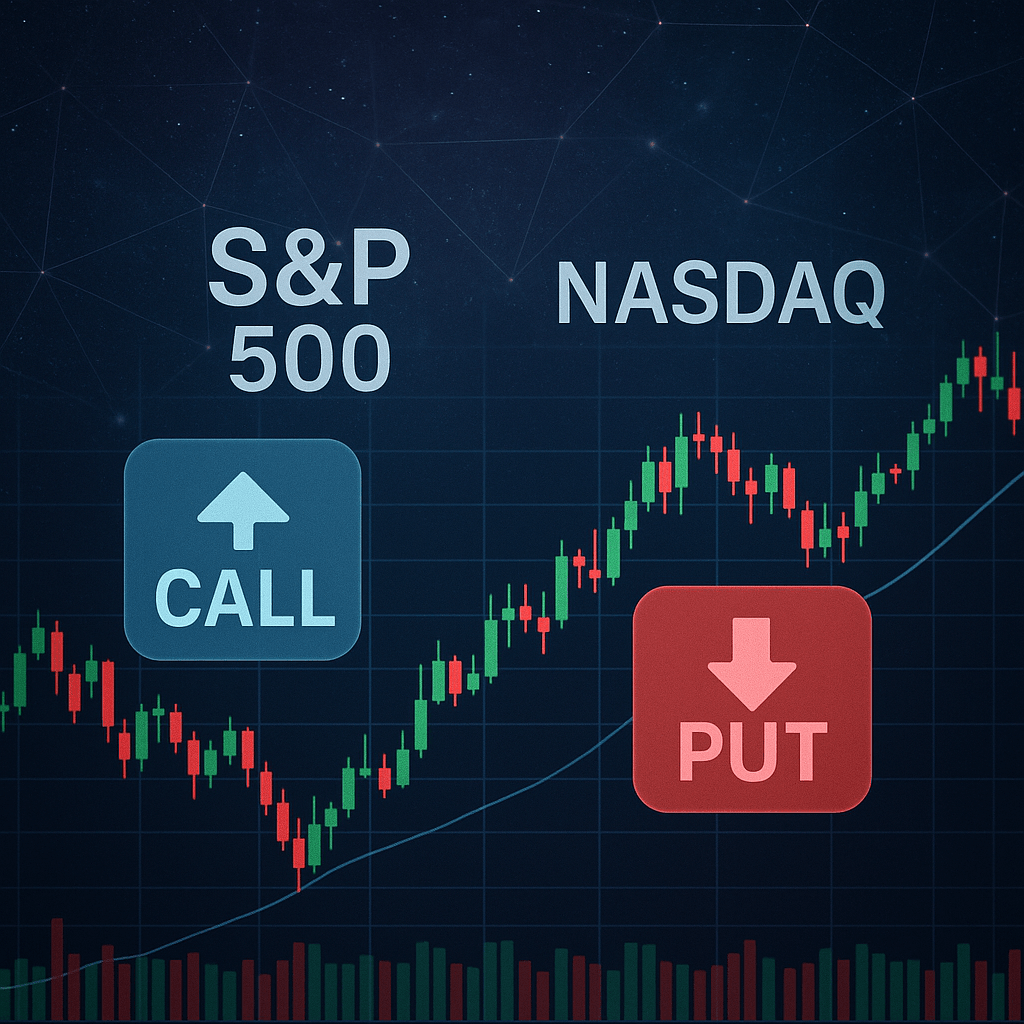
Options amplify the value of a good calendar. If you trade SPX or NDX options—or proxies like SPY and QQQ—the Annual Letter 2026 offers a forward map of high-probability windows. These windows help you sync tenor, strike, and structure with volatility regimes and expected directional impulses. The result is a plan that seeks to harvest time-decay when the market is range-bound and to capture convexity when a window favors trend extension.
Why timing matters even more for options
- Regime-fit: Calendar windows help you decide whether to emphasize premium-selling (credit spreads, iron condors) in consolidations or premium-buying (debit verticals, calendars, diagonals) into potential breakouts.
- Tenor alignment: When a strong impulse window is approaching, targeting expiries that fully encompass the window can reduce theta drag on longs.
- Risk budget: Defined-risk spreads sized to the window can keep drawdowns contained while still expressing the view.
Structure selection by scenario
| Scenario | Likely Regime | Preferred Structures | Notes |
|---|---|---|---|
| Trend extension | Momentum & breadth thrust | Call debit verticals; call diagonals; broken wing butterflies | Aim for convexity; stagger strikes to manage cost |
| Mean-reversion | Overbought/oversold into window | Short-dated credit spreads; put-credit into support | Define invalidation; avoid martingale adds |
| Event risk cluster | Volatility expansion risk | Calendars/diagonals; long straddles/strangles (small size) | Own time; manage gap risk with limited exposure |
| Range & decay | Low realized vol | Iron condors; butterflies; ratio spreads with protection | Keep wings realistic; monitor for regime change |
A 2026 routine for SPX & NDX options
- Quarter map: Mark the letter’s major windows and align them with your options expiries (monthly, weeklies).
- Before the window: Pre-build 2–3 structures per scenario with planned roll/exit rules and order templates.
- During the window: Act on triggers; scale winners; reduce losers quickly; respect invalidation.
- After the window: Collect learnings—IV behavior, skew response, spreads that worked best—and recycle into the next window.
Many options traders struggle with overtrading and misaligned tenor. A forward calendar counteracts both. It encourages patience during chop and decisiveness when probability windows arrive. Over time the process can raise average trade quality without forcing you to sacrifice your personal style.
Link the roadmap to real-time execution
Some traders prefer a research-only plan; others want reinforcement during market hours. You can pair the Annual Letter 2026 with time-stamped broadcasts that share the same research backbone, so the year-map translates into real entries, risk updates, and discipline. The pairing is optional but effective for those who prefer structured accountability.
Annual Letter 2026 — pre-order details | Live Signals — overview
Options involve risk and are not suitable for every investor. This content is educational and not financial advice. Consider consulting a licensed professional and always trade with defined risk.