
Introduction
The 10-year Treasury note is a cornerstone of the global financial market, influencing everything from mortgage rates to stock valuations and currency movements. Issued by the U.S. Department of the Treasury, the 10-year Treasury note represents a debt obligation of the U.S. government, with a maturity period of ten years. As a benchmark financial instrument, it is considered one of the safest investments due to the U.S. government’s ability to meet its debt obligations. However, the yield on the 10-year Treasury is not only a measure of government debt costs but also a critical indicator of broader economic conditions. This analysis delves into the history, purpose, market impact, yield dynamics, influencing factors, and the broader implications of the 10-year Treasury note on the financial landscape.
Historical Background
The origins of the 10-year Treasury note date back to the early days of the United States when the government sought methods to fund its activities and maintain fiscal stability. Over the centuries, the U.S. Treasury market has evolved into the world’s most liquid and secure fixed-income market. The issuance of Treasury securities began as a way to finance wars, infrastructure projects, and government expenditures. As the country expanded economically, the role of Treasury securities, particularly the 10-year note, became more sophisticated, serving not only as a funding mechanism but also as a benchmark for assessing economic stability.
Historically, the 10-year Treasury has been a reflection of the U.S. government’s creditworthiness. Investors view it as a safe haven in times of economic uncertainty, leading to increased demand and lower yields during periods of market turmoil. Conversely, during economic expansion and higher inflation, yields tend to rise as investors demand greater returns for the perceived higher risk. The evolution of the 10-year Treasury has mirrored shifts in the global economy, technological advancements in financial markets, and changing monetary policies.
The 10-Year Treasury and Inflation Expectations
Inflation expectations are a core driver of the 10-year Treasury yield. As inflation erodes the purchasing power of money, investors demand higher yields on long-term securities to compensate for this potential loss. When inflation expectations rise, the 10-year Treasury yield typically increases to reflect this risk premium.
The U.S. Treasury Inflation-Protected Securities (TIPS) market provides insights into inflation expectations. By comparing the yield on traditional 10-year Treasury notes with that of TIPS, investors can estimate the “breakeven inflation rate,” which is a measure of expected inflation over the bond’s maturity. If the breakeven rate rises, it signals that the market expects higher inflation, leading to upward pressure on nominal 10-year yields.
Periods of deflation or disinflation, characterized by declining price levels or slower inflation, generally lead to lower yields. This scenario often occurs during recessions or economic downturns when demand weakens, and central banks may adopt accommodative policies to stimulate growth. The interplay between inflation expectations and the 10-year Treasury yield is closely monitored by the Federal Reserve, financial analysts, and institutional investors, as it provides critical insights into the future trajectory of the economy.
The Global Impact of the 10-Year Treasury
The influence of the 10-year Treasury extends far beyond U.S. borders, as it plays a central role in the global financial system. As a safe-haven asset, the 10-year Treasury is sought after by foreign governments, central banks, and institutional investors worldwide. Countries with significant trade surpluses, such as China and Japan, hold large quantities of U.S. Treasury securities as part of their foreign exchange reserves, helping to stabilize their own currencies and support international trade.
Changes in the 10-year Treasury yield can have a ripple effect across global markets. For example, when U.S. yields rise, global investors may move capital into U.S. assets to capture higher returns, potentially leading to capital outflows from emerging markets. These capital shifts can put pressure on the currencies of developing countries, increase borrowing costs, and create financial instability.
Moreover, the 10-year Treasury yield often influences the yield on sovereign bonds issued by other developed nations. Countries like Germany, the United Kingdom, and Canada experience shifts in their bond yields in response to U.S. Treasury movements. This interconnectedness means that the 10-year Treasury yield serves as a global benchmark, affecting credit markets, currency exchange rates, and international trade.
Purpose and Importance
The 10-year Treasury note serves multiple critical functions in the financial system. Firstly, it is a tool for the U.S. government to finance its expenditures, including infrastructure projects, defense, and public services. By issuing Treasury notes, the government borrows money from investors in exchange for regular interest payments, with the principal returned upon maturity.
Secondly, the 10-year Treasury acts as a benchmark for various financial instruments. Mortgage rates, corporate bonds, and other forms of long-term debt often use the 10-year yield as a reference point. When the yield on the 10-year Treasury rises, borrowing costs typically increase across the economy, influencing everything from consumer loans to business financing.
Additionally, the 10-year Treasury serves as a gauge of investor sentiment and economic expectations. A declining yield often signals concerns about economic slowdown or recession, prompting investors to seek safer assets. Conversely, a rising yield typically reflects optimism about economic growth and inflationary pressures. The yield is closely watched by policymakers, analysts, and investors to understand market sentiment and anticipate potential shifts in monetary policy.
Market Dynamics and Yield Movements
The yield on the 10-year Treasury note is determined through an intricate balance of supply and demand dynamics in the bond market. When the U.S. Treasury issues new debt, it auctions these securities to institutional investors, foreign governments, and individual investors. The interest rate, or yield, on the 10-year note is established through this auction process, reflecting the level of demand for the security.
If demand for the 10-year Treasury is high, its price increases, causing the yield to decline. Conversely, if demand falls, prices decrease, leading to higher yields. This inverse relationship between bond prices and yields is fundamental to bond market mechanics. Market participants analyze yield movements as indicators of economic trends, including inflation expectations, economic growth, and Federal Reserve policies.
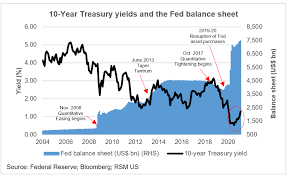
The Federal Reserve’s monetary policy also plays a significant role in influencing 10-year Treasury yields. When the Fed raises interest rates to control inflation, short-term borrowing costs increase, impacting investor behavior. If the Fed signals a tightening stance, long-term yields may rise due to expectations of higher inflation and economic growth. Conversely, when the Fed cuts rates or implements quantitative easing, demand for the 10-year Treasury typically rises, leading to lower yields.
Factors Influencing the 10-Year Treasury Yield
The yield on the 10-year Treasury is influenced by a complex set of factors, including economic conditions, monetary policy, geopolitical events, and investor sentiment. Economic indicators such as GDP growth, inflation rates, and employment data significantly impact yield movements. Strong economic data often leads to higher yields as investors anticipate increased inflation and potential rate hikes.
Monetary policy decisions by the Federal Reserve also play a crucial role. When the Fed signals an accommodative stance by maintaining low interest rates, yields tend to decline. Conversely, a hawkish approach aimed at curbing inflation often leads to higher yields. Inflation expectations themselves are pivotal; if investors expect rising prices, they demand higher yields to compensate for the potential erosion of purchasing power.
Geopolitical events, such as wars, trade conflicts, and political instability, can drive investors to seek safe-haven assets like the 10-year Treasury, increasing demand and reducing yields. Similarly, global economic conditions, including the economic policies of major economies like the European Union and China, influence yield fluctuations. Investor sentiment, driven by market psychology and risk appetite, also affects demand for the 10-year Treasury, impacting yields.
Implications for Financial Markets and the Economy
The 10-year Treasury yield has far-reaching implications for various sectors of the economy. Its role as a benchmark for mortgage rates means that fluctuations in the yield can influence the housing market, affecting home affordability and real estate investment. When yields rise, mortgage rates tend to increase, potentially reducing home purchases and slowing the housing market.
The corporate sector is also affected by changes in the 10-year Treasury yield. Rising yields increase borrowing costs for businesses, impacting expansion plans, capital expenditures, and overall profitability. Companies with significant debt may face challenges in refinancing at higher interest rates, leading to increased financial strain.
Stock markets are sensitive to movements in the 10-year Treasury yield as well. When yields rise rapidly, investors may shift from equities to fixed-income securities, considering the higher returns with lower risk. Conversely, falling yields often result in increased investment in equities, as lower yields reduce the appeal of bonds. The yield curve, which compares short-term and long-term Treasury yields, is a key indicator for predicting potential recessions. An inverted yield curve, where short-term yields exceed long-term yields, is often viewed as a signal of an impending economic downturn.
Conclusion
The 10-year Treasury note remains a pivotal instrument in global finance, reflecting market sentiment, influencing interest rates, and shaping investment decisions. As a barometer of economic health and a safe haven during uncertainty, its significance extends beyond the U.S. borders, affecting international financial markets. Investors, policymakers, and economists closely monitor its yield movements, seeking insights into inflation trends, economic growth, and the stability of financial markets. In a world marked by economic complexity and uncertainty, the 10-year Treasury continues to serve as a critical gauge of market confidence and a foundation for financial stability.